

If you’ve been searching for pole barn plans, you’re already thinking like a builder. You want a structure that goes up fast, costs less than stick-built construction, and gives you a working space without the price tag of a full custom build. That’s the right instinct.
But pole buildings aren’t your only option, and depending on what you’re going to use the building for, a pre-engineered metal building often gets you to the same outcome with less labor, less maintenance, and a longer lifespan.
Below, I’ll walk through the head-to-head differences between pole barn plans and metal building plans, what a 30×40 or 40×60 build looks like in each, where the cost numbers actually land once you account for materials and labor, and possible use cases.
Pole Barn vs. Metal Building
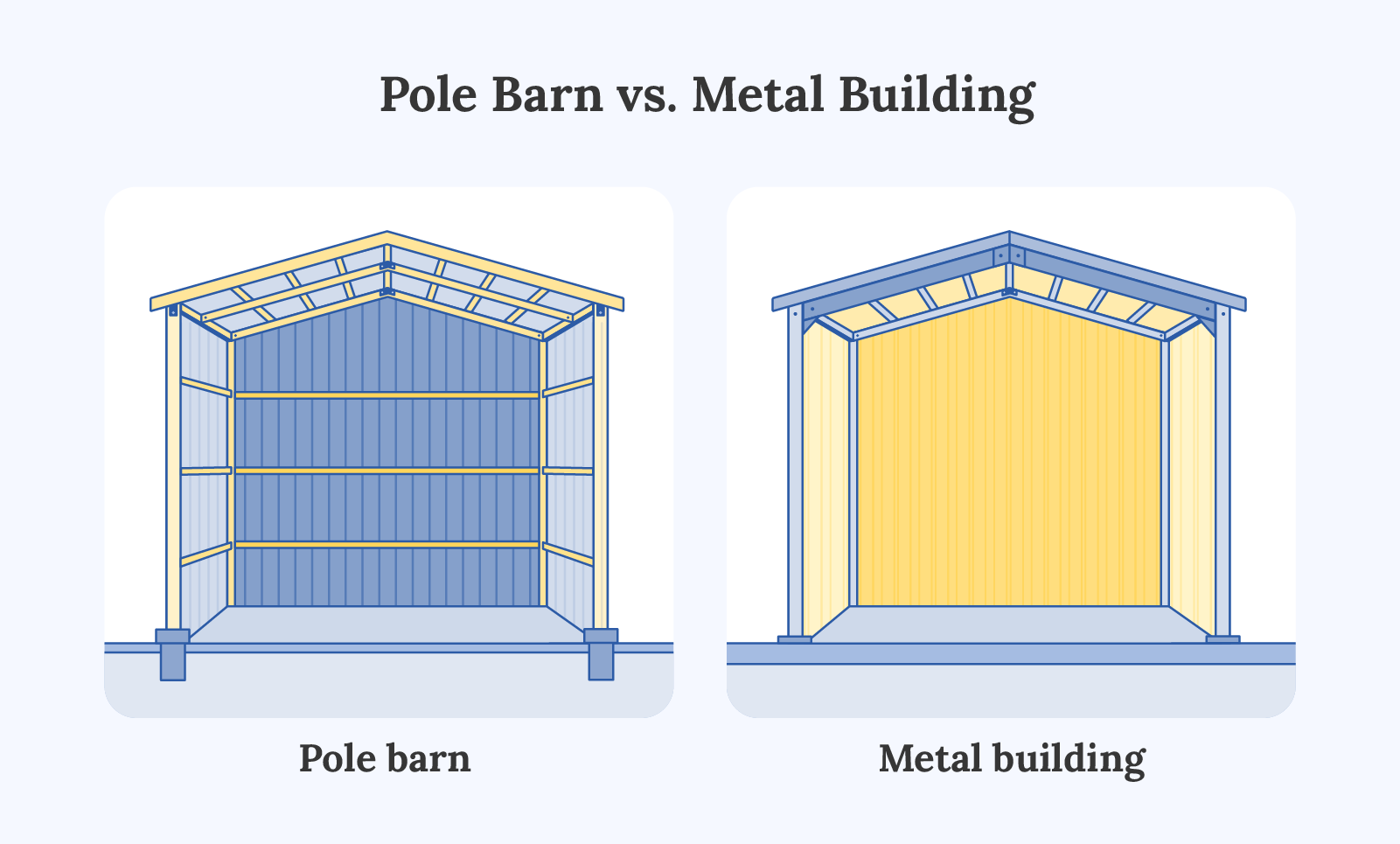
The two structures look similar from the road but are built very differently. Here’s the head-to-head.
| Feature | Pole barn (post frame) | Metal building (steel frame) |
|---|---|---|
| Frame | Wood posts (typically pressure-treated 6×6) buried in concrete footings, with horizontal girts and roof purlins between posts | Pre-engineered steel frame and panels, bolted together on a concrete slab |
| Lifespan | 15 to 60 years, depending on soil conditions, climate, and treatment grade (longer with steel-sleeved or laminated posts) | 70 years or more with basic maintenance |
| Maintenance | Periodic inspections for wood rot, pest damage, and post deterioration. Repairs increase as the building ages. | Low; wash panels, repaint trim every decade, reseal fasteners. Steel doesn’t rot or attract pests. |
| Build process | DIY or contractor build. You source materials (or buy pole barn kits), set posts, frame the roof, install metal siding, and metal roofing. | Engineered shell delivered to your site. Free professional installation in our 21-state service area. |
| Labor cost | 40–60% of the total project cost when you hire it out. DIY saves labor but adds weeks of weekend work. | Included in the building cost when you buy through Alan’s Factory Outlet, no separate labor bill. |
| Plans and design | Buy stock pole barn plans or hire a designer. Plans typically need engineering review for permitting. | Engineering is built into the prefab system. Pick size, sidewall height, roof style, door placement, and color. |
| Best for | Buyers committed to the DIY route, agricultural use cases, and properties where a wood-post structure fits the look. | Buyers who want a faster build, longer lifespan, and a turnkey shell delivered. |
For a look at the structural differences, frame, footings, sheathing, and durability head-to-head, see our other article on metal building vs. pole barn and our comparison of pole barn vs. metal barn kits.
30×40 Pole Barn Plans vs. 30×40 Metal Building
This is the most popular size for both pole barns and metal buildings: 1,200 sq. ft. on the ground, which is enough for a 3-car garage with workspace, a serious workshop, or a small horse barn.
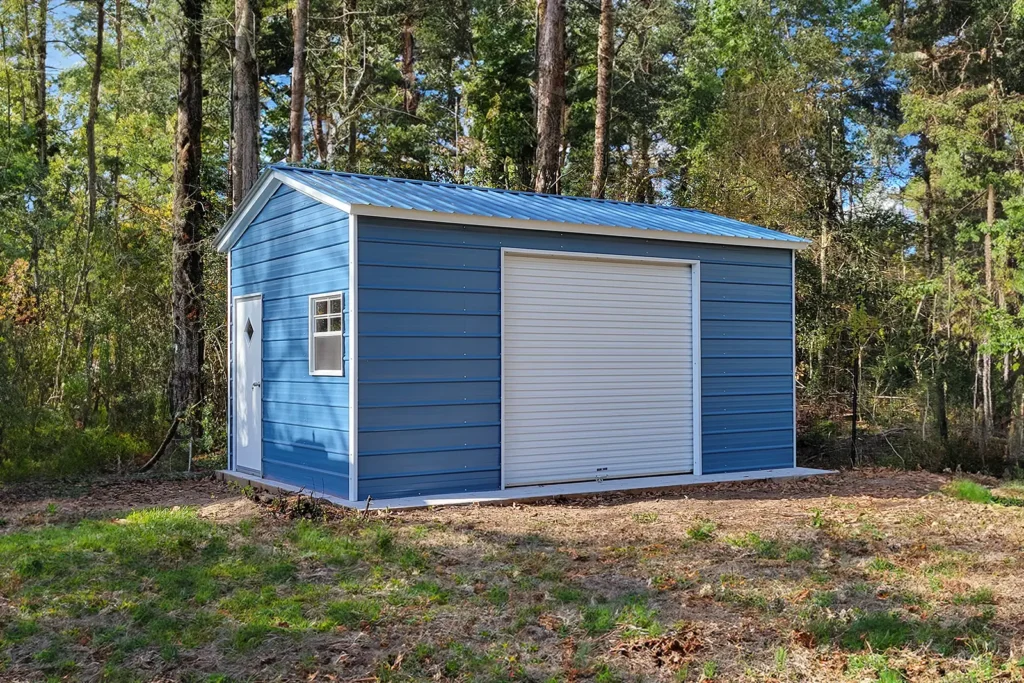
For a pole barn at this size, you’re typically buying a kit or sourcing materials separately and hiring a contractor (or doing it yourself). Stock pole barn plans for a 30×40 cover post placement (usually 8 ft on-center), girt and purlin spacing, truss layout, door and window framing, and roof pitch. Most plans assume a single side door, one or two double doors on the gable end, and a 12-inch overhang on the eaves.
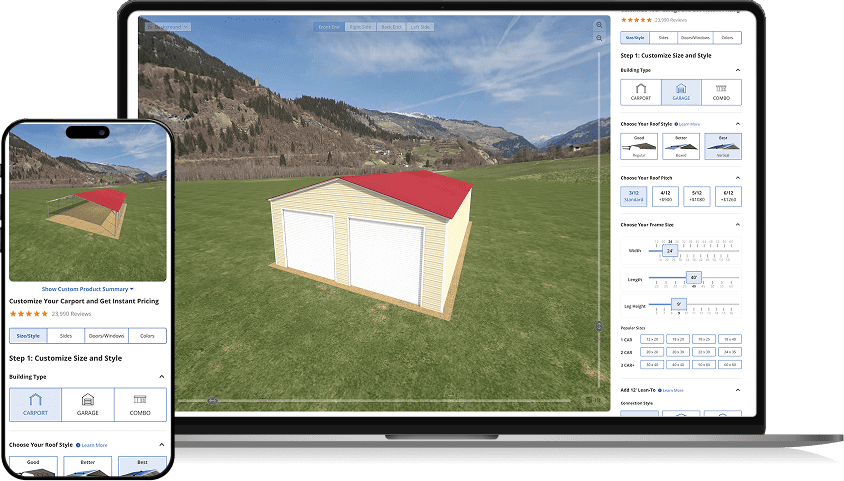
For a metal building at the same footprint, the design is engineered into the kit. Pick the sidewall height (10 ft for storage, 14 ft for taller equipment, 16+ ft for two-story options), the roof style (regular, A-frame boxed eave, or vertical roof), and the openings. The shell shows up on the truck as labeled steel components and goes up in a day or two with a professional installation crew. No post placement to figure out, and no truss math to verify.
For a head-to-head price view across both options, our metal building pricing shows configurations and starting points by size. It’s useful as a reference when you’re comparing it to a pole barn quote you’ve gotten elsewhere.
40×60 Pole Barn Plans vs. 40×60 Metal Building
Now your pole barn search gets more serious: the 2,400 sq. ft. of floor space here is enough for a horse barn with multiple stalls, a small commercial building or office space, an agricultural equipment shed, or a multi-bay car garage with a finished workshop.
A 40×60 pole barn plan typically uses 10 ft post spacing on-center, with engineered trusses spanning the 40-ft width. Roof pitch usually runs 4/12 or 5/12. Building length scales easily on a pole frame, adding two more posts and a truss section gets you to 40×80 with minimal redesign. That flexibility is real, and it’s part of why pole barns dominate the agricultural construction market.
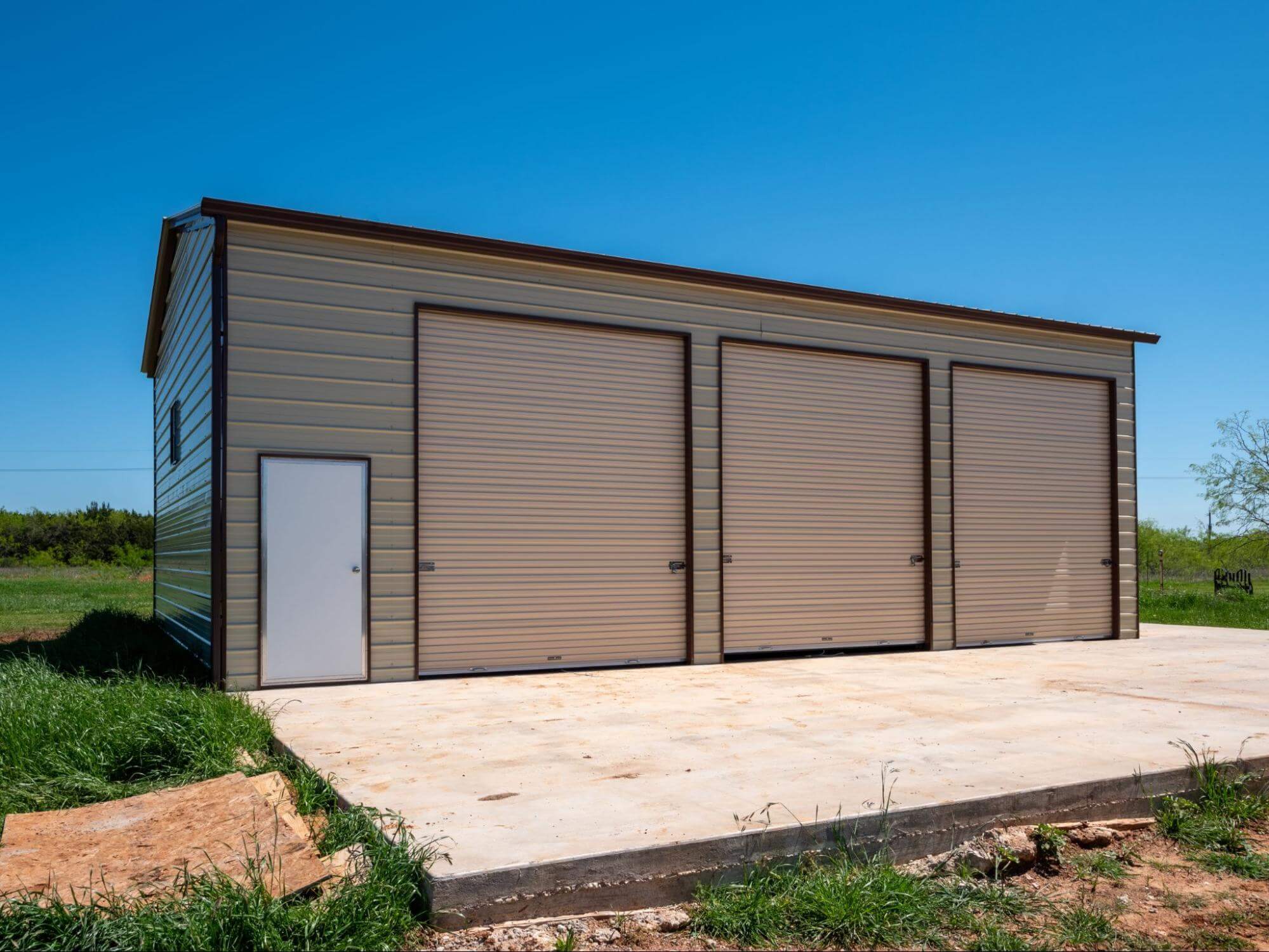
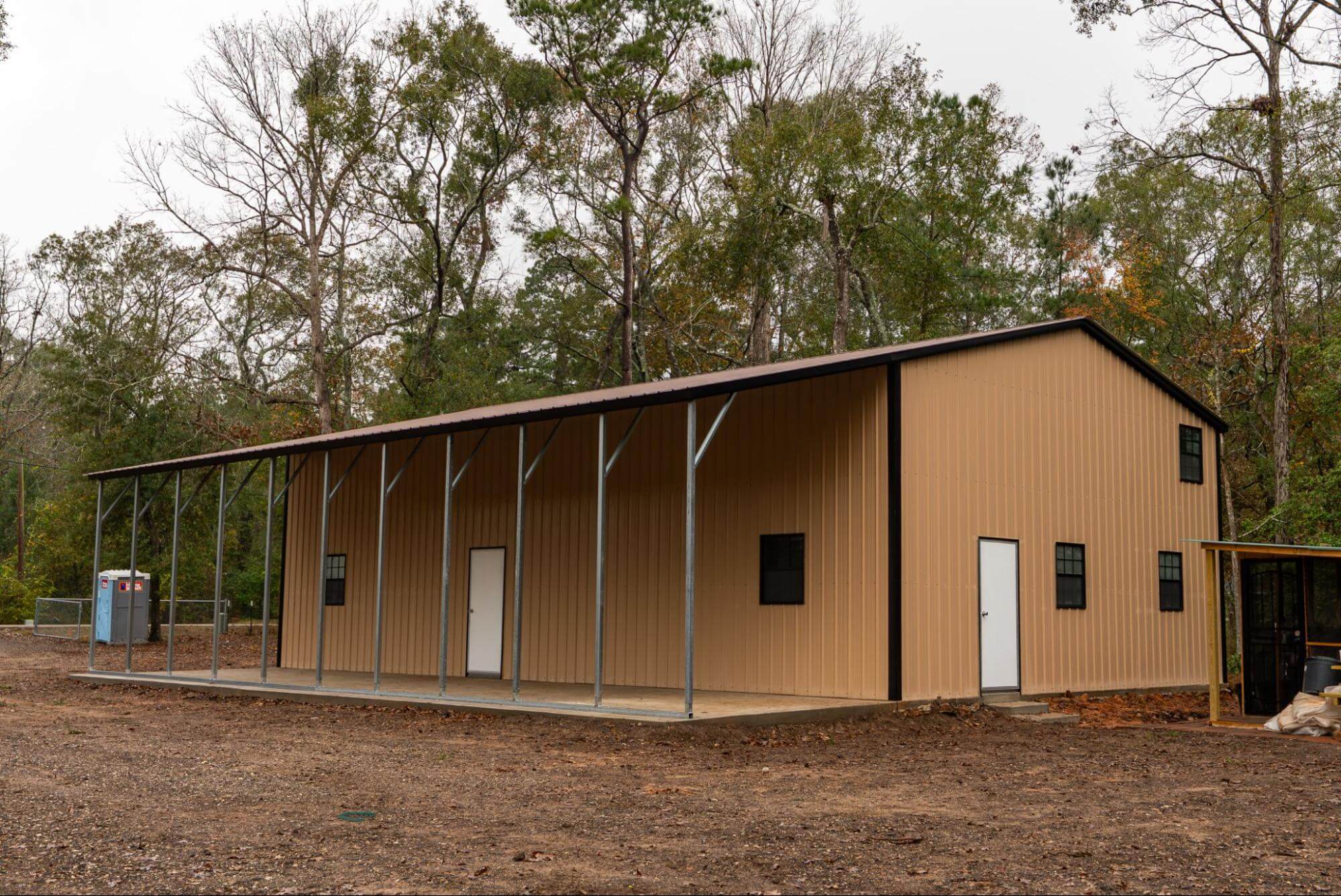
The same 40×60 in a metal building is a clear-span steel structure with no internal posts. Wider open floor, easier to maneuver large equipment, and simpler to subdivide later for office space or stalls. The metal shell installs in days, not weeks, and the engineering is already done; you don’t need a separate engineer’s stamp on the plans for permitting.
The Real Cost Comparison
This is what most pole barn buyers don’t see until they’re halfway through the project. Pole barn pricing looks lower on paper because the kit prices and material lists are quoted separately from labor. Once you add labor (which runs 40 to 60% of the total project cost on a hired-out pole barn build), the numbers tell a different story.
| Build type | 30×40 total project cost | 40×60 total project cost | Labor treatment |
|---|---|---|---|
| 30×40 pole barn (materials + labor) | $18,000 to $48,000 installed | $36,000 to $96,000 installed | Labor is separate. Hire a crew or DIY over multiple weekends. |
| 30×40 pole barn (DIY kit only) | Materials kit runs $12,000 to $36,000; labor is on you. | 40×60 materials kit runs $24,000 to $72,000 | You provide the labor. Plan for several weekends and a few helpers. |
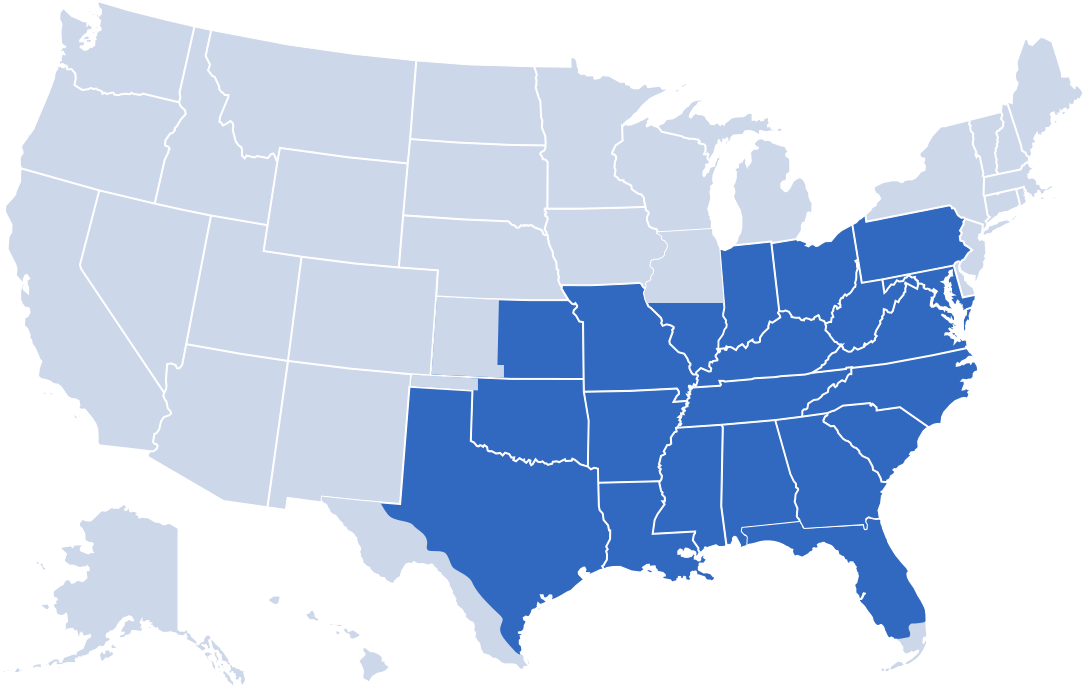
| 30×40 metal building (Alan’s Factory Outlet) | Pricing varies by size, sidewall height, roof style, and openings. See our metal building pricing for current configurations. | Same, pricing scales with size and spec | Free delivery and professional installation included across our 21-state service area. No separate labor bill. |
Pole barn cost ranges put most pole barns between $15 and $30 per square foot, with custom or insulated builds reaching $45+ per square foot. Site prep, clearing, leveling, and drainage adds several thousand dollars on top, and that cost applies to both pole barns and metal buildings.
Our free installation matters. On a 30×40 pole barn build with $10,000 to $20,000 of labor priced separately, pole barns get deceptively expensive.
When DIY Pole Barn Plans Make Sense
The most common reason buyers pick pole barn plans over metal buildings is the DIY angle. You can buy stock plans, source the lumber and metal siding yourself, and put up the structure with a couple of friends over a few weekends. Here’s where DIY pole barn plans pay off:
- You enjoy the construction process. If hands-on building is part of why you want the structure in the first place, DIY is the answer. The journey is the point.
- Your time has a lower opportunity cost than your money. If a multi-weekend build doesn’t take you away from work or family obligations, DIY labor saves real money.
- You have construction experience. Setting posts, framing trusses, and installing metal roofing isn’t beginner work. If you’ve built before, you know what you’re getting into.
- You want full custom control. Stock pole barn plans are flexible. Move a door, change a window placement, or adjust the overhangs, DIY gives you the freedom to modify on the fly.
Where the DIY math falls apart is when you start adding up the time, the rental equipment, the trips to the lumber yard, and the inevitable mistakes. A first-time pole barn builder usually spends 4 to 6 weekends on a 30×40, plus a few weekday evenings on punch list items. That’s 80 to 120 hours of your time, and if you’d rather spend those weekends using the building than building it, the metal building route gets you there faster.
Pole Barn or Metal Building by Use Case
I’ll help you decide based on what you want to use it for.
Agricultural Storage
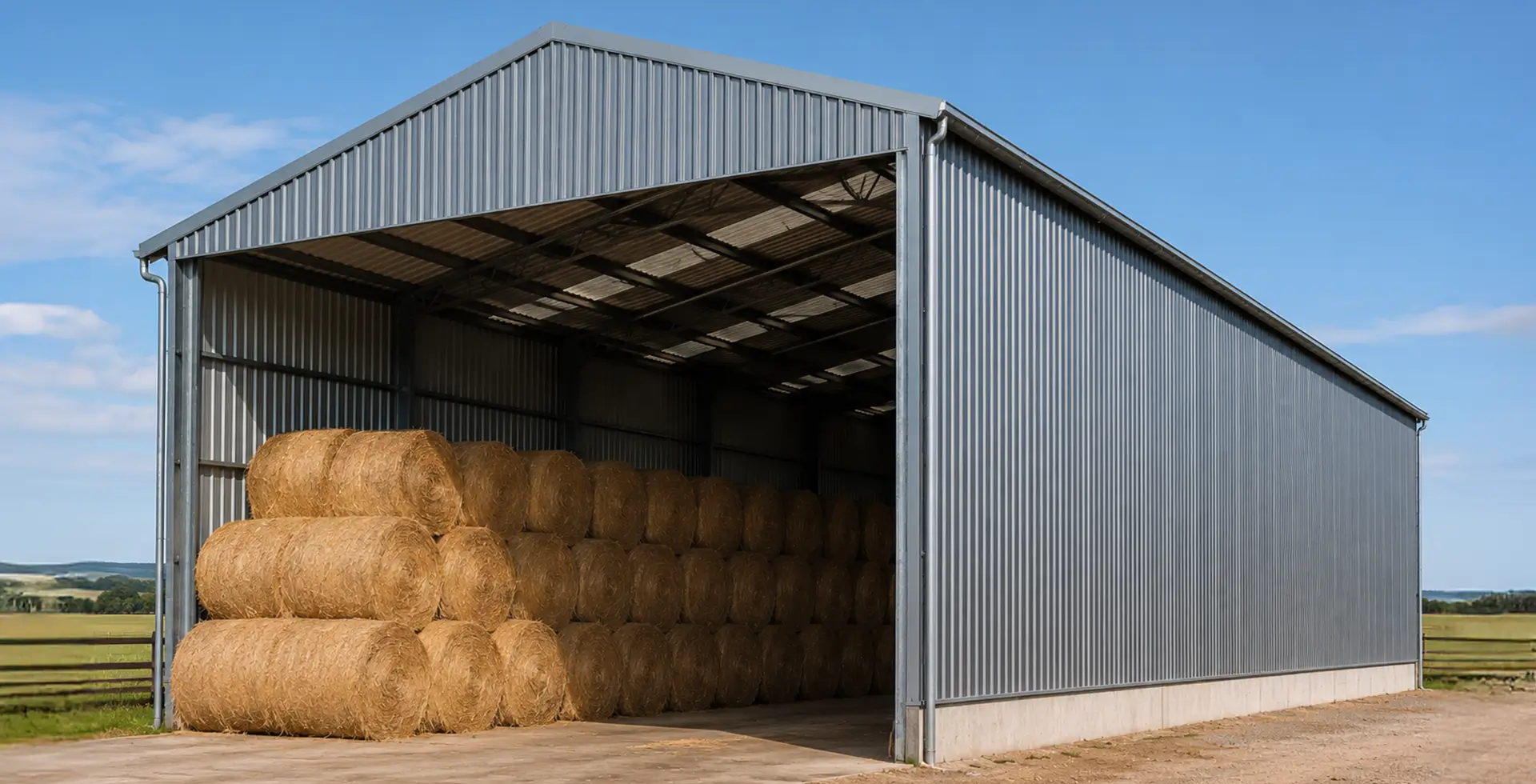
Hay, feed, equipment, and ag supplies all need a covered, ventilated space. Pole barns are traditional here for a reason; they’re cheap, the construction process is well understood, and the 8 to 10-foot post spacing makes wide door openings easy. Metal buildings work just as well and last longer, with fewer maintenance cycles over a 30-year ownership period.
Workshop or Shop Building
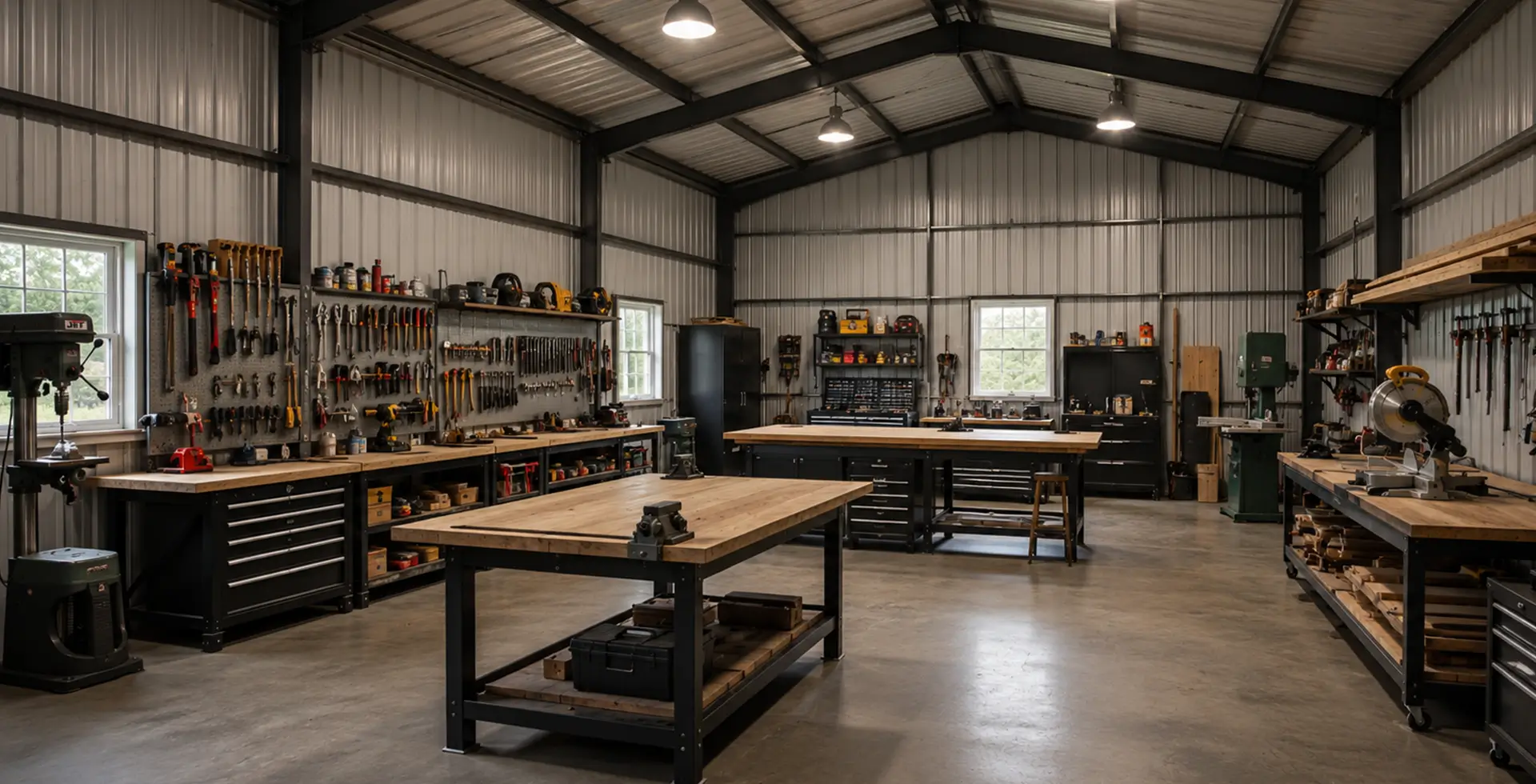
A working shop needs an open floor, good lighting, and enough sidewall height for a workbench plus overhead storage. Both pole barn and metal building options handle this. The metal building wins on the no-internal-posts question; a clear-span 30×40 means you can lay out the shop without working around 6×6 posts in the middle of the floor.
Garage or Car Garage
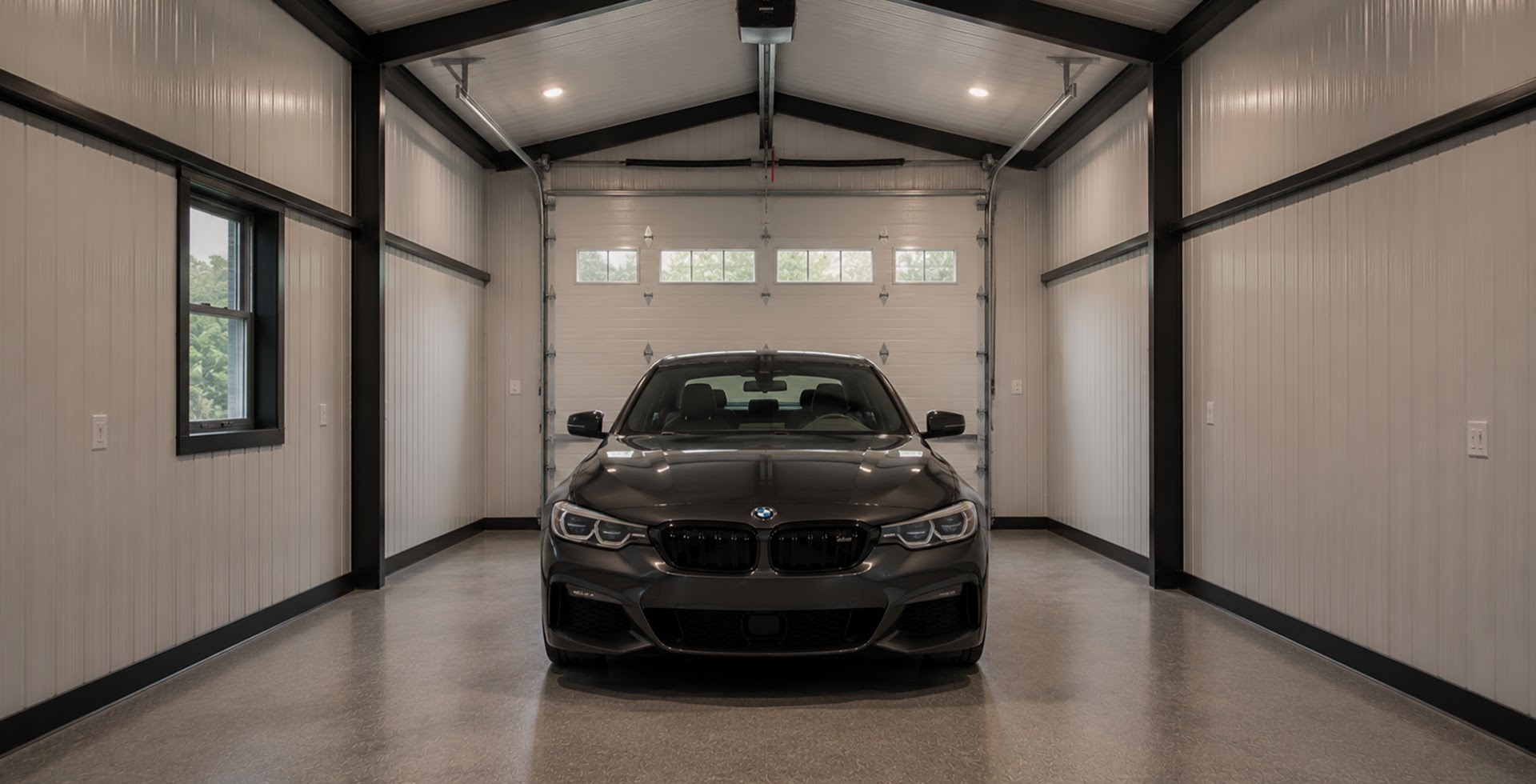
For storing vehicles, a pre-engineered metal building is hard to beat. The shell is lockable, weather-tight, and quick to assemble, and the wider openings on a metal building accommodate larger garage doors without the post-frame complexity.
Horse Barn

This is where pole barn plans hold their own. The wood frame breathes, the structure looks more residential than industrial, and stall layouts have been refined over decades of pole barn and horse barn builds. Metal buildings work for horse barns too, especially when paired with a wood interior, but the traditional pole barn aesthetic is still the default.
General Storage
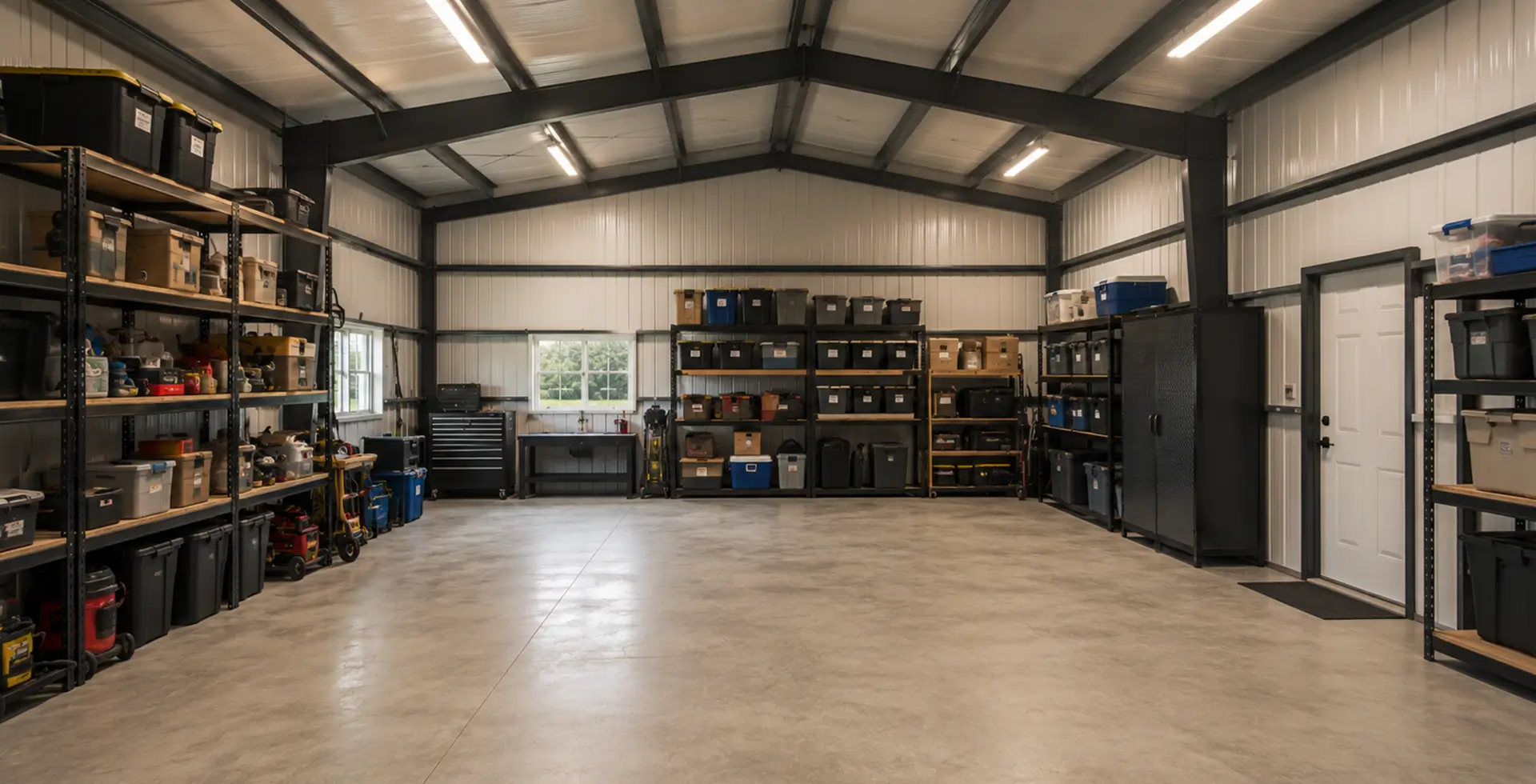
Equipment, RVs, boats, off-season gear. Either option works, and the call comes down to what you’re storing and how long you want the building to last. For long-term storage of anything sensitive to temperature or humidity, a metal building’s tighter envelope and better insulation compatibility wins.
Office Space
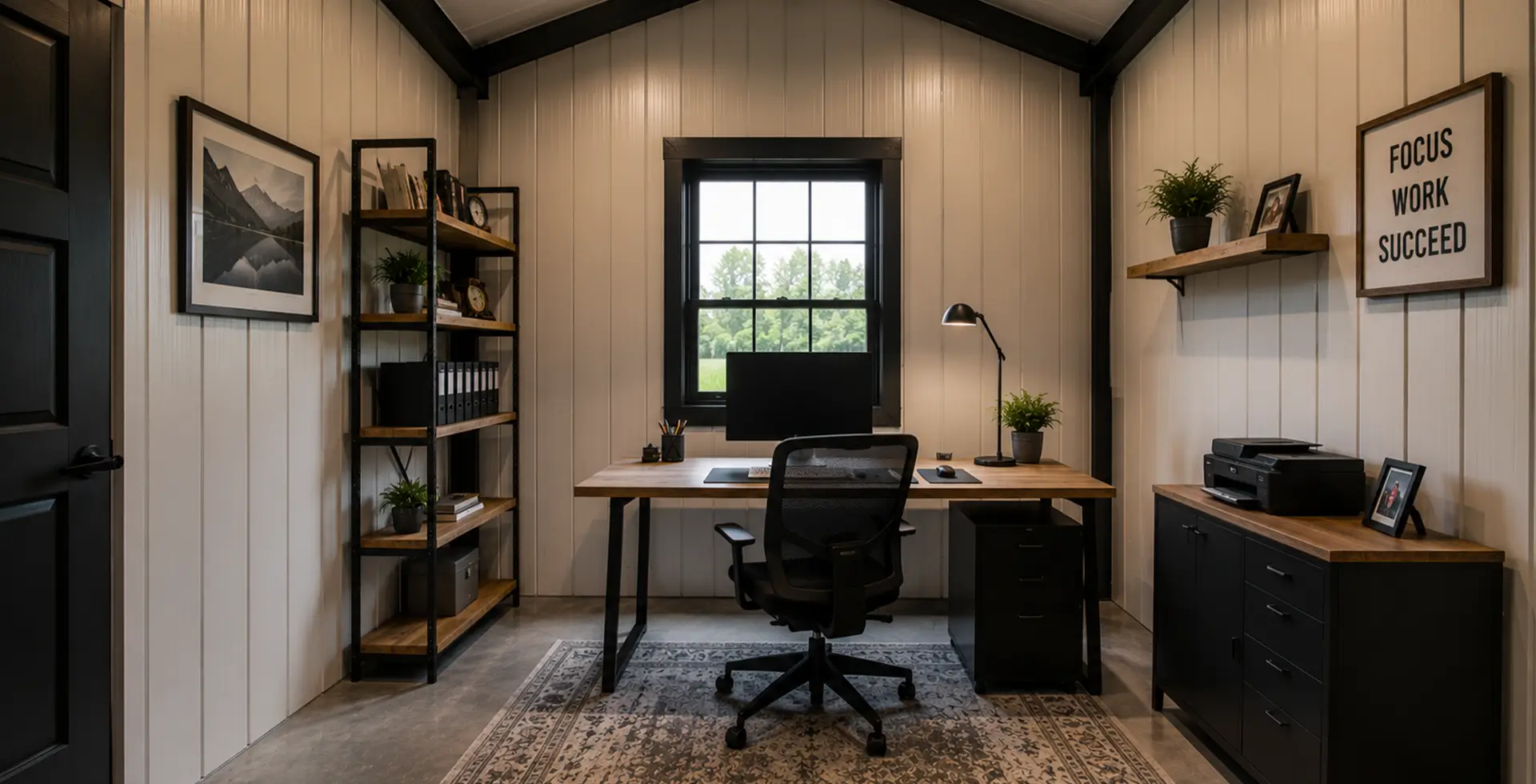
For commercial buildings, small offices, shops with retail space, and light manufacturing, metal building plans are usually the clearer choice. Faster permitting, easier code compliance, and a more finished look that reads as commercial rather than agricultural.
The Building Process: A Step-by-Step Comparison
Here’s how the construction process actually plays out for each option.
| Step | Pole barn build | Metal building (Alan’s Factory Outlet) |
|---|---|---|
| 1. Site prep | Clear and level the site, mark post locations, ensure drainage | Clear and level the site, prepare the slab area |
| 2. Foundation | Dig post holes 4–5 ft deep, set wooden posts in concrete footings, allow cure time | Pour a concrete slab to the manufacturer’s spec, allow 7–28 days to cure |
| 3. Framing | Install horizontal girts between posts, frame in roof trusses, install purlins | Pre-engineered steel frame delivered as labeled components, bolted together by the install crew |
| 4. Sheathing | Install metal siding on walls, metal roofing on roof, trim out openings | Install steel wall and roof panels (factory-fitted), trim, doors, and windows |
| 5. Finish | Install doors, hardware, electrical and any interior finishing on your own schedule | Building is delivered turnkey on the shell. Interior finishing (insulation, electrical, partition walls) is on you or a subcontractor |
| Total time | 2–6 weeks for a hired crew, 6–12 weekends for a DIY build | 1–3 days from delivery to installed shell on a prepared slab |
How to Choose Between Pole Barn Plans and Metal Building Plans
The decision usually comes down to four questions:
- How long do I plan to own this building? 5 to 10 years, either option works. 20+ years, the metal building’s longer lifespan and lower maintenance start adding up.
- Do I want to do the labor myself? Yes, pole barn plans give you that path. No, a metal building with free installation eliminates the question.
- What’s my use case? Do you need a horse barn or are using it for agricultural purposes? Then a pole barn is traditional and works. For a workshop, garage, commercial space, or office, a metal building usually wins.
- How fast do I need it up? Pole barn = weeks. Metal building = days.
If a metal building is the right answer, browse configurations and starting prices on our metal building pricing page to see what your size and spec lands at. If you’re still on the pole barn track, compare your quote to a metal building quote on the same footprint before you commit; the labor line is where the gap usually shows up.
Pole Barn Plans FAQs
Here are the questions that come up most when people are weighing this decision.
Are pole barns cheaper than metal buildings?
On a materials-only basis, pole barn kits often look cheaper. Once you add labor, which runs 40 to 60% of the total project cost on a hired-out pole barn, the gap shrinks or reverses. A metal building from us comes with free professional installation across our 21-state service area, which removes the separate labor bill that makes pole barns deceptively expensive.
How long does a pole barn last?
Treated wooden pole barn posts typically last 20 to 40 years before they need replacement, depending on soil conditions, climate, and wood quality. The roof on a pole barn often gives out before the posts do. A steel-frame metal building, by comparison, lasts 40 to 60+ years with basic maintenance, washing panels, repainting trim every decade, resealing fasteners. Steel doesn’t rot, doesn’t attract pests, and doesn’t deteriorate the way wood does.
Can I get pole barn plans for a metal building?
Not really, because the two systems are framed completely differently. Pole barn plans assume wooden posts in concrete footings with girts and purlins between. A metal building uses pre-engineered steel components on a concrete slab.
If you’ve found a pole barn plan you like and want the same layout in a metal building, the right move is to pick a metal building configuration with the same footprint, sidewall height, and openings, the design will translate, even if the structural drawings don’t.
What does a 30×40 pole barn cost to build?
A 30×40 pole barn typically runs $18,000 to $48,000 with materials and labor included, per 2025 HomeAdvisor data. The $18,000 end represents a basic agricultural shell with no insulation or finishing; the $48,000 end represents a fully finished building with insulation, doors, windows, and interior partitions.
Is it cheaper to build your own pole barn?
If your time has a lower opportunity cost than your money, and you have construction experience or someone who does, DIY is cheaper on the ledger. Plan for 6 to 12 weekends on a 30×40 build, plus rental equipment, trips to the lumber yard, and the inevitable correction work. If you’d rather use the building than build it, the metal building route with free installation gets you there faster.
How far apart can 6×6 posts be for a pole barn?
Standard pole barn plans space 6×6 posts 8 to 10 ft on-center along the sidewalls, with end-wall posts often closer together (6 ft on-center) to support the gable. Wider spacing is possible with engineered solutions, laminated columns, steel-sleeved posts, or larger-dimension lumber, but most stock plans stick to the 8 to 10 ft range because it works structurally and matches standard truss spans.