

Custom Metal Motorcycle Sheds and Bike Garages
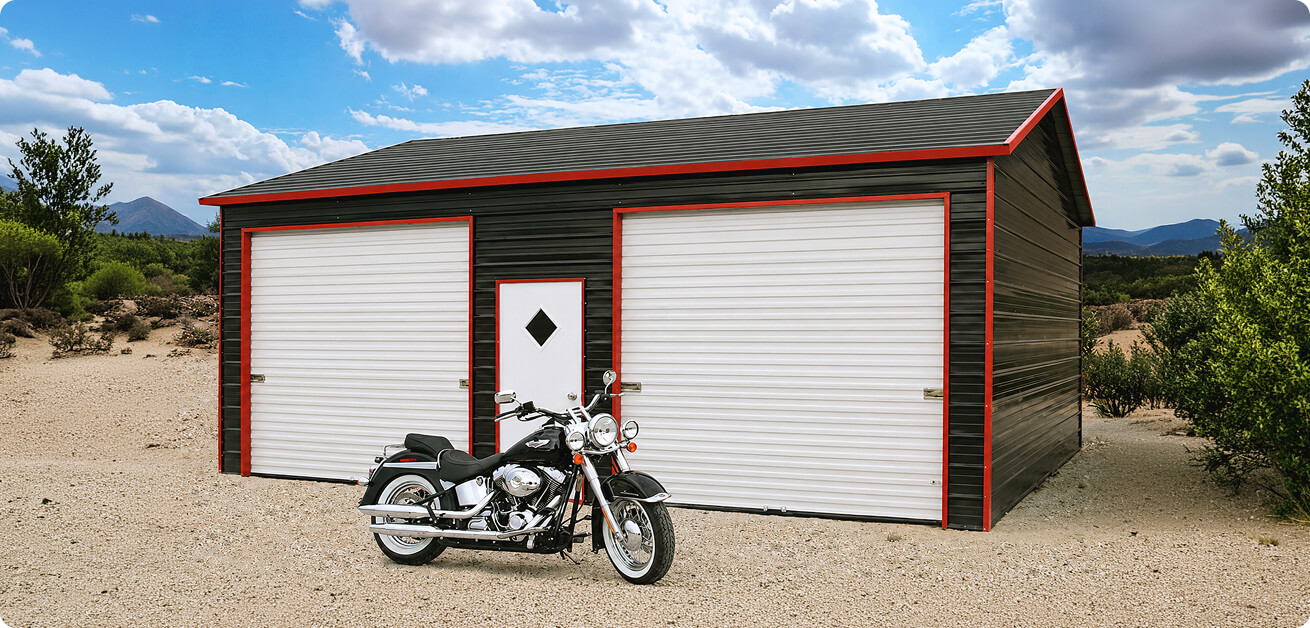
Your motorcycle deserves better than a tarp. Here’s how to size a metal motorcycle shed, secure it from theft, ventilate it for stored fuel, and winterize the bike inside it.
Get a Custom Metal Garage at Unbeatable Factory-Direct Prices

Instant Online Pricing
Exact price online for metal garages—no calls, no forms.

Free Delivery & Installation
We deliver and install at no extra cost in our service areas.

Certified Quality
U.S.-made steel, 1-year workmanship warranty.

100,000+ Satisfied Customers
23+ Years of Factory Direct Prices
If you ride, you already know what rain, hail, and a few months of harsh sun can do to a bike’s paint, leather, electronics, and tires. I’ve spent more than 22 years helping over 100,000 customers protect their investments, and the riders I talk to almost always reach the same conclusion: a real metal motorcycle shed pays for itself the first time a freak storm rolls through.
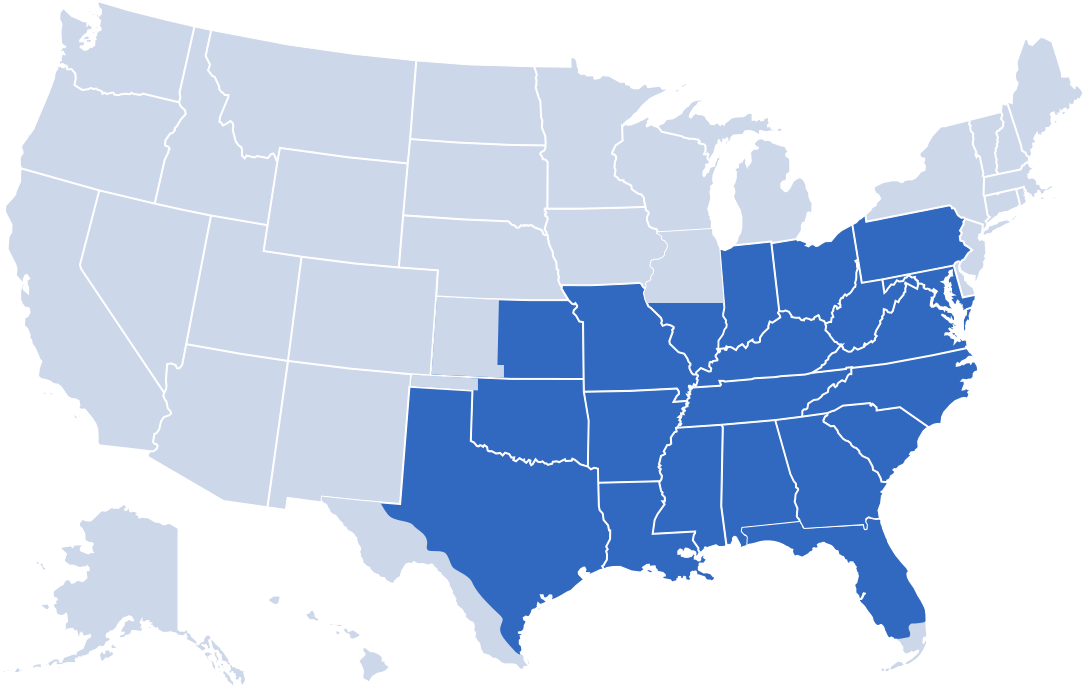
I’ll walk you through how to size a shed for your bike (or two), how a steel structure stacks up against a tarp or pop-up cover, the security and ventilation choices that actually matter, and how we customize and deliver your shed for free in 21 states. By the end, you should know exactly what to ask for when you build yours.
Why Riders Choose a Metal Motorcycle Shed
A motorcycle is exposed to two enemies the moment it leaves the road: weather and theft. A purpose-built metal shed handles both, plus a few problems most owners don’t think about until they’re staring at a rusted chain or a dead battery in spring.
- Weatherproof, year-round protection. A galvanized steel frame and steel panels hold up to rain, snow, ice, hail, and high winds in ways a tarp or fabric cover can’t match. Cross-flow vents and a sealed roof keep rain off your seat and components.
- Better security than a cover. The FBI’s National Insurance Crime Bureau reported 54,736 motorcycle thefts in a single year, with most stolen from outside the owner’s home. A locked steel structure with no windows is a far harder target than a bike under a tarp.
- UV-resistant paint and weather-resistant trim. Steel panels block direct sun, which is what fades plastics, cracks vinyl seats, and ages rubber gaskets faster than mileage does. The painted finish on our panels is designed to hold color through the kind of weather conditions that bleach a fabric cover in a single summer.
- One spot for the whole kit. A shed isn’t just for the bike. It’s also where your helmet, jack, ATV, lawn mower, garden tools, and spare parts live. That’s a real storage solution, not just a cover.
- It looks like part of the property. Our 16-panel colors and three roof styles let your steel storage shed match the house, the barn, or the existing detached garage instead of standing out like a portable storage shed.
If you’ve been weighing a quick fix against the long haul, a metal motorcycle storage shed is the option that actually solves your storage needs rather than postponing them. It’s the kind of long-term solution that handles the bike, the gear, and a few seasons of bad weather without flinching, which is why most of our motorcycle storage solutions outlive the bikes they were built for.
Browse our full lineup of metal garages to see how the structures scale up from a single-bike shed to a full workshop.
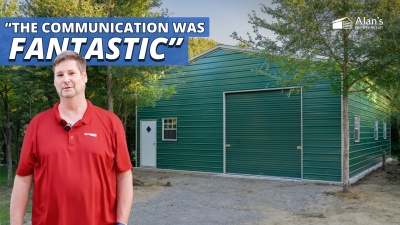
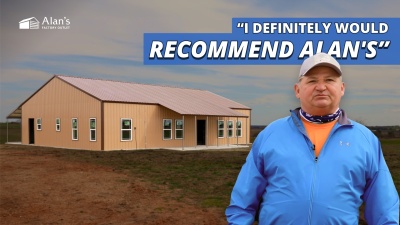
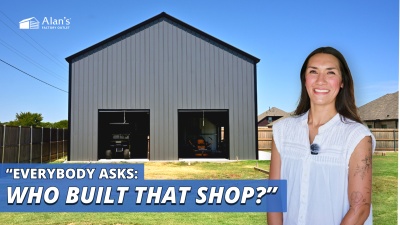
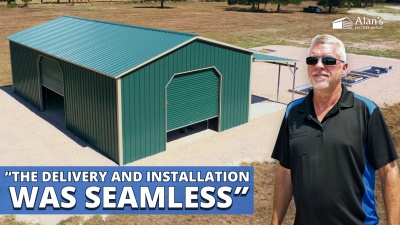
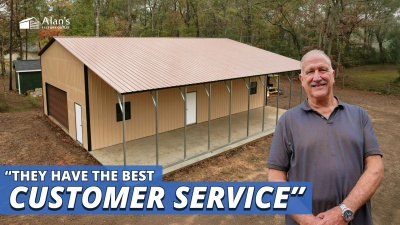
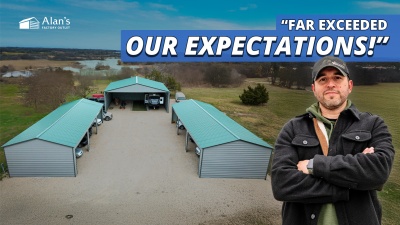
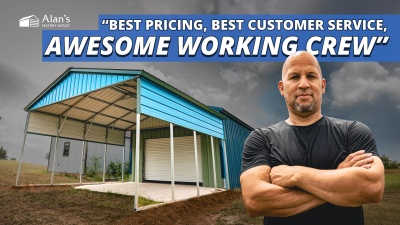
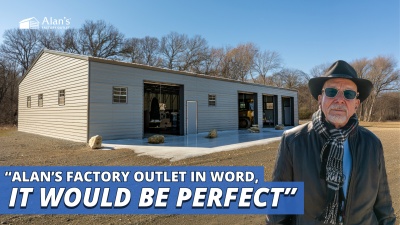
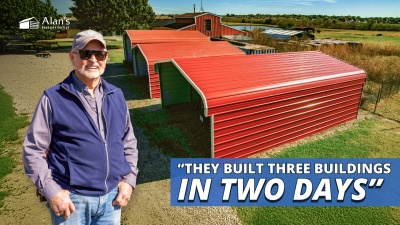
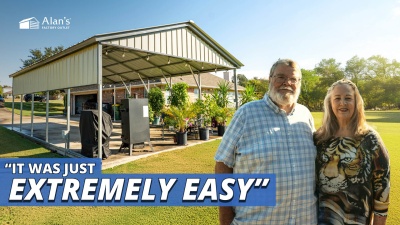
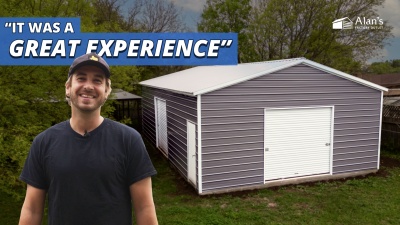
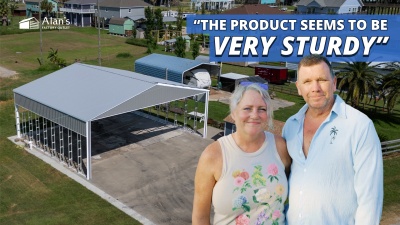
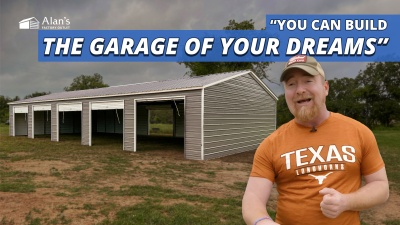
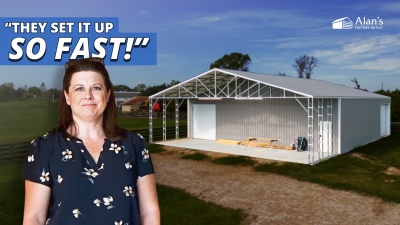
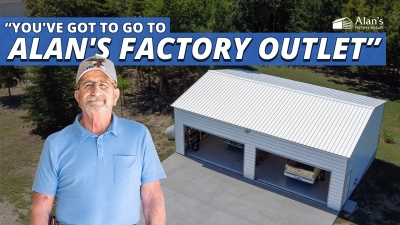
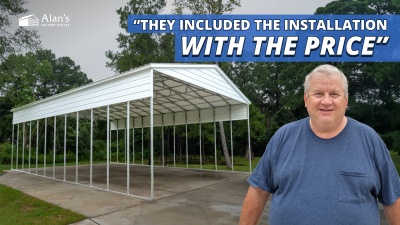
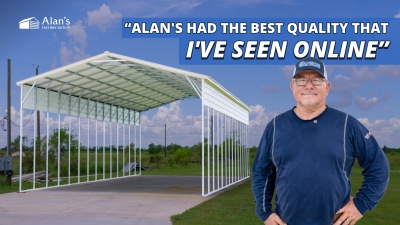

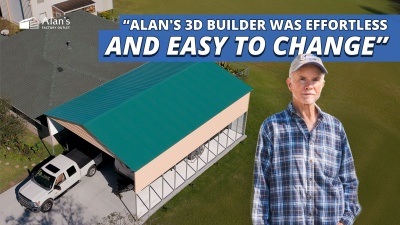
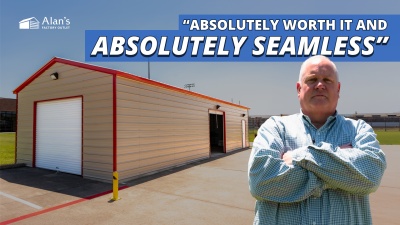
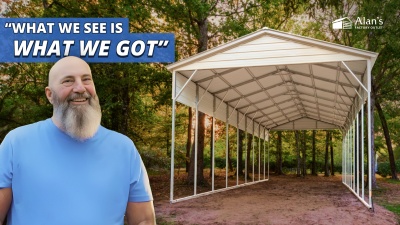
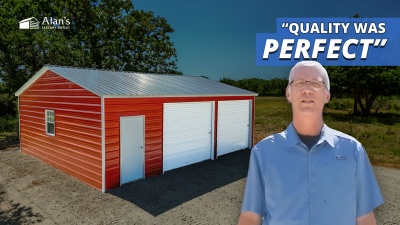
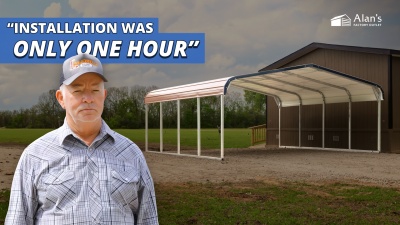
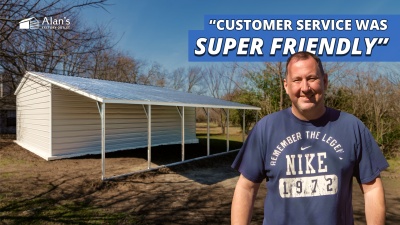
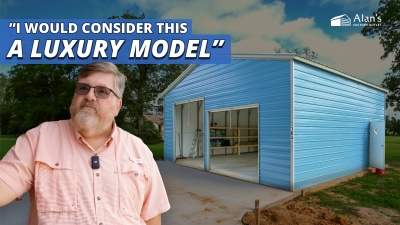
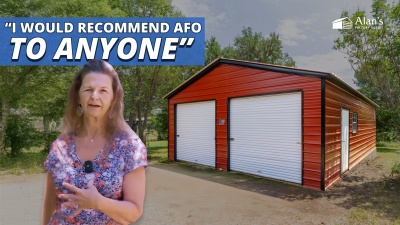
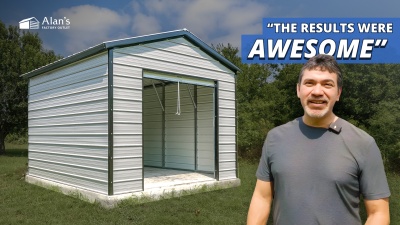
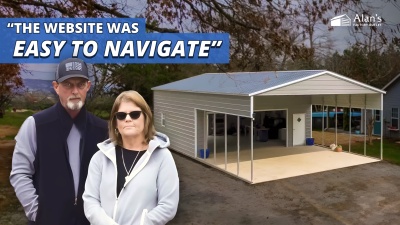
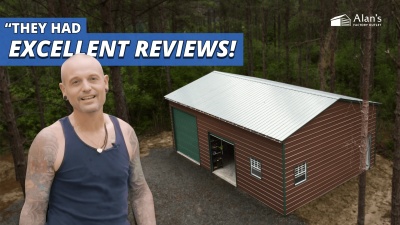
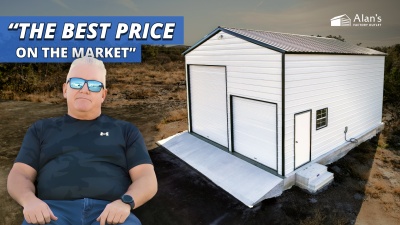
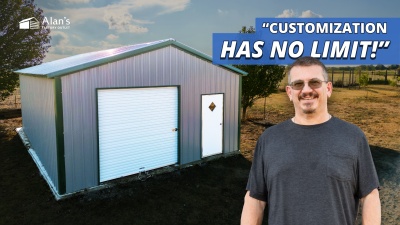
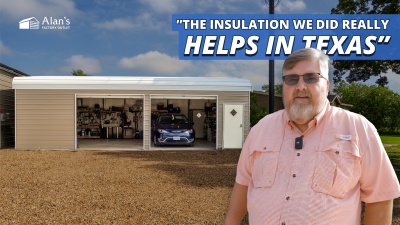
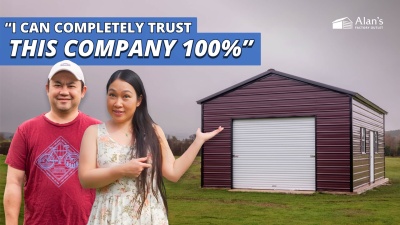
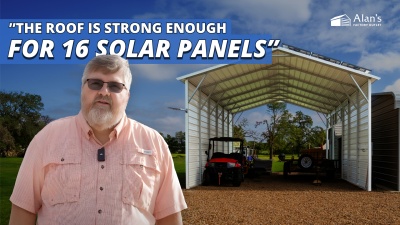
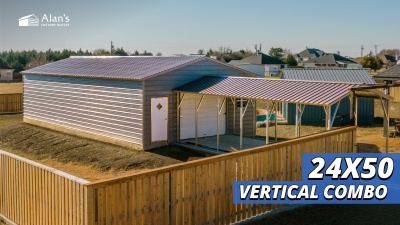
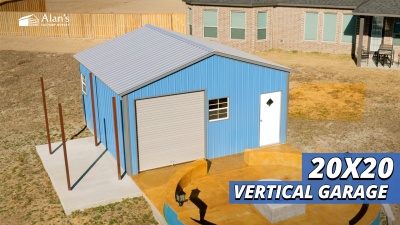
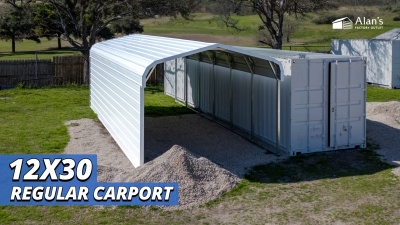

Perfect building perfect customer service and this is my 3rd structure they have built for me. Love them!
Absolutely awesome website!!! Loved this purchasing experience, as it was the easiest I have ever made online!!! The product is just what I was looking for and at a cost that I was looking for too. Everything made here in the good 'ole USA! I HIGHLY RECOMMEND Alan's Factory Outlet!!!
This is the 4th building I've ordered from you so far. Always been extremely pleased. Have no reason to think this time will be any different. You guys always do a AWESOME job!!
The online metal carport configurator on this site is incredible. The level of detail and modularity is outstanding, and I don't know of any other retailer that can compete. Every price is clearly defined, which gave me total peace of mind and made the entire buying process incredibly easy!
Customer service was top notch! Love the new building. Contractors that set it up were well trained and did an amazing job
Easy navigation on website. Loved the customization feature. Exceptional quality of product & installation.
We were so excited to finally purchase and have a new carport installed. The entire experience was better than we could have imagined and it looks great!!
This will be our second shop purchased from you, very happy with the first purchase and plan to make a 3rd purchase in the near future…
This is my second carport purchase from you. I bought my first one 10 years ago and it is still being used today.
Both structures went up so fast it was hard to believe. The crew were very friendly. Nothing I can even complain about. Thanks
Website for design was very easy to use, and allowed for post design editing without having to trash and start again. Phone service was also top notch!
The website was fun to play with and very helpful to design exactly what I was looking for. I'm not trying to toot anybody's horn here, but this might honestly be the best website I have ever used to buy something on. Kudos, boys!
I have purchased buildings from Alan's before and have been extremely pleased with the whole process and quality of the buildings
I recently received my carport and I am extremely happy with it. The quality is excellent, and it perfectly meets my needs. Thank you for a great product!
I HAPPILY RECOMMEND INVESTING IN AN ALANSFACTORY OUTLET CARPORT . ORDERING MY CARPORT WAS VERY EASY, NO PROBLEMS WHATSOEVER. I APPRECIATE THE STAFF, PROFESSIONAL AND KNOWLEDGEABLE. THANK YOU, VIRGINIA CAMPBELL
so far this has been a wonderful experience. Your web page was easy to navigate, as well as easy to build the carport I wanted. I called with questions that were answered by a real person.
Website is fantastic. Able to easily design and modify my garage to my specifications. Emily is customer service has been very helpful and responsive to my questions.
It has been clear and concise, adaptable to the size requirements needed, very user friendly. A tremendous value for the system I purchased for my company.
Very user-friendly site with great 3-D builder feature for planning the product you want. Professional all the way, and thank you for the blessing, and may God bless you as well.
I just ordered so this review is just for the ordering process: Very easy to use website, informative, great options, all upgrades list prices, read many online reviews which gave me confidence to try this company.
What Size Motorcycle Shed Do You Need?
The right size comes down to the bike (or bikes), the gear you store with it, and whether you’ll ever turn a wrench inside.
Most touring motorcycles measure seven to nine feet long and three to four feet wide at the bars, so an eight-foot depth is the absolute minimum just to clear the rear tire.
From there, a few clean reference sizes cover most riders, and we build the same shed in different sizes so you can match the structure to the storage space you actually have on the property.
8×10: Single Bike and Basic Gear
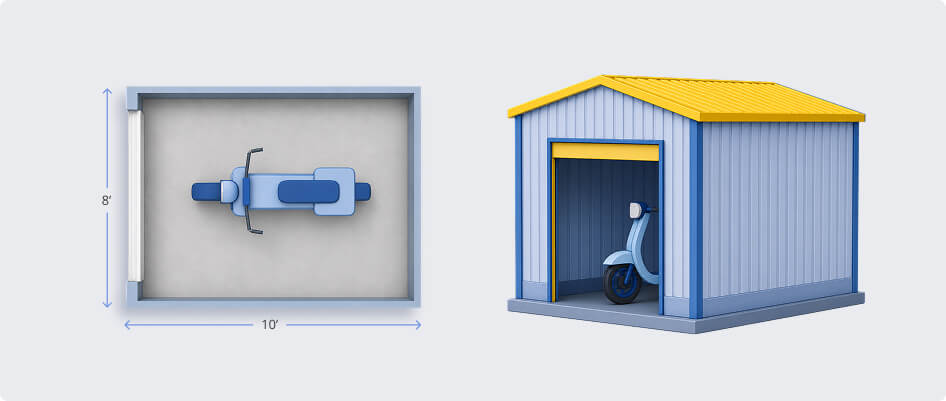
This is the smallest size I’d recommend for a daily rider. An 8×10 fits one full-size touring bike with about three feet of working space behind the rear tire, enough to walk past the bike, hang a jacket, and stack a helmet on a shelf. It’s a tight footprint that drops onto most yards without permitting issues in rural and suburban areas.
Choose this size if you have a single street bike, scooter, or motorbike and don’t plan to do major maintenance inside.
10×15: Two Bikes or a Bike Plus a Workbench
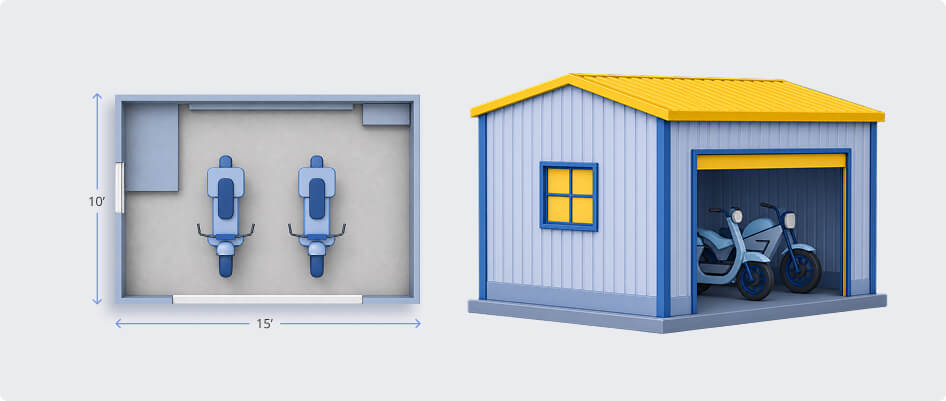
Step up to 10×15, and you can park two bikes side-by-side with room for a workbench against one wall, or one bike with a full-width bench, parts cabinet, and a roll-up door for easy access.
This is the size most two-bike households land on. It’s also where adding double doors starts to make real-world sense. You can roll one bike out without doing a five-point turn around the other.
12×20 and Up: Bike, Workshop, and Storage Combined
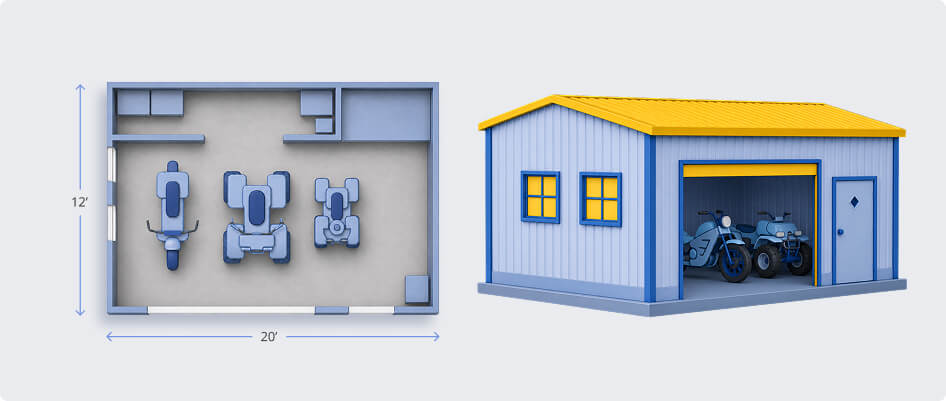
At 12×20 and beyond, there’s room for a bike, an ATV, a lawn mower, a workbench, an air compressor, and shelves for your garden storage and parts. Many of our customers use this size as a hybrid garage shed, with bikes on one end and garden tools and seasonal gear on the other.
If you’re considering a workshop space, don’t size down. The extra width is what lets you actually swing a wrench.
Motorcycle Shed vs. Motorcycle Cover vs. Garage: A Comparison
Riders looking for a motorcycle shed will usually find several options: a fabric cover, a portable shelter, and a permanent metal building. Here’s how those options compare.
| What you get | Motorcycle cover or tarp | Pop-up motorcycle shelter | Metal motorcycle shed |
|---|---|---|---|
| Weather protection: How it handles rain, wind, snow | Blocks direct rain only. Wind can pull it loose; condensation is common under the fabric. | Heavy-duty fabric on a steel frame; many pop-up options rate to 100 mph wind and 35 PSF snow load | Galvanized steel panels and frame. Permanent, all-weather protection rated for snow. |
| Security: Lockable, theft deterrent | None; a thief just lifts the cover | Limited; some have lockable zipper doors or stabilizer anchors, but the fabric cuts | Lockable doors, no windows option, and steel walls. Pairs with a ground anchor for a much harder target. |
| Long-term cost: 5-year picture | Cheapest up front. Most covers need replacement every 1–3 years. | Mid-range; Cover fabric typically needs replacement before the frame | Highest up-front cost; Steel frame and panels are designed for decades of outdoor use |
| Workspace: Can you work on the bike? | No | Limited headroom; not weatherproof for tools or electronics | Yes — Choose width and height that fit a workbench, lift, and lighting |
| Setup: Time and effort to install | Seconds; just drape it | DIY assembly in a few hours; you provide the foundation | We deliver and install for free in 21 states |
| Best fit: Who should pick this | Short-term, indoor-stored bike that occasionally sits outside | Renters, temporary properties, or a stopgap before a permanent build | Owners who want a long-term motorcycle storage solution that doubles as outdoor storage and shop space |
Basically:
- A motorcycle cover handles light rain on a bike that mostly lives indoors.
- A pop-up portable garage or temporary storage shelter is a fine bridge solution.
- A steel storage shed is what you buy when you’re done patching together half-fixes.
Security Features That Actually Keep Your Bike Safe
Most motorcycle thefts happen at home, not in parking lots. Choose your shed features with that in mind, and a determined thief moves on to an easier target.

Lockable double doors
Spec a pair of swing-out steel doors with a hardened padlock or a deadbolt. Lockable doors with concealed hinges resist the pry bar that opens most cheap sheds.

No-window option
Skip the windows on the side facing the road. A thief can’t case what they can’t see.

Ground anchors and floor bolts
Once the shed sits on a slab, run a hardened chain from the bike’s frame to a concrete floor anchor. We can spec the anchor points when you order your shed.

Lockable Motion lighting and visibility doors
Place the shed where it’s visible from the house and add a motion-activated floodlight nearby. Visibility is free security.

A heavy-duty disc lock on the bike itself
Even inside the shed, a wheel lock buys you minutes, and minutes are what most opportunistic thieves don’t have.
Foundation, Ventilation, and Climate Considerations
The shed itself is only half the build. The base it sits on, the airflow inside it, and the way it handles temperature swings determine whether your bike is dry and starts on the first kick come spring.
Concrete Slab vs. Gravel Base
For a motorcycle shed, a poured concrete slab is the gold standard. It’s flat, it doesn’t shift, it lets you bolt down the shed and the bike, and it gives you a clean surface for a side stand or a wheel chock. A 4-inch slab is plenty for most bike-only uses; bump to six inches if you’re parking an ATV or a heavy touring rig alongside.
A compacted gravel pad is a real alternative if a slab isn’t in the budget or you don’t want to pour concrete on rented land. It drains well, supports the structure, and our installers can set the shed directly on a level gravel base in most of our 21-state service area. The trade-off: you can’t bolt floor anchors into gravel, and you’ll get more dust inside.
Ventilation for Stored Fuel and Batteries
This is the part most pop-up shelters and DIY sheds get wrong. A motorcycle parked indoors is still off-gassing fuel vapors, and a sealed lead-acid battery vents small amounts of hydrogen on a charger. Both build up in still air. Aim for cross-flow ventilation: a passive vent low on one wall and a ridge or gable vent up high on the opposite side. Air comes in cool, rises as it warms, and pulls fumes and humidity out the top. We can build vents into your steel storage shed when we customize it. Tell us if the bike will sit on a battery tender all winter, and we’ll size the airflow accordingly.
Insulation and Condensation Control
Condensation, not rain, is what rusts most stored motorcycles. When a metal roof cools off overnight, and the air inside is humid, water beads on the underside of the panels and drips onto your tank. Two fixes work together: insulate the underside of the roof to reduce the temperature swing, and ventilate to drop the humidity. For riders in our cooler-climate states (Pennsylvania, Ohio, Maryland, the Virginias), I usually recommend at least a basic radiant insulation layer; for the Gulf states, ventilation alone is often enough.
Our metal building insulation guide lays out the options if you want to go deeper.
Seasonal Storage Tips for Your Motorcycle
A good shed only does half the job. The way you park the bike for the winter (or for any stretch where it sits more than a couple of weeks) decides what kind of riding season you have when the weather breaks. Here’s the order I run myself.
- Top off the tank and add a fuel stabilizer. A full tank leaves less air inside for condensation to form, and stabilizer keeps the gas from going stale. Run the bike for five minutes to circulate the treated fuel through the lines.
- Change the oil and filter before you park it. Used oil holds combustion acids that eat at engine internals. Drain it warm, refill with fresh, and the bike sits on clean oil all season.
- Put the battery on a tender. Either pull the battery and bring it inside, or leave it in place with a maintainer connected. Cold cycles a battery deeper than most riders realize, and a tender stops the slow self-discharge from killing the cells.
- Inflate the tires and lift the wheels if you can. Sitting on flat-spotted tires for four months is a real concern. Inflate to the max sidewall PSI and use a paddock stand or wheel chocks to take weight off the rubber.
- Cover the intake and exhaust loosely. Mice love a warm, dry tailpipe in February. A clean rag or a purpose-built plug keeps them out without trapping condensation.
- Skip the plastic cover indoors. Inside a sealed shed, a plastic motorcycle cover traps moisture against the bike. A breathable cotton or microfiber cover is fine; bare is also fine if your shed is dry and ventilated.
If you ride year-round in the Southeast, you can skip the full winterization, but the fuel stabilizer and battery tender steps still apply anytime the bike sits more than three weeks.
Free Delivery and Professional Installation in 21 States
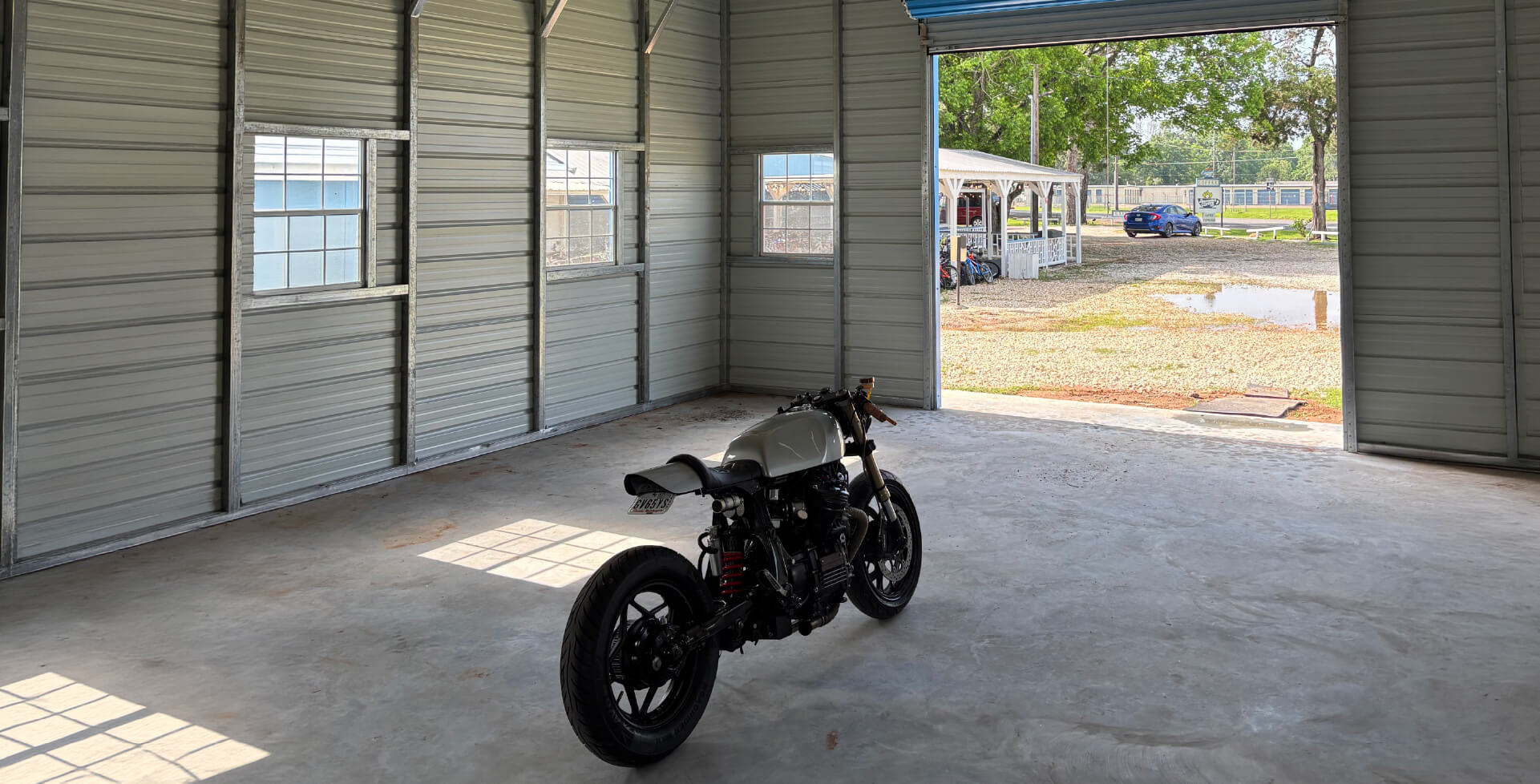
Every metal motorcycle shed we build comes with free delivery and installation in our 21-state service area. No flat-bed rentals, no DIY assembly weekend, no surprise freight bill. We deliver to your slab or gravel pad, and our installers anchor the structure on site.
Free Delivery and Professional Installation in 21 States
Customize Your Motorcycle Shed With Alan’s Factory Outlet
Every motorcycle storage shed we sell is built to your specs, so you can get a high-quality structure that fits your bike, your gear, and the spot in your yard. Some customers use the same build as a hybrid garden shed for the bike on one side and outdoor tools on the other. Pick a roof style (regular, boxed-eave, or vertical), choose dimensions for height, width, and length, and decide on the doors, windows, and walk-in entry points you want.
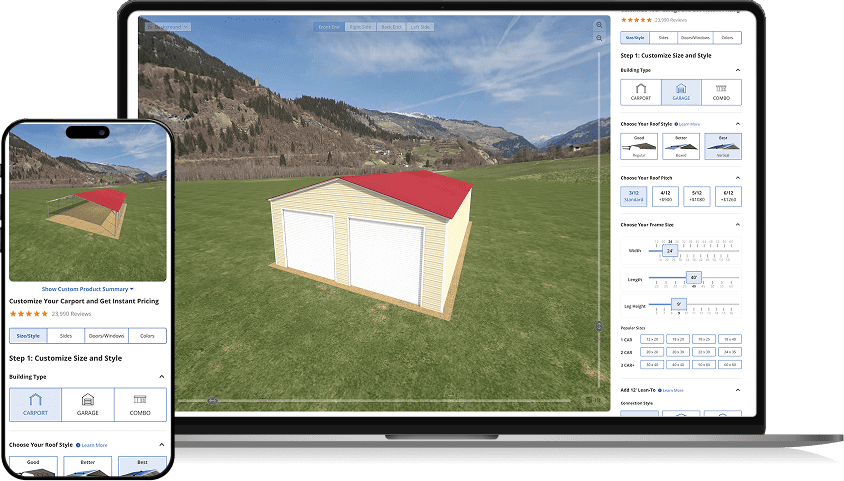
It’s easy to design your build with our 3D garage-builder tool, which shows your shed taking shape (and adjusting in price) as you customize it. You can also pick from 16-panel colors for the walls, roof, and trim.
Once you’ve designed your bike storage exactly the way you want it, place the order, and our team handles the build, the haul, and the install.
If you’d rather talk through it first, you can send us a message, and one of our installers will help you spec the right structure for your property. We also have smaller metal sheds if you only need a tight-footprint outdoor shed for a single scooter or motorbike.
Why Shop Alan’s Factory Outlet for Metal Buildings?
Motorcycle Shed FAQs
The questions below show up most often in customer calls and search results for motorcycle storage.
Top off the tank with a fuel stabilizer added, change the oil, put the battery on a tender, inflate the tires, and use a breathable cover (or no cover at all if the shed is dry). Skip plastic covers indoors. They trap condensation against the bike.
Use cross-flow ventilation: a low intake vent on one wall and a ridge or gable vent on the opposite high side. That setup pulls fuel vapors and humidity out without needing a fan, and we can build the vents into your shed during customization.
No, but a slab is the best base. A 4-inch poured concrete slab keeps the shed level, lets you bolt down floor anchors, and gives you a clean surface for a side stand. A compacted gravel pad is a workable alternative if a slab isn’t in the budget.
Cost depends on size, roof style, doors, windows, and color choices. Because every shed is custom-built, we keep the latest pricing on our metal garage prices page, where you can see the current numbers for each size.
An 8×10 fits one full-size touring bike with about three feet of working room. Step up to 10×15 for two bikes or one bike plus a workbench, and 12×20 if you want a true workshop alongside the bike.

Do you have a general question?
Get quick answers to common questions in our Help Center, an extensive knowledge base available 24/7.
Visit Our Help Center
Do you need something specific?
Call Us:
1-800-488-6903 Contact Us