


Creating a dedicated space for home projects, DIY hobbies, or small repair work starts with the right workshop building: a durable, enclosed metal structure used for hobbies, repairs, and storage.
A metal workshop building offers a durable, high-quality structure with customizable layouts for woodworking, auto repairs, crafting, and more. With open clear-span interiors and sturdy steel frames, these buildings provide ample workspace and storage space in a cost-effective design.
You can choose dimensions based on square footage needs, yard space, and project type. Whether you’re looking to build a small backyard shed or a multi-zone workspace, this guide walks you through workshop building essentials, including layout ideas, roof styles, upgrade options, and an essential features checklist to help you build a functional and lasting home workshop.
Common Workshop Building Uses
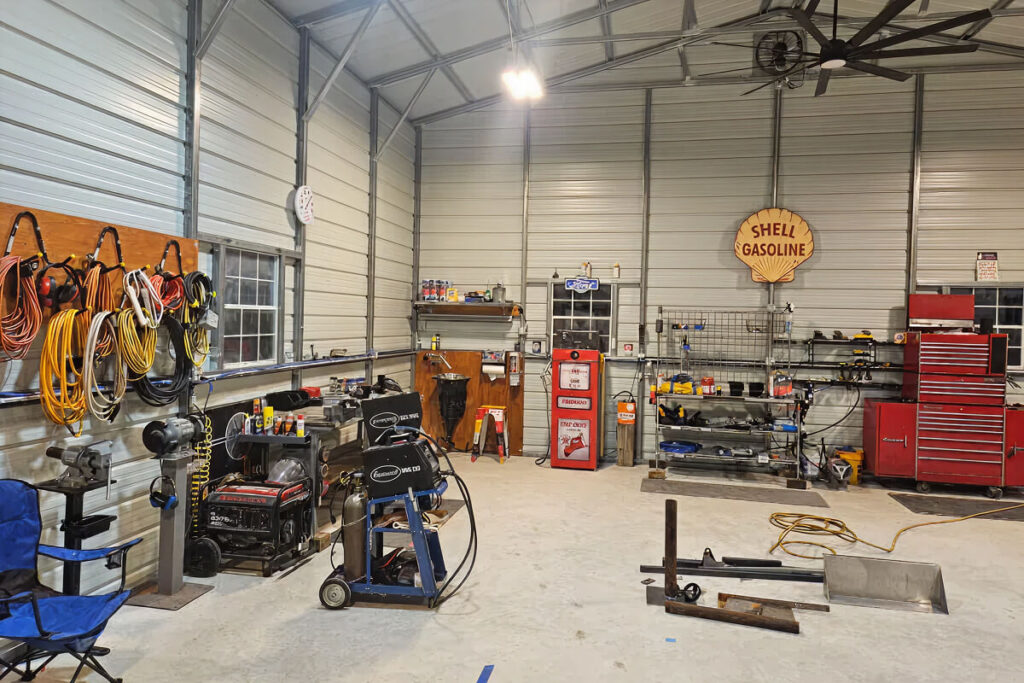
Unlike basic sheds or attached garages, metal workshop buildings feature clear-span interiors that support flexible workspace layouts, multiple workbenches, and equipment zones. Built with steel frames and weather-resistant panels, metal workshops offer durability, versatility, and a low-maintenance design. Outfitted with power outlets, lighting, and insulation, they’re ideal for year-round use.
Metal buildings are popular with both hobbyists and part-time professionals for projects such as:
- Woodworking. Suitable for saws, sanders, and assembly stations.
- Automotive repair. Supports vehicle lifts, part storage, and tool benches.
- Crafting and hobbies. Works well for sewing, painting, or electronics.
- Gardening and seasonal storage. Keeps tools, soil, and supplies organized.
Their versatility and durability make metal workshop buildings a smart choice for multi-use setups that blend workspace and storage.
Standard Workshop Dimensions
Finding the right size is key to ensuring enough floor space for both tools and movement. Here’s a comparison of common workshop sizes:
| Common Workshop Sizes and Best‑Fit Projects | ||
|---|---|---|
| Size (ft) | Floor space (sq. ft) | Best-fit projects |
| 12×20 | 240 | Small hobby space, crafting, tool storage |
| 20×30 | 600 | Woodworking, auto repairs, medium equipment |
| 24×30 | 720 | Multi-zone DIY setups with storage |
| 30×40 | 1,200 | Automotive work, multiple workbenches |
Consider ceiling height when planning for equipment like drill presses or hoists. Taller ceilings improve ventilation and make room for lighting or heating units. Matching square footage to your specific building project helps create a comfortable, functional workshop without wasted space.
Workshop Layout Ideas
Smart layout choices are essential for safety, productivity, and comfort. Even small workshops can feel spacious with good organization. Dividing your workspace into functional zones — such as workbenches, tool stations, and storage — helps improve workflow.
Workbench and Tool Placement
Designing work zones with clear pathways enhances movement and safety.
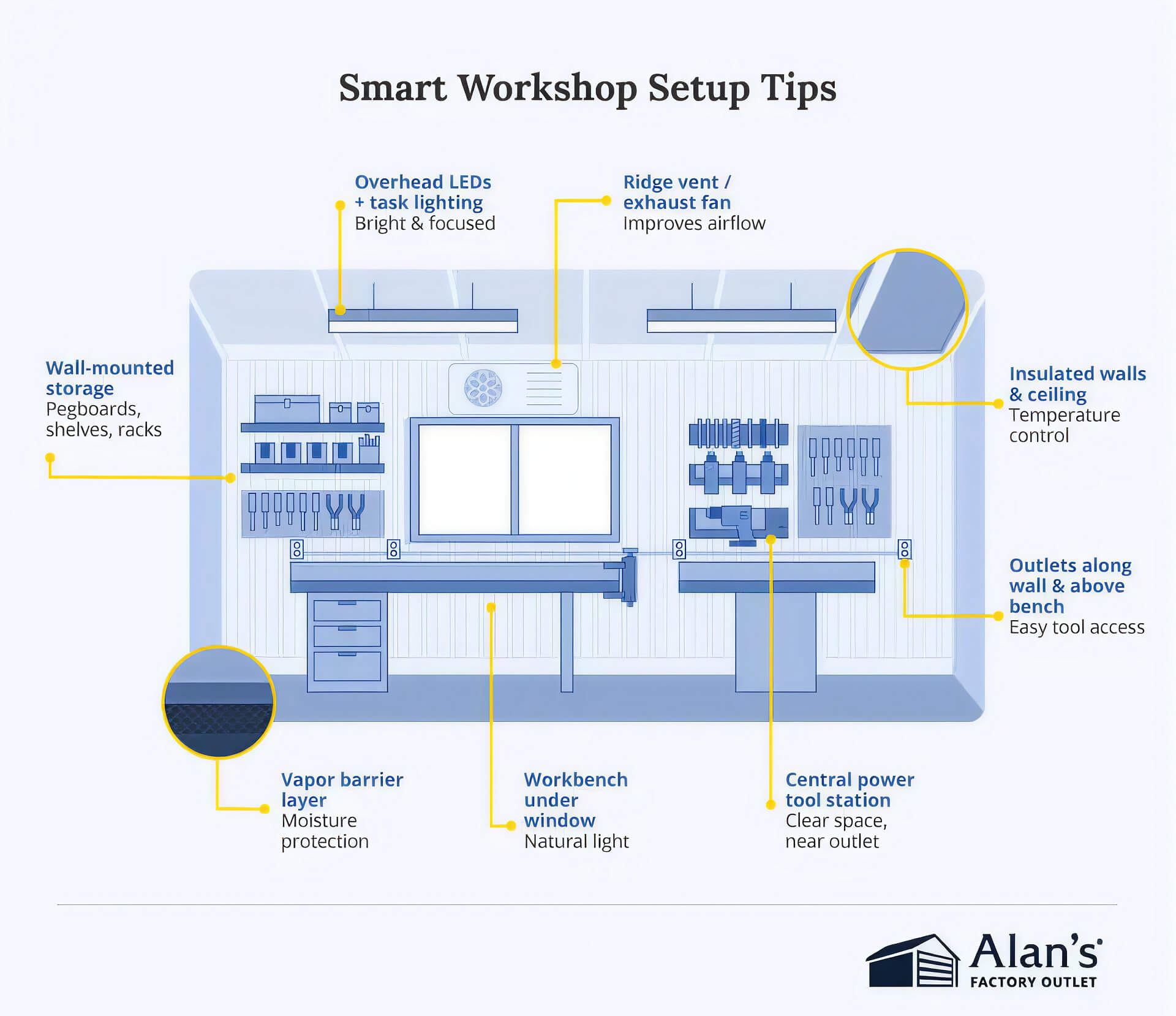
- Workbenches. Position along walls or under windows for natural light.
- Power tools. Centralize heavy-duty tools near outlets with open clearance.
- Vertical storage. Add shelves, pegboards, and racks to save floor space.
These simple layout choices support a clean, safe, and efficient home workshop.
Electrical and Lighting Setup
An effective electrical layout keeps your tools powered and your workspace bright.
- Power outlets. Place outlets along walls and above benches for flexibility.
- Lighting. Combine LED overheads with task lighting at benches.
- Electrical capacity. Plan for saws, compressors, and small heating units.
With the right electrical setup, your workspace will be ready for both heavy-duty projects and everyday use.
Ventilation and Climate Control
Good airflow supports safe working conditions and extends your building’s lifespan.
- Ventilation. Use ridge vents, exhaust fans, or operable windows to improve air quality.
- Insulation. Insulated walls and ceilings help maintain temperature.
- Vapor barrier. Prevents moisture buildup that could damage tools and projects.
These additions protect your investment while making your space more comfortable year-round.
Essential Workshop Features Checklist
A well-outfitted workshop includes more than just tools. Here’s a checklist of must-have features:
- Power outlets. Multiple outlets keep your tools and chargers within reach.
- Insulation and vapor barrier. Boosts year-round comfort and prevents condensation.
- Ventilation. Encourages airflow and reduces fumes from paints or chemicals.
- Lighting. Bright overhead and task lights improve visibility.
- Tool storage. Cabinets, racks, and drawers keep things organized.
- Workbenches. Strong, ergonomic benches make DIY work easier.
- Flooring considerations. Concrete or cushioned mats reduce fatigue.
- Security features. Reinforced doors and locks help protect equipment.
Combined, these features create a workshop that’s safe, efficient, and built to last.
Roof-Style Options for Workshop Buildings
Roof style affects your building’s durability, weather resistance, and maintenance.
- Vertical roof. Ideal for heavy snow and rain. Durable and low-maintenance.
- Boxed-eave roof. Offers a clean look and good weather protection at a mid-range price.
- Regular roof with curved edges. Most affordable. Curved edges make it best for mild climates.
Choosing the right roof style helps protect your investment while fitting your budget and local weather conditions.
Upgrade Options for Workshop Buildings
Adding upgrades helps tailor your building to your needs. These are popular choices:
Insulation and Vapor Barriers
Adding insulation supports year-round usability while vapor barriers guard against humidity and rust. Both are useful for temperature-sensitive tools and supplies.
Electrical and Plumbing Add-Ons
Extra circuits, lighting, and outlets improve power access. Optional plumbing allows for sinks or wash stations.
Custom Storage and Built-Ins
Shelves, cabinets, and tool walls boost efficiency. Built-in storage cuts clutter and improves workflow.
How Much Does a Workshop Building Cost?
Workshop building costs vary based on size, materials, and upgrades. Here’s a general pricing overview:
| Typical Cost Ranges for Building a Home Workshop by Size | ||
|---|---|---|
| Size (ft) | Floor space (sq. ft) | Typical cost range* |
| 12×20 | 240 | $4,200–$8,000 |
| 20×30 | 600 | $6,400–$11,700 |
| 30×40 | 1,200 | $9,000–$12,600 |
| 40×60 | 2,400 | $31,700–$46,000 |
*All prices except 40×60 encompass the range from a regular roof at the lowest height to a vertical roof at the highest height. They are all for garages. For 40×60, only the vertical roof is available.
Other factors include roof style, insulation, custom storage, and local contractor rates. Choosing a building kit can reduce labor costs and help DIYers manage budgets more easily.
Reimagine Your Ideal Workshop Space
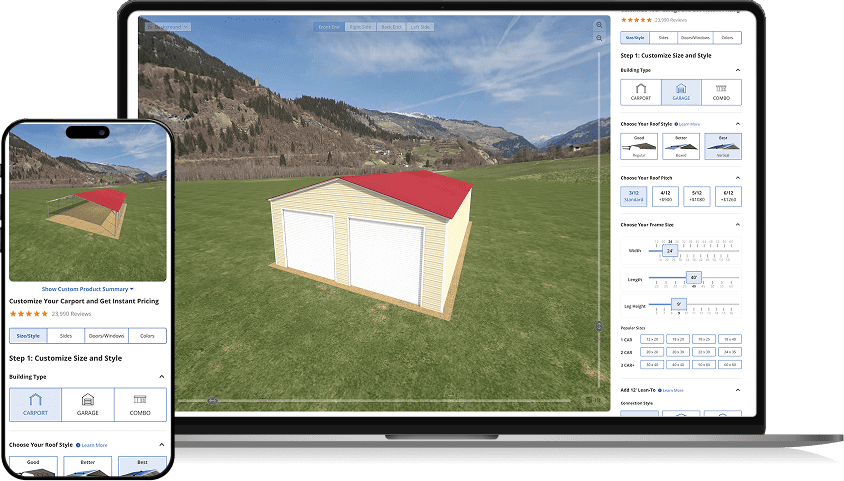
A metal workshop building gives you a durable, customizable solution for your projects. From layout planning to adding must-have features, you can create a functional workspace that suits your needs and grows with your goals. Use Alan’s Factory Outlet’s 3D Carport & Metal Garage Builder to plan your space and request a free quote. We offer free delivery and installation in our 21-state service area.
Free Delivery and Professional Installation in 21 States

FAQs About Workshop Buildings
These frequently asked questions are based on common concerns from homeowners planning metal workshop projects. Whether you’re considering a DIY build or weighing feature upgrades, these answers can help you make informed decisions.
Is it cheaper to build your own workshop?
DIY workshop construction using a building kit can lower labor costs. These kits offer flexibility and are ideal for experienced DIYers. Hiring a local contractor may be better for larger, more complex buildings.
What permits are needed to build a workshop?
Permit requirements vary by location. Most areas require permits for buildings over a certain size. Check your city or county zoning rules and consult a local contractor if needed.
What are the essential tools for a home workshop?
Essential tools include:
- Cutting tools. Saws and blades for shaping materials.
- Measuring tools. Tape measures, levels, and squares for accuracy.
- Power tools. Drills, sanders, and grinders to speed up work.
- Safety gear. Gloves, goggles, and respirators for personal protection.
These basics help you maintain a functional, safe DIY workspace at home.