

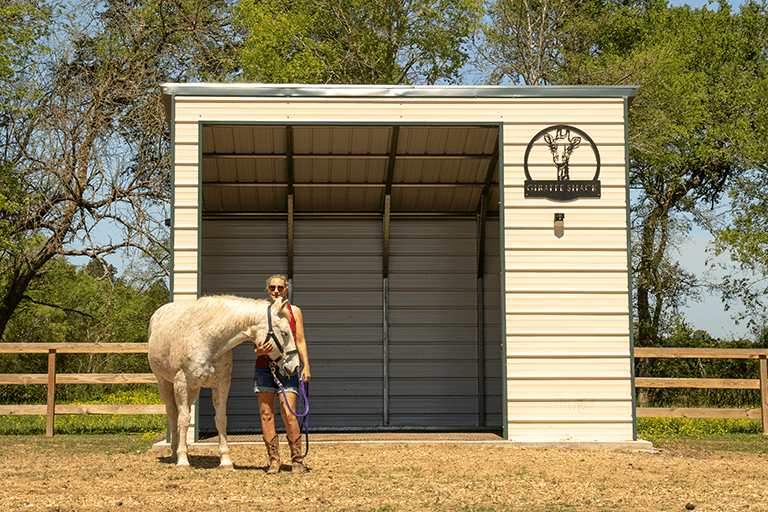
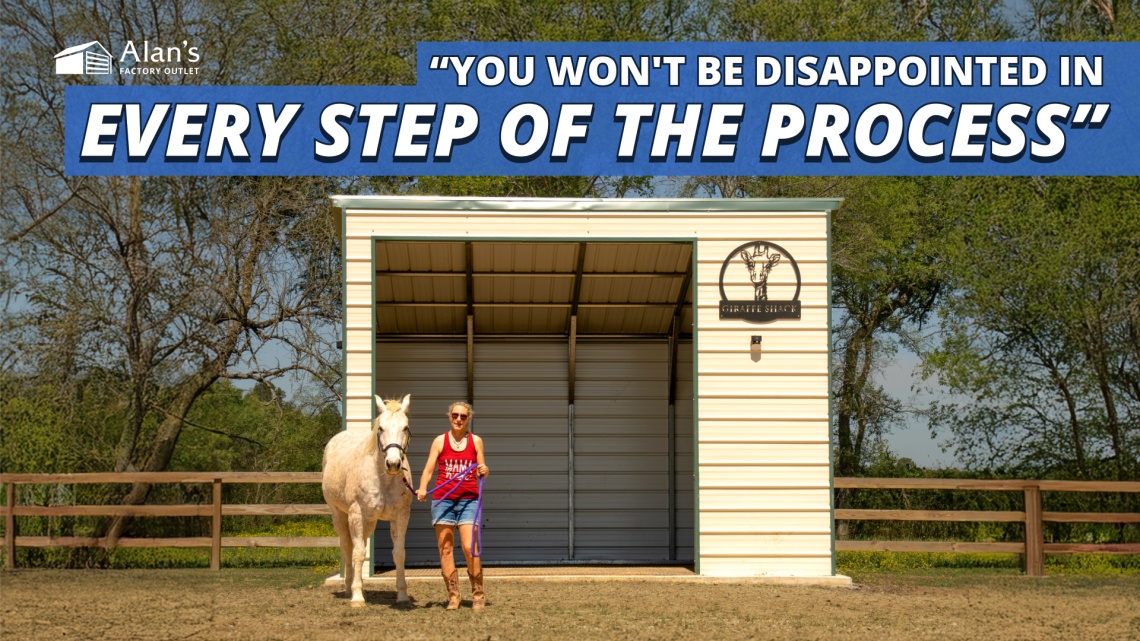
A loafing shed (also called a run-in shed or field shelter) is a three-sided, open-front structure that gives horses, cattle, goats, and other livestock year-round protection from rain, wind, sun, and snow, all while letting them move in and out freely.
For more than 22 years, Alan’s Factory Outlet has served over 100,000 customers with durable metal structures built for rural and suburban properties. This guide covers sizing, placement, and planning for a metal loafing shed that protects animals in every season.

Trusted by 100,000+ customers across the U.S.
Perfect building perfect customer service and this is my 3rd structure they have built for me. Love them!
Absolutely awesome website!!! Loved this purchasing experience, as it was the easiest I have ever made online!!! The product is just what I was looking for and at a cost that I was looking for too. Everything made here in the good 'ole USA! I HIGHLY RECOMMEND Alan's Factory Outlet!!!
This is the 4th building I've ordered from you so far. Always been extremely pleased. Have no reason to think this time will be any different. You guys always do a AWESOME job!!
The online metal carport configurator on this site is incredible. The level of detail and modularity is outstanding, and I don't know of any other retailer that can compete. Every price is clearly defined, which gave me total peace of mind and made the entire buying process incredibly easy!
Customer service was top notch! Love the new building. Contractors that set it up were well trained and did an amazing job
Easy navigation on website. Loved the customization feature. Exceptional quality of product & installation.
We were so excited to finally purchase and have a new carport installed. The entire experience was better than we could have imagined and it looks great!!
This will be our second shop purchased from you, very happy with the first purchase and plan to make a 3rd purchase in the near future…
This is my second carport purchase from you. I bought my first one 10 years ago and it is still being used today.
Both structures went up so fast it was hard to believe. The crew were very friendly. Nothing I can even complain about. Thanks
Website for design was very easy to use, and allowed for post design editing without having to trash and start again. Phone service was also top notch!
The website was fun to play with and very helpful to design exactly what I was looking for. I'm not trying to toot anybody's horn here, but this might honestly be the best website I have ever used to buy something on. Kudos, boys!
I have purchased buildings from Alan's before and have been extremely pleased with the whole process and quality of the buildings
I recently received my carport and I am extremely happy with it. The quality is excellent, and it perfectly meets my needs. Thank you for a great product!
I HAPPILY RECOMMEND INVESTING IN AN ALANSFACTORY OUTLET CARPORT . ORDERING MY CARPORT WAS VERY EASY, NO PROBLEMS WHATSOEVER. I APPRECIATE THE STAFF, PROFESSIONAL AND KNOWLEDGEABLE. THANK YOU, VIRGINIA CAMPBELL
so far this has been a wonderful experience. Your web page was easy to navigate, as well as easy to build the carport I wanted. I called with questions that were answered by a real person.
Website is fantastic. Able to easily design and modify my garage to my specifications. Emily is customer service has been very helpful and responsive to my questions.
It has been clear and concise, adaptable to the size requirements needed, very user friendly. A tremendous value for the system I purchased for my company.
Very user-friendly site with great 3-D builder feature for planning the product you want. Professional all the way, and thank you for the blessing, and may God bless you as well.
I just ordered so this review is just for the ordering process: Very easy to use website, informative, great options, all upgrades list prices, read many online reviews which gave me confidence to try this company.
What Is a Loafing Shed and How Farmers Use Them
A loafing shed is an open-sided livestock shelter that protects animals from the weather while maintaining strong airflow. The three-sided structure blocks weather elements, while the open front lets animals enter and leave freely. This design works well for horses and other livestock because it combines protection with ventilation.
A loafing shed serves a different role than a fully enclosed horse barn. Barns provide individual stalls, storage, and controlled housing for horses that need daily management or protection. A run-in shed works best for animals that spend most of their time outdoors and only need shelter during harsh weather.
Because of that flexibility, many farmers prefer open-sided horse shelters over enclosed barns. Livestock can move naturally across pasture while still having a dependable livestock shelter available whenever the weather changes.
How Big Should a Loafing Shed Be?
Choosing the right loafing shed size depends on the type of livestock and the number of animals using the shelter. Each animal needs enough covered space to move comfortably, rest, and stay protected. Here are the general guidelines per animal type:
 Horses Plan for 100 sq ft for the first horse and 50 sq ft for each additional one. A 10×18 shed works for one to two horses; three to four horses need at least a 12×24. |  Cattle Allow about 60 sq ft per cow, or 100 sq ft per cow-calf pair. A 12×24 shed comfortably covers four to five cows. |  Goats Goats need roughly 15–25 sq ft per animal. A 10×12 shed typically fits two to four goats. |
 Sheep Plan for 16–25 sq ft per ewe with lambs, or eight to 10 sq ft per sheep if they aren’t lambing. |  Pigs Budget a minimum of 50 sq ft per pig. |
Larger breeds like draft horses may need more space than these baselines suggest. A horse loafing shed in particular should give animals enough room to enter, turn, and stand without crowding. When in doubt, size up. Also, consider multiple smaller sheds rather than one large one, since dominant animals can block a single entrance.
Metal vs. Wood Loafing Sheds: Which Is Better?
Farmers often compare metal and wood shelters before choosing a loafing shed. Both materials provide protection for livestock, but they differ in maintenance, longevity, and installation time. Wood shelters can look traditional, yet they often require frequent repairs. Boards may rot, warp, or suffer chewing damage from horses and other animals.
The following comparisons highlight why many property owners prefer metal structures:
- Lower maintenance. Metal siding does not rot, crack, or attract insects like wooden boards. Property owners spend less time repairing or replacing materials over the life of the loafing shed.
- Stronger weather resistance. A durable metal loafing shed withstands heavy rain, wind, and snow more effectively than many wood shelters. The steel frame helps the structure maintain its shape during severe weather.
- Faster installation. Prefabricated metal shelters can be delivered and assembled quickly. This approach saves time compared with sourcing lumber and constructing a wooden loafing shed from the ground up.
- Long-term durability. Steel components resist chewing damage from horses and other livestock. That added durability helps the structure last longer with fewer structural repairs.
Standard Features of Metal Loafing Sheds
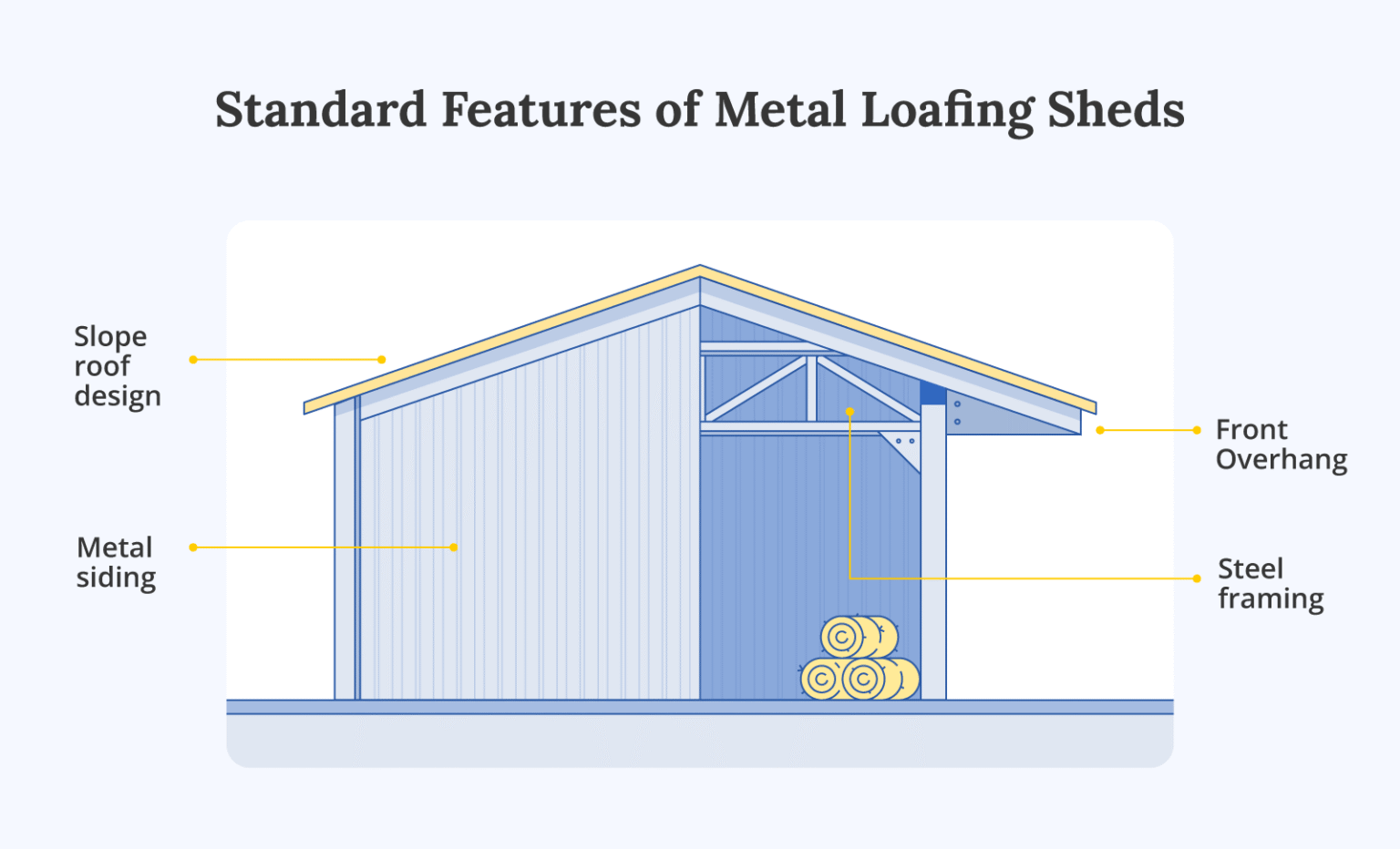
Most metal loafing barns share several structural elements that protect livestock from weather while maintaining airflow. These standard features work together to create a dependable shelter that performs well throughout the year.
Common design elements include the following:
- Slope roof design. A sloped roof directs rainwater and snow away from the shelter opening. This design helps keep the interior dry and reduces moisture buildup around the livestock shelter.
- Steel framing. Galvanized steel framing supports the roof structure and helps the loafing shed maintain stability during wind or storms. Strong structural steel components also help the shelter hold its shape over time.
- Metal siding. Corrugated metal siding forms the walls that shield animals from wind and rain. This material also contributes to the overall durability of the shelter.
- Front overhang. Many shelters include an overhang that extends the roof slightly past the entrance. The added coverage helps block rain or snow from blowing directly into the loafing shed.
These standard features work together to create a durable structure that protects animals while requiring minimal upkeep.
Optional Upgrades and Add-Ons
Many livestock owners customize their loafing shed with upgrades that improve convenience and storage. Adding a few practical features can turn a simple shelter into a multipurpose structure that supports daily farm tasks.
Common upgrades include:
- Tack room. A small enclosed tack room provides a secure place to store saddles, bridles, grooming tools, and other equipment.
- Feed storage area. Some shelters include enclosed sections that keep hay or feed dry and protected from weather exposure.
- Partial side walls. Adding partial walls improves wind protection while still maintaining airflow inside the shelter.
- Integrated storage space. Some property owners include extra storage space for tools, fencing supplies, or farm equipment, turning the shelter into a combined livestock shelter and storage shed.
- Horse stalls. Larger structures may include horse stalls along one side, creating a hybrid design that functions as both a loafing shed and a small horse-housing area.
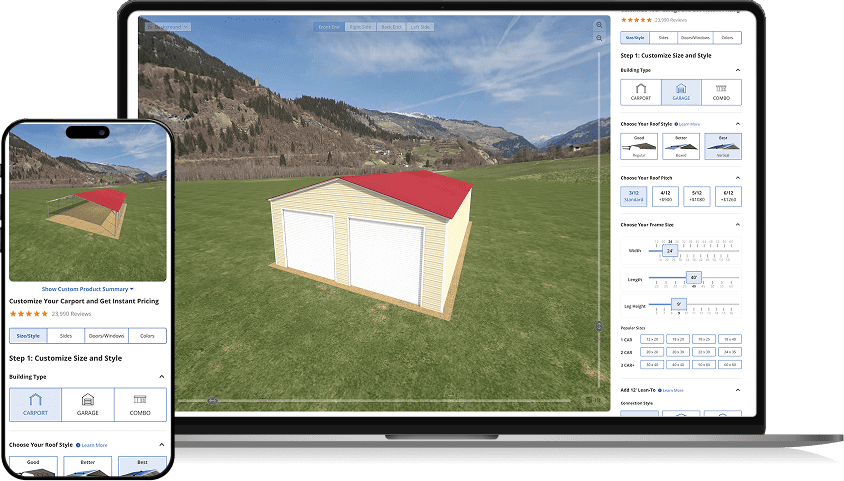
Want to see your loafing shed take shape? Try the 3D Carport & Metal Garage Builder to visualize custom features and create a layout that fits your livestock needs.
Where to Place a Loafing Shed on Your Property
Choosing the right location helps a loafing shed protect animals effectively year-round. Good placement improves drainage, reduces wind exposure, and keeps the shelter comfortable for livestock during storms or extreme heat.
Start by placing the livestock shelter on level ground. Flat terrain helps maintain structural stability and prevents water from pooling around the base. Proper drainage is also important. Position the shelter so rainwater flows away from the open side rather than into the covered area where animals stand.
Wind direction is another key factor. Most livestock owners position the open side of the loafing shed away from prevailing winds. This setup helps block cold gusts and driving rain while still maintaining ventilation inside the shelter.
Preparing a stable base also improves long-term performance. Many property owners install a crushed stone or gravel foundation to support horse shelters and improve drainage around the structure. A proper base helps prevent mud buildup and creates a more stable surface for livestock.
Prefabricated Loafing Shed Options
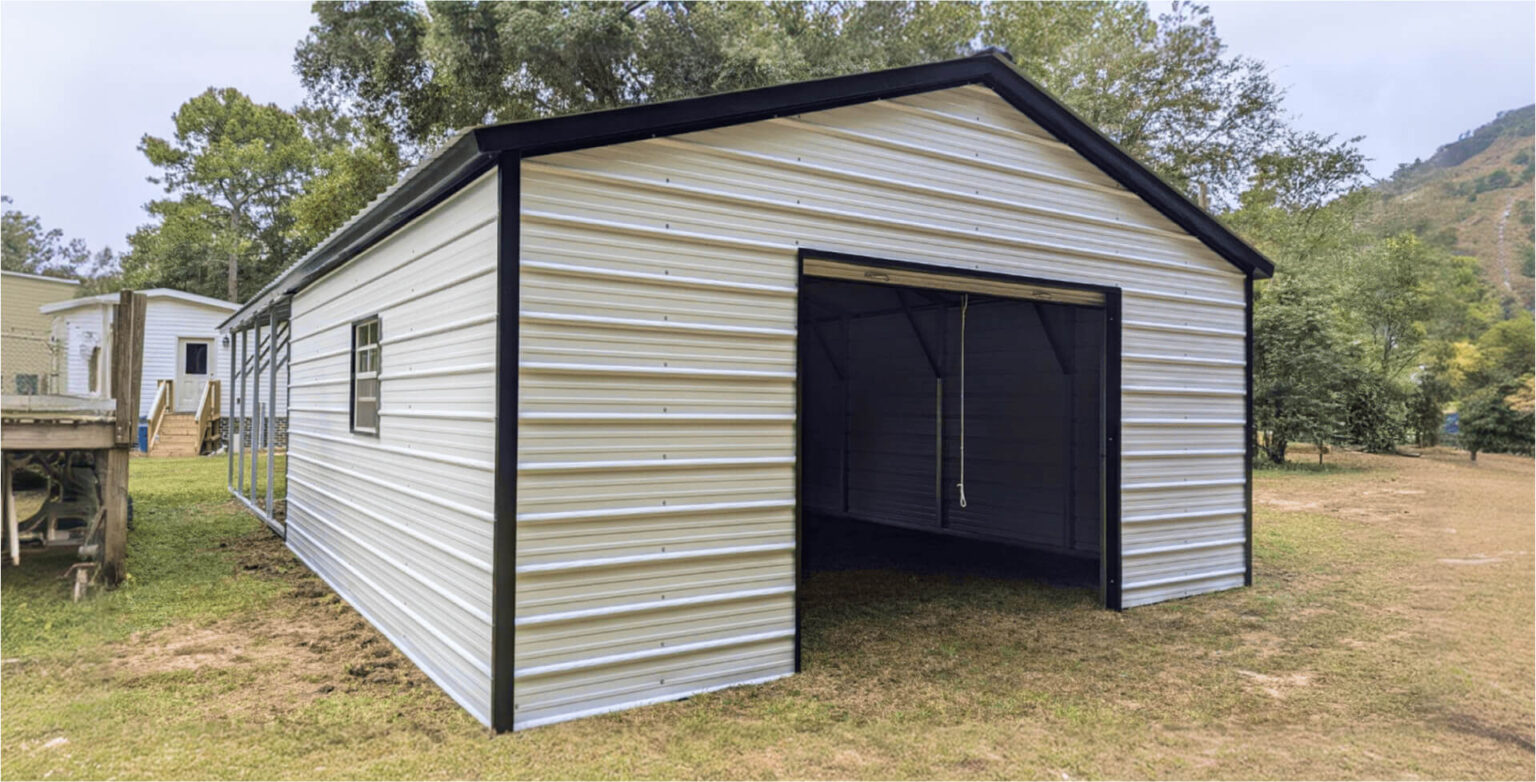
Prefabricated metal shelters arrive with pre-cut components and standardized designs. This approach speeds up construction and creates a durable structure that protects animals sooner.
The key advantages of prefab sheds include:
- Flexible sizing options. Prefabricated shelters come in a range of standard sizes, making it easy to find a configuration that fits your herd without custom construction costs.
- Consistent construction quality. Factory-produced components create reliable structural connections and uniform metal siding coverage, improving long-term durability.
- Predictable pricing. Because components are standardized, prefab shelters come with clearer up-front costs than custom-built wooden structures, making budgeting more straightforward.
These advantages make a metal loafing shed a practical choice for farms that need dependable livestock protection without lengthy construction projects.
Loafing Shed Pricing Factors
Several factors influence loafing shed pricing, including:
- Structure size. Larger shelters require more materials and structural support. Increasing the width, length, or height of a loafing shed generally raises the overall pricing.
- Material selection. A metal loafing shed often costs more up front than basic wood structures, but steel construction reduces long-term maintenance and repair needs.
- Customization and upgrades. Adding upgrades such as a tack room, partial enclosures, or additional panels can increase the total price.
- Storage additions. Some property owners include enclosed sections or storage buildings within the structure for equipment, feed, or supplies, which adds to the final cost.
- Installation requirements. Site preparation, ground leveling, and foundation work may also influence pricing depending on the property conditions.
Considering these factors helps property owners choose a shelter that fits their livestock needs while balancing durability and long-term value.
Permits and Local Regulations
Before installing a loafing shed, it is important to check local building requirements. Permit rules vary by location and often depend on the size of the structure, property zoning, and local construction codes.
In many rural areas, agricultural buildings follow different regulations from residential structures. A livestock shelter may not require the same permits as a residential storage shed, especially if it is used strictly for farm operations.
However, some municipalities still require permits for larger buildings or permanent foundations. Checking local zoning rules and building codes before installation helps property owners avoid delays or compliance issues.
Find the Right Metal Loafing Shed for Your Animals
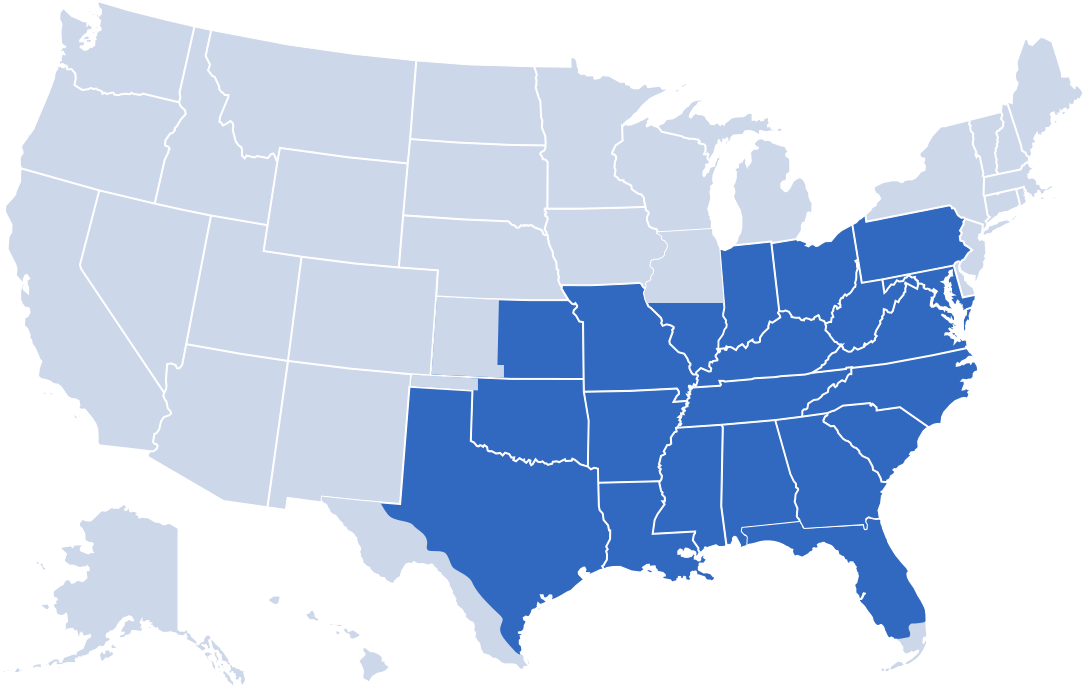
A properly sized, well-placed metal loafing shed gives livestock dependable year-round shelter with minimal upkeep. Alan’s Factory Outlet provides free delivery and installation within our 21-state service area, helping property owners set up reliable livestock shelters quickly without managing a lengthy construction project.
Free Delivery and Professional Installation in 21 States
If you are planning a new shelter, you can design your structure with our easy-to-use 3D builder and request a free quote.