

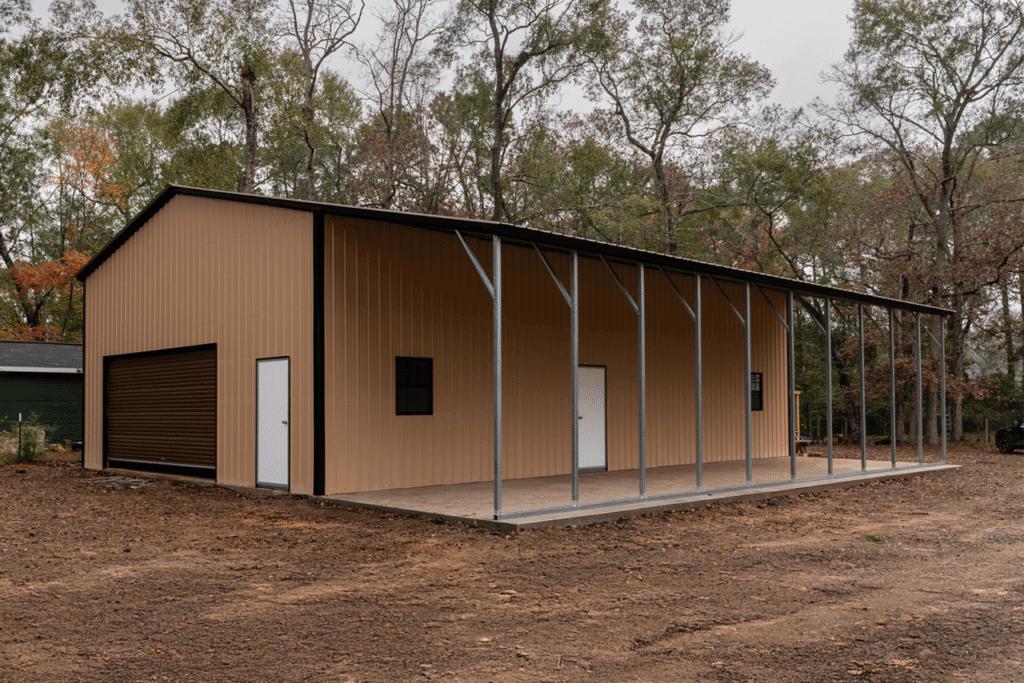
If you need extra storage but don’t want to give up yard space or take on a major construction project, a lean-to shed might be worth a good look. The name comes from exactly what it does: The structure leans against an existing building, using that wall as one side of the frame.
For rural and suburban homeowners, a lean-to adds ample covered space for tools, equipment, firewood, or vehicles without expanding your property footprint. Depending on the configuration, the same basic concept works as a lean-to garage for a vehicle, a lean-to carport for covered parking, or a lean-to building for a dedicated workspace.
In this guide, we cover everything you need to know about lean-to shed sizes, materials, and installation considerations so you can find the right storage solution for your property.
Lean-to Sizes and Configurations
Lean-tos come in various layouts to suit different properties and purposes, including compact square-foot additions and larger outdoor storage shed setups.
Lean-to Attached to a House
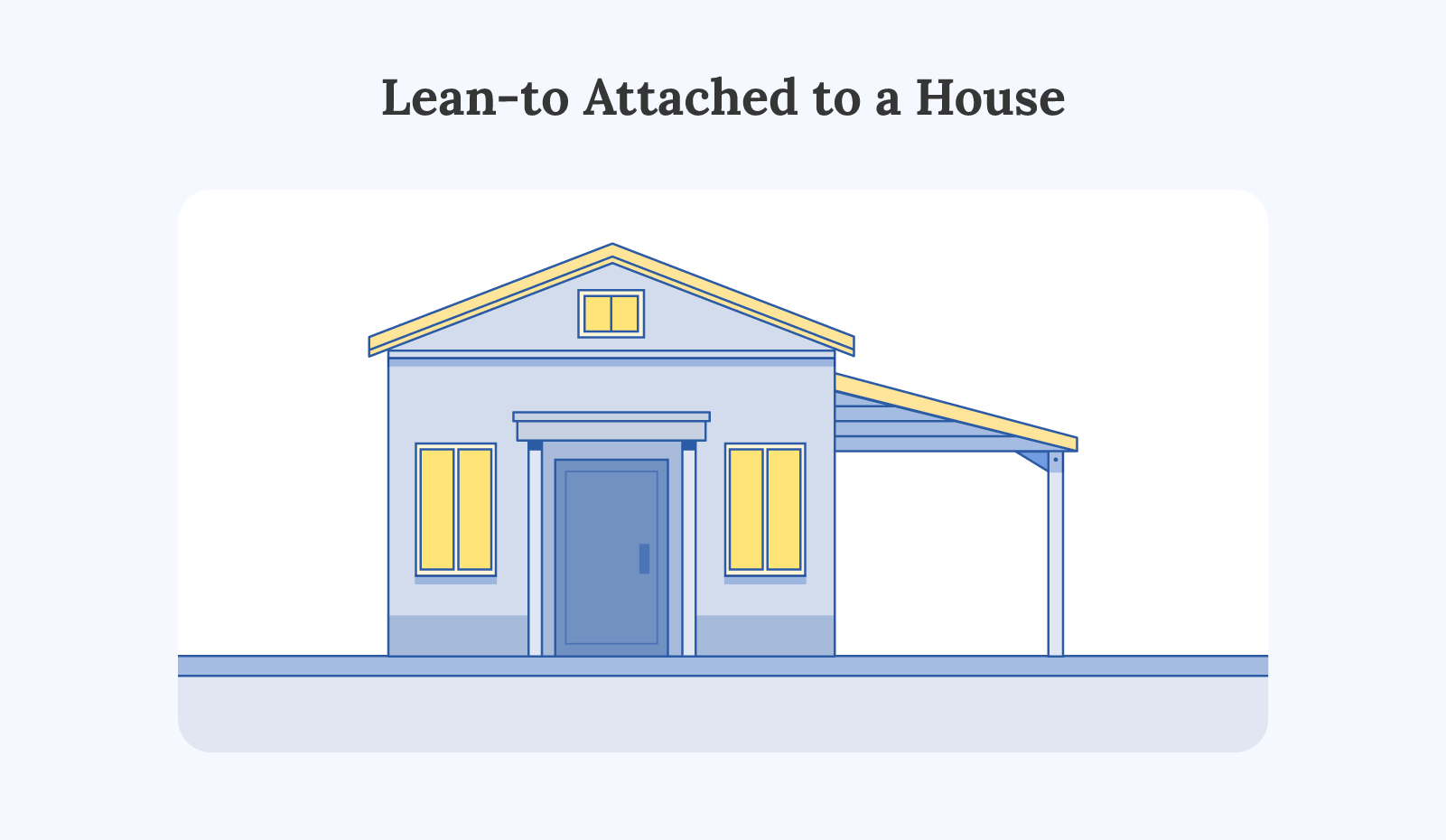
Running a lean-to off an exterior home wall is a clever way to add covered space without straying far from the back door. It keeps your backyard garden tools, lawn mowers, and seasonal gear right where you need them without having to trudge across the yard in the rain.
You can line the walls with shelving to organize everything from potting soil to pruning shears, and since it connects directly to the house, grabbing what you need takes seconds.
Lean-to Extending From a Garage
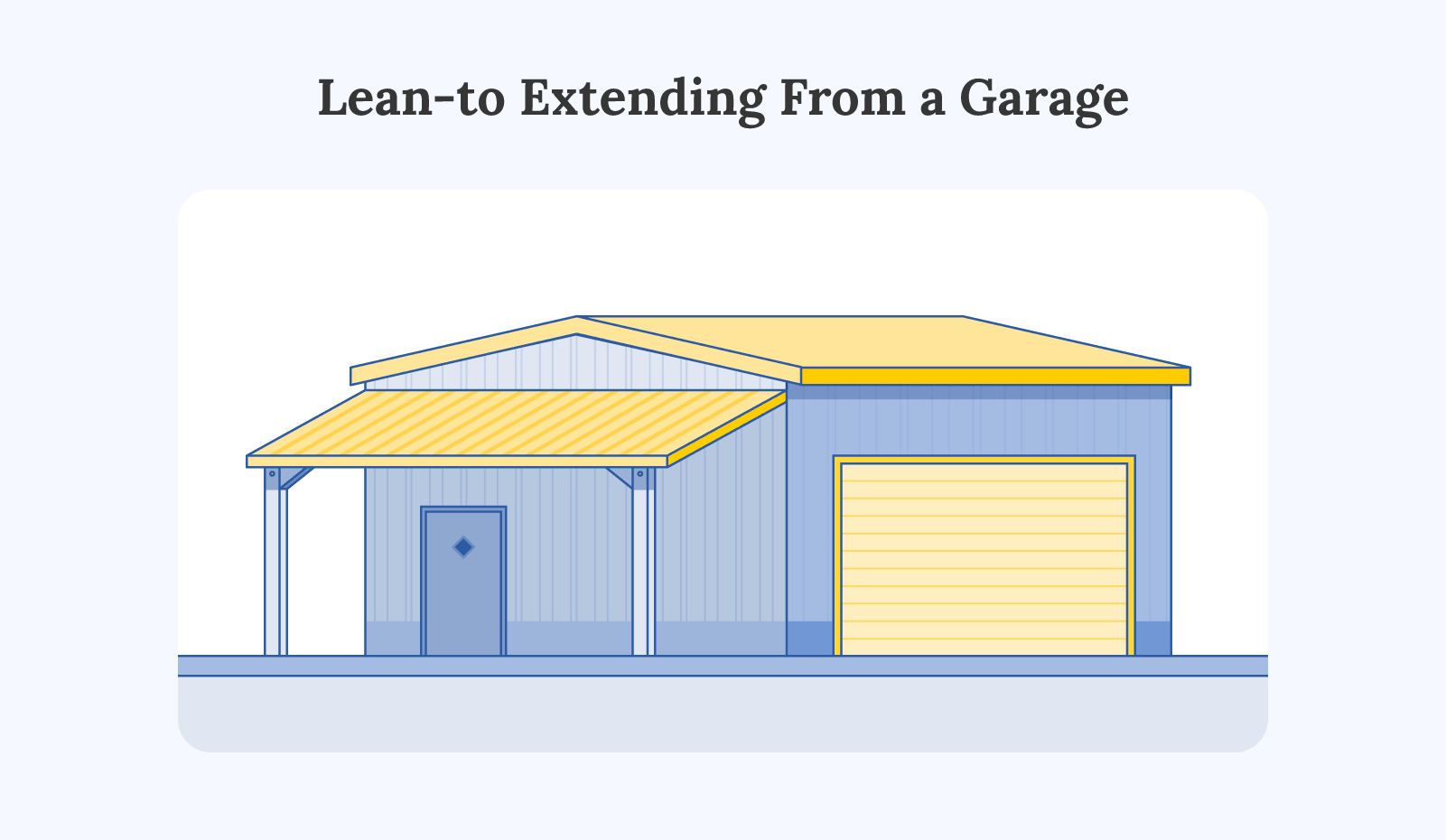
Attaching a lean-to to an existing garage is a smart way to grow your storage or workspace without giving up yard space. The garage wall makes up one side of the structure, so you’re getting a covered extension for surprisingly little effort.
Add double doors on the open end, and it functions as a lean-to carport for a smaller vehicle, trailer, or ATV. Keep it open on the sides, and it becomes a covered workspace to work on projects, store heavy-duty equipment, or park a riding mower under cover. A shed door on one end can also close off part of the space if you want a more enclosed area for tools or supplies.
Freestanding Lean-to Shed for Equipment or Firewood
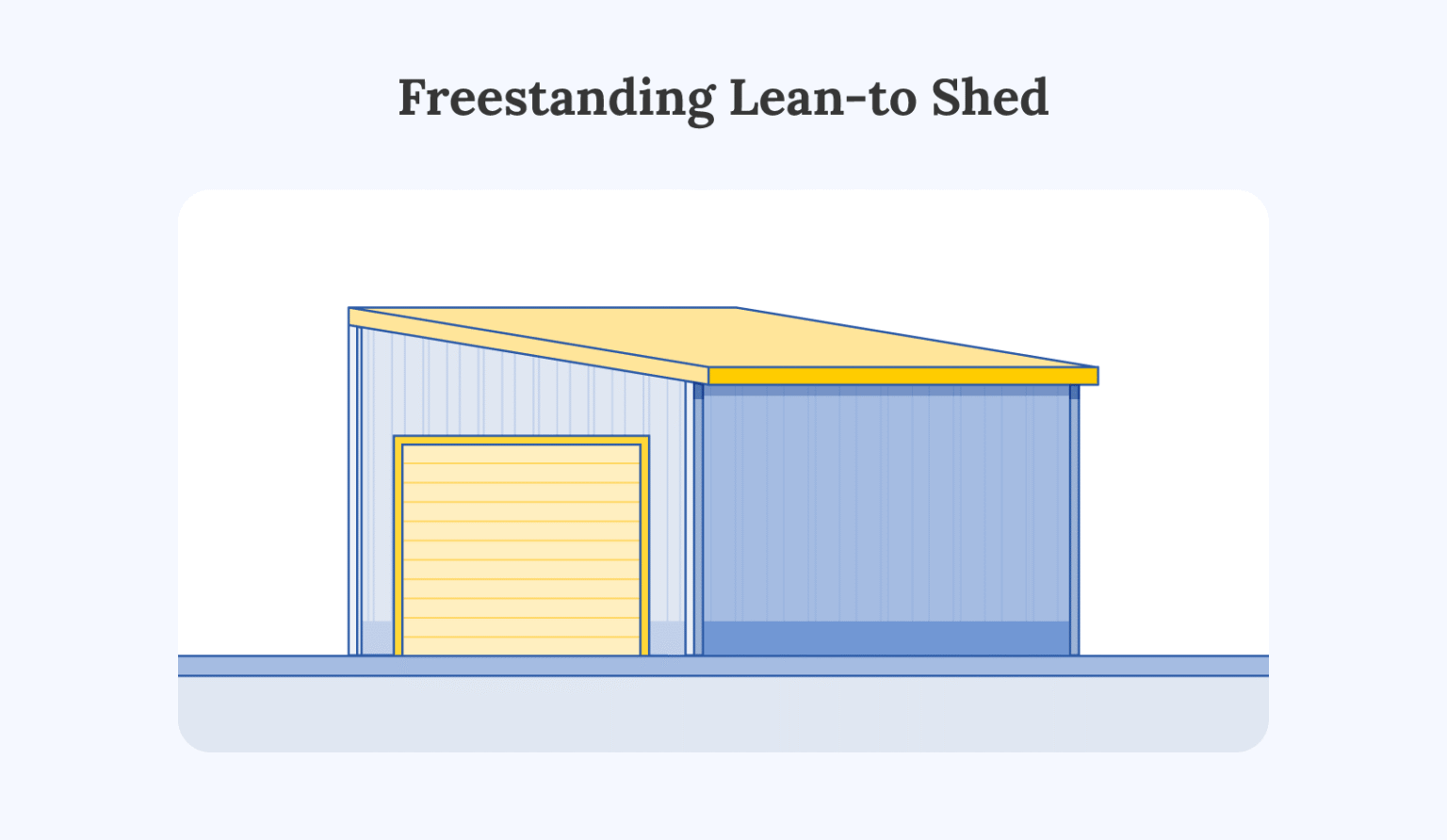
Not every lean-to needs to borrow a wall. A freestanding lean-to storage shed keeps the same sloped roof design but stands entirely on its own, making it a flexible option when you’re placing it away from the house or garage.
It’s a go-to setup for firewood storage, as the angled roof sheds rain and snow while keeping air moving through the stack. As an outdoor storage shed, it also handles the bulkier stuff that doesn’t belong indoors, such as:
- Lawn equipment
- Garden tractors
- ATV gear
- Landscape supplies
Lean-to Shed vs. Freestanding Shed
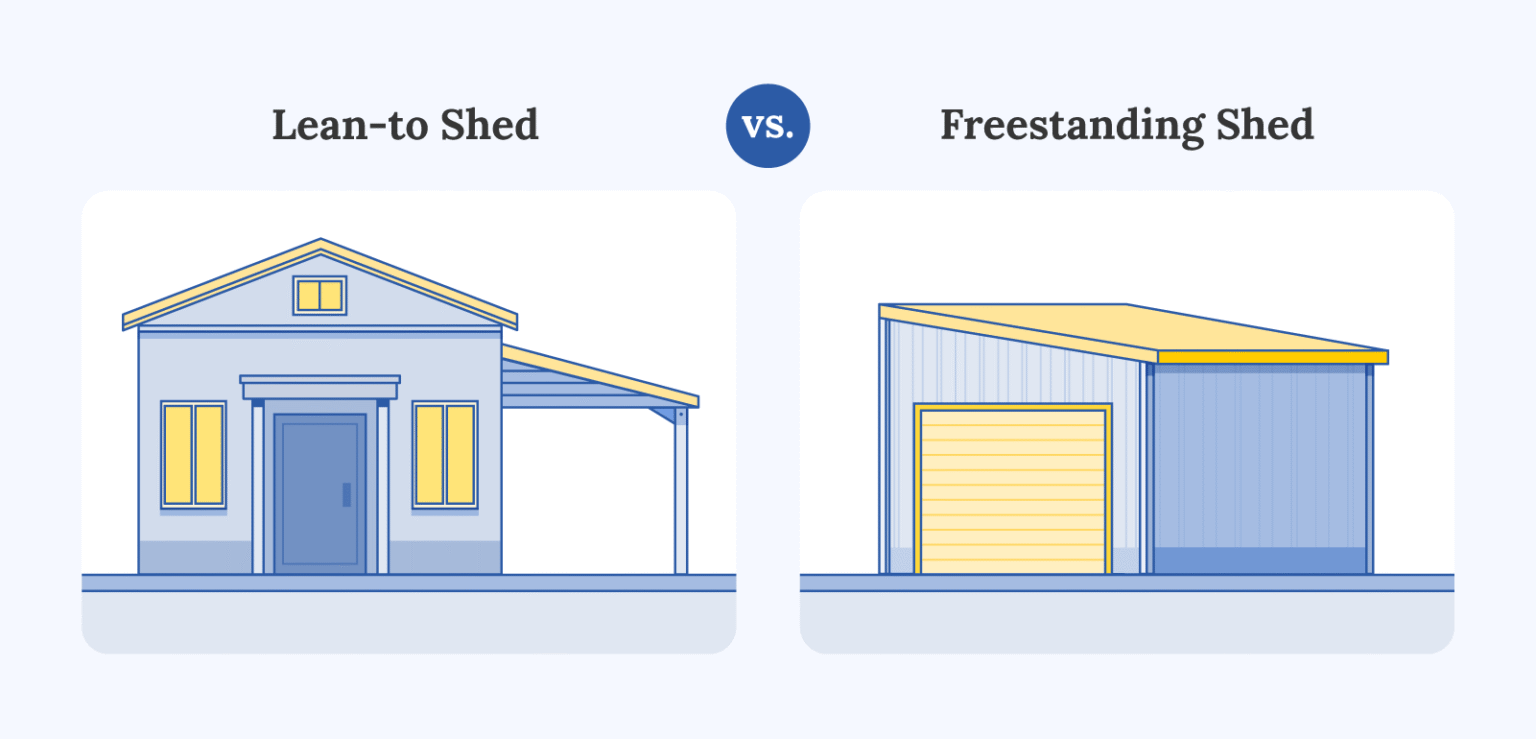
If you’re weighing your storage shed options and trying to decide which direction to go, the choice usually comes down to your property layout, budget, and how involved you want the shed built to be. Here’s how lean-tos compare to freestanding structures on the factors that matter most.
Cost and Material Efficiency
A lean-to’s biggest practical advantage is that it borrows an existing wall, which means less material and a simpler build from the start. A freestanding shed needs four complete walls and full framing on every side. This difference adds up across the whole material list:
- Framing lumber and sheathing. Fewer walls mean less oriented strand board (OSB) and fewer studs, which cuts both material costs and labor time.
- Roofing material. A single-pitch lean-to roof is straightforward to frame and cover. Shingles go on faster when the roof plane is simple and consistent.
- Flooring and foundation. Pressure-treated lumber is still worth using for the floor frame regardless of shed type, but a lean-to’s smaller footprint means less of it.
- 10×12 shed considerations. At this size, the savings from sharing a wall are modest, but you’re still eliminating one full wall’s worth of framing, sheathing, and finishing.
- 12×16 shed considerations. The larger the structure, the more the shared-wall advantage compounds. More square footage means more material on every wall you don’t have to build.
Space Efficiency and Footprint
A lean-to takes up less ground. Because it tucks against an existing structure, it occupies a narrower footprint than a comparable freestanding outdoor storage shed would on the same property.
This is especially great for rural or suburban lots where you might want to preserve yard space for other uses. A freestanding shed needs clearance on all sides, its own dedicated patch of ground, and usually some buffer from property lines. A lean-to already has one side resolved (it’s against the house, garage, or barn), so the sq ft it claims is just the depth and length of the addition itself.
When a Freestanding Shed Makes More Sense
A lean-to is a great fit for a lot of properties, but it’s not always the right call. Sometimes a detached structure just makes more sense in these situations:
- No suitable wall to attach to. If your house, garage, or barn isn’t positioned in a way that works for an addition, a freestanding shed sidesteps the problem entirely.
- Larger dedicated storage needs. A full garden shed with its own footprint gives you more flexibility on size, interior layout, and door placement than a lean-to typically allows.
- Workshop or hobby space. If the shed is going to double as a workspace rather than just storage, a freestanding build gives you better control over insulation, ventilation, lighting, and layout.
- Aesthetic or style considerations. A well-designed style shed can be a visual asset on a property. Detached sheds offer more design freedom, whether you’re matching your home’s exterior or going for something with more character.
- Accessory dwelling potential. A larger freestanding structure with the right setup can eventually be converted into a studio, guest space, or tiny house-style living quarters.

Installation and Structural Considerations
Before you begin your lean-to build, a few planning decisions will shape everything that follows.
Roof Pitch and Drainage Planning
The International Residential Code generally recommends a minimum roof pitch of 2:12 for asphalt shingles, meaning the roof rises at least 2 inches for every 12 inches of horizontal run.
For a lean-to specifically, a sloped roof between 3:12 and 6:12 tends to be ideal. Steeper than that and the height difference between the high wall and the low wall becomes awkward; shallower and you risk water pooling, especially in climates with heavy snow or rain.
Overhang matters too. Extending the roofline 12 to 18 inches beyond the shed’s open or lower edge directs runoff away from the foundation and keeps water from working its way into the base of the walls. Without adequate overhang, even well-installed shingles can’t fully protect the structure below them.
Attachment Methods and Structural Support
How a lean-to connects to an existing building is where a lot of builds go wrong. The high side of the structure (where the lean-to meets the house, garage, or barn) needs to transfer the roof load into the existing wall safely. That typically means anchoring a ledger board directly into the wall studs or structural framing of the host building. Here are a few key framing considerations to keep in mind:
- Rafter spacing. Rafters run from the ledger down to the top plate of the lean-to’s outer wall. Spacing those rafters at 16 or 24 inches on center keeps the roof plane sturdy and gives you consistent nailing surfaces for your decking.
- Floor framing. Joists on the floor frame follow the same logic — pressure-treated lumber is the right call here, since anything close to ground contact is vulnerable to moisture over time. Skipping pressure-treated on the floor frame is one of the most common mistakes in shed construction, and it’s the kind of thing that doesn’t show up as a problem until a few years in.
- Masonry attachment. If you’re attaching to a masonry wall rather than wood framing, lag screws with anchors rated for masonry loads are the appropriate fastener. The connection point needs to be structural, not cosmetic.
Foundation Options
Not every lean-to needs a poured concrete pad, but some definitely do, and knowing the difference saves you from either over-engineering a simple project or underbuilding something that needs more support.
For smaller lean-tos under roughly 100 sq ft, compacted gravel, concrete deck blocks, or a treated skid foundation often provide enough stability, especially on well-drained ground. These options are easier to install, more forgiving on uneven terrain, and don’t require permits in many jurisdictions.
Once you’re pushing past that threshold, particularly with larger builds in the 10×12 or 12×16 range, that will hold heavy equipment or see frequent use. So, a concrete pad becomes the more reliable foundation. It keeps the structure level over time, resists frost heave better than surface-set options, and is typically required by local code for permanent structures in many areas.
Design Features and Customization Options
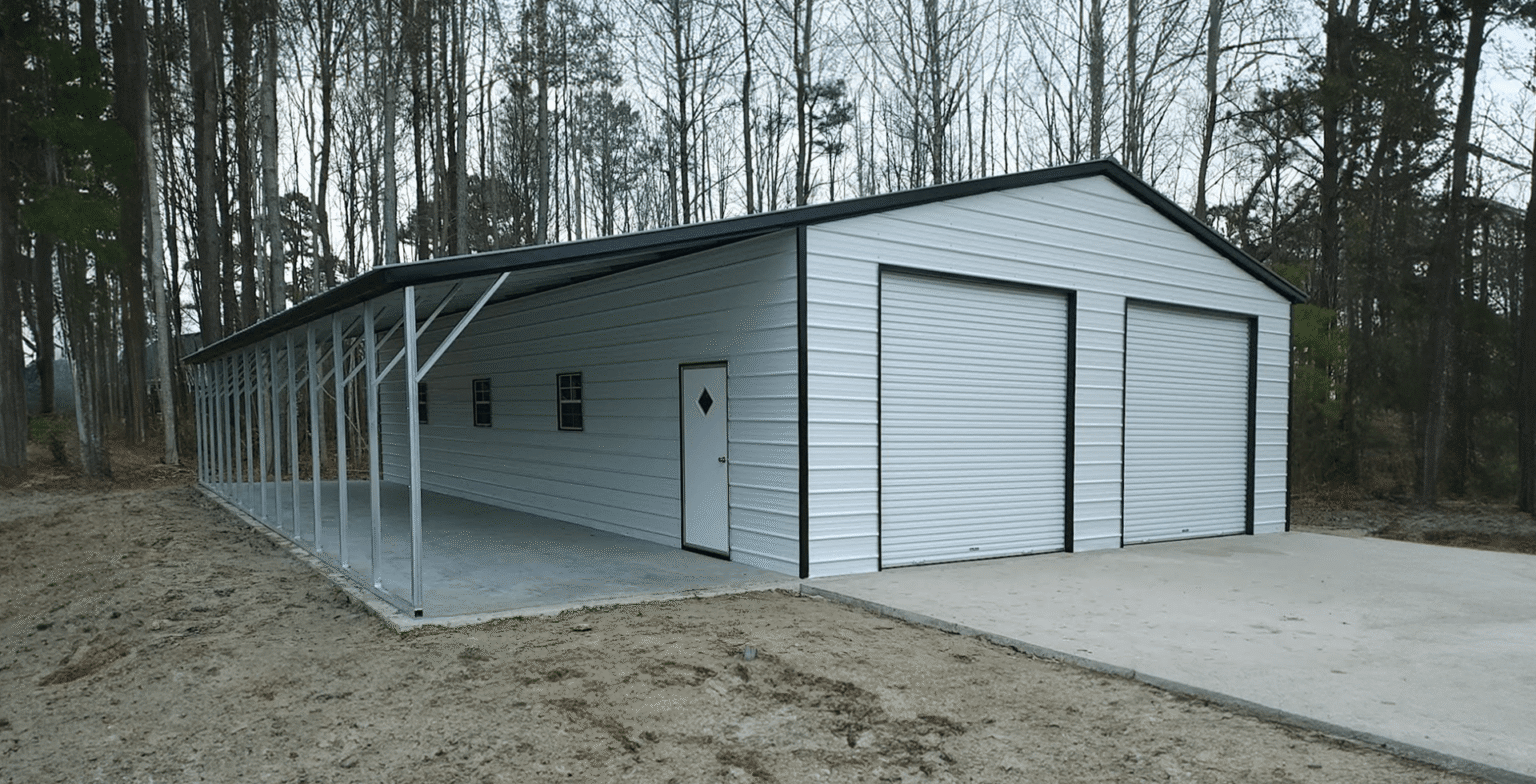
With Alan’s Factory Outlet, you can adjust the size and layout of your lean-to in order to fit your property. Access points, roof style, and wall height are all configurable, so whether you need a wide opening for equipment or a tighter enclosed setup for tools and firewood, the structure can be built around your actual needs.
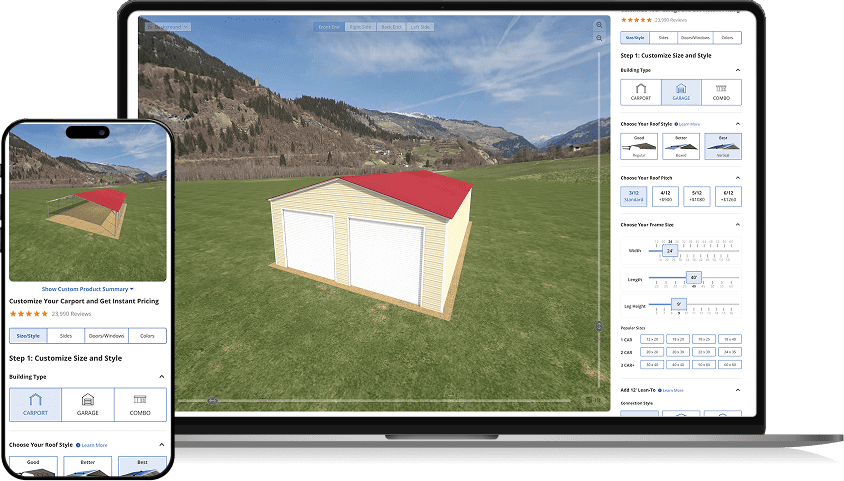
Use our 3D Carport & Metal Garage Builder to get a free quote and map out your configuration visually before you order.
FAQ
Got questions about lean-to sheds? Here are answers to some of the most common ones.
How much does a lean-to shed cost?
Cost varies depending on size, materials, and whether you’re attaching to an existing structure or going freestanding. A basic lean-to shed on the smaller end can run a few hundred dollars in materials, while a larger metal build with professional installation will cost significantly more. The best way to get an accurate number is to configure your build and request a quote directly.
Can you attach a lean-to to a metal building?
Yes. Metal buildings are actually a sturdy base for a lean-to addition. The attachment method differs slightly from wood framing, but the core approach is the same: The connection needs to anchor into the structural framing. A concrete pad foundation is worth considering here, especially if the addition will hold heavy equipment or see regular use.
What is the best roof pitch for a lean-to?
For most lean-to sheds, a sloped roof in the 3:12 to 6:12 range is ideal, as it’s steep enough to shed rain and snow effectively but not so steep that framing becomes complicated.