


A well-designed concession stand can turn busy foot traffic into steady revenue, whether it’s serving hot dogs at a school game or nachos and ice cream at a weekend festival.
A concession stand building is a compact, purpose-built structure designed for food service at events, parks, sports fields, and seasonal venues. These buildings are popular because they balance mobility with durability, giving operators a reliable setup without committing to permanent construction.
Schools, parks departments, sports complexes, and small business owners often choose a portable concession stand for its flexibility. Metal structures hold up to frequent use, changing weather, and repeated transport, while still supporting essential equipment and safe food handling. From classic concession stand food like cotton candy, french fries, and BBQ to veggie options and frozen treats, the right building keeps operations efficient and compliant.
In this guide, you’ll learn about concession stand building types, layout options, materials, customization features, regulatory requirements, and cost factors — plus practical concession stand ideas to help you plan with confidence.
Types of Concession Stand Buildings
Different concession stand building types support different service needs, crowd sizes, and operating schedules. Choosing the right format helps improve customer flow and daily efficiency.
Common options include:
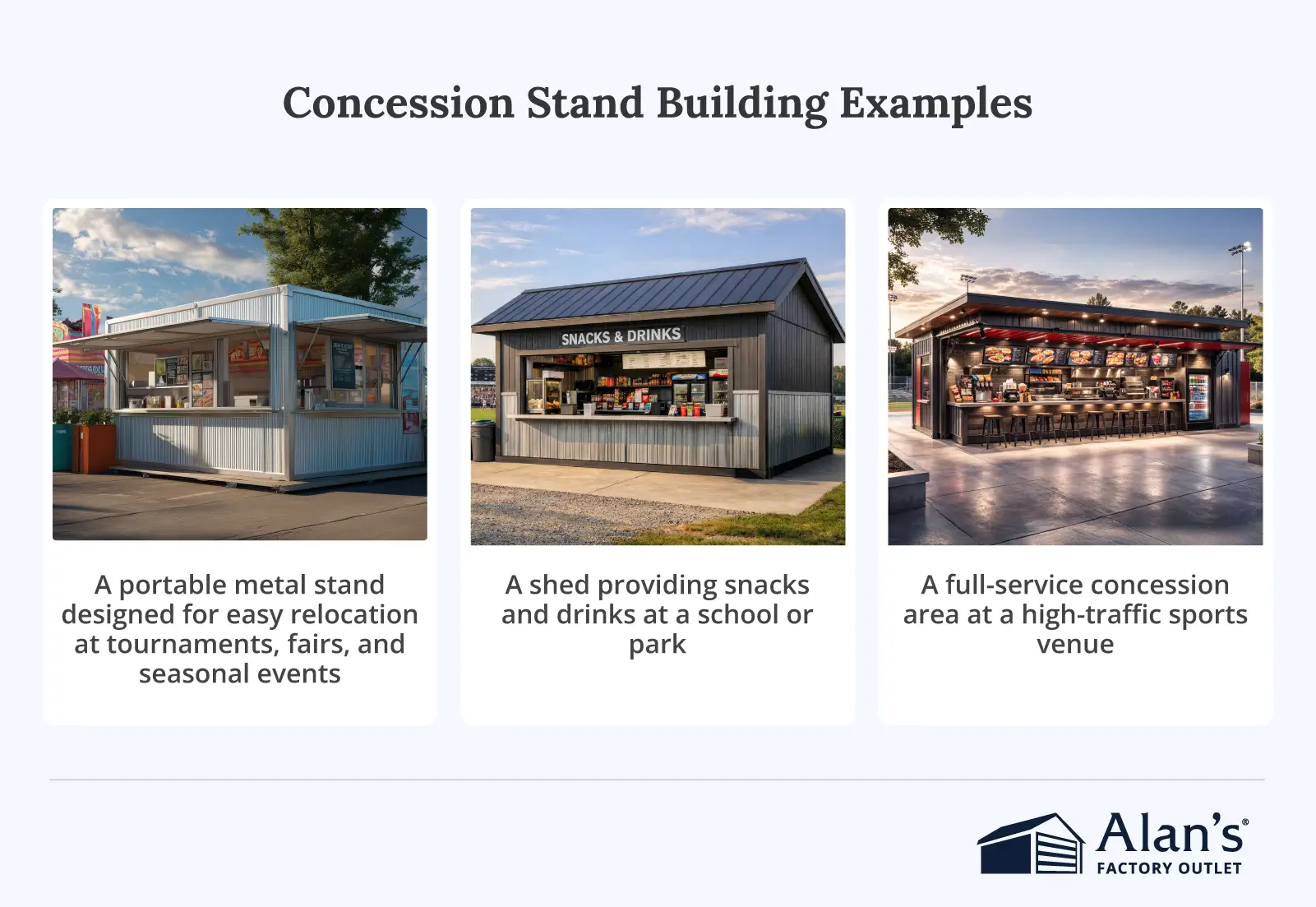
- Portable metal stands. Designed for easy relocation, these work well for tournaments, fairs, and seasonal events.
- Freestanding sheds. A semi-permanent solution often used by schools or parks that need a dedicated snack location.
- Modular buildings. Scalable units that can expand with demand at high-traffic venues.
Layout also matters. A single-window concession stand suits smaller crowds, while multi-window designs speed service during peak times. Wider countertops, space for popcorn machines, and organized dispensers improve workflow.
Many operators also plan for ADA-friendly access, including appropriate counter heights and clear approach paths, to meet accessibility expectations.
Things to Look for in a Concession Stand
Choosing the right concession stand starts with understanding the key structural, roofing, and customization features that support long-term performance and efficiency.
Materials
Metal structures remain the preferred choice for concession stands because they combine strength, weather resistance, and low maintenance.
A high-quality concession stand building typically includes:
- Steel framing and metal panels. Durable materials that withstand rain, wind, and sun exposure.
- Insulation. Supports year-round use in variable climates.
- Load-bearing interior walls. Easily accommodate refrigeration units, food warmers, merchandisers, and wall-mounted dispensers.
Depending on the site, stands can be built on:
- Portable foundations for flexibility
- Permanent slabs for long-term installations
These construction features not only improve performance and durability but also help operators meet health and safety standards with minimal upkeep.
Roofing
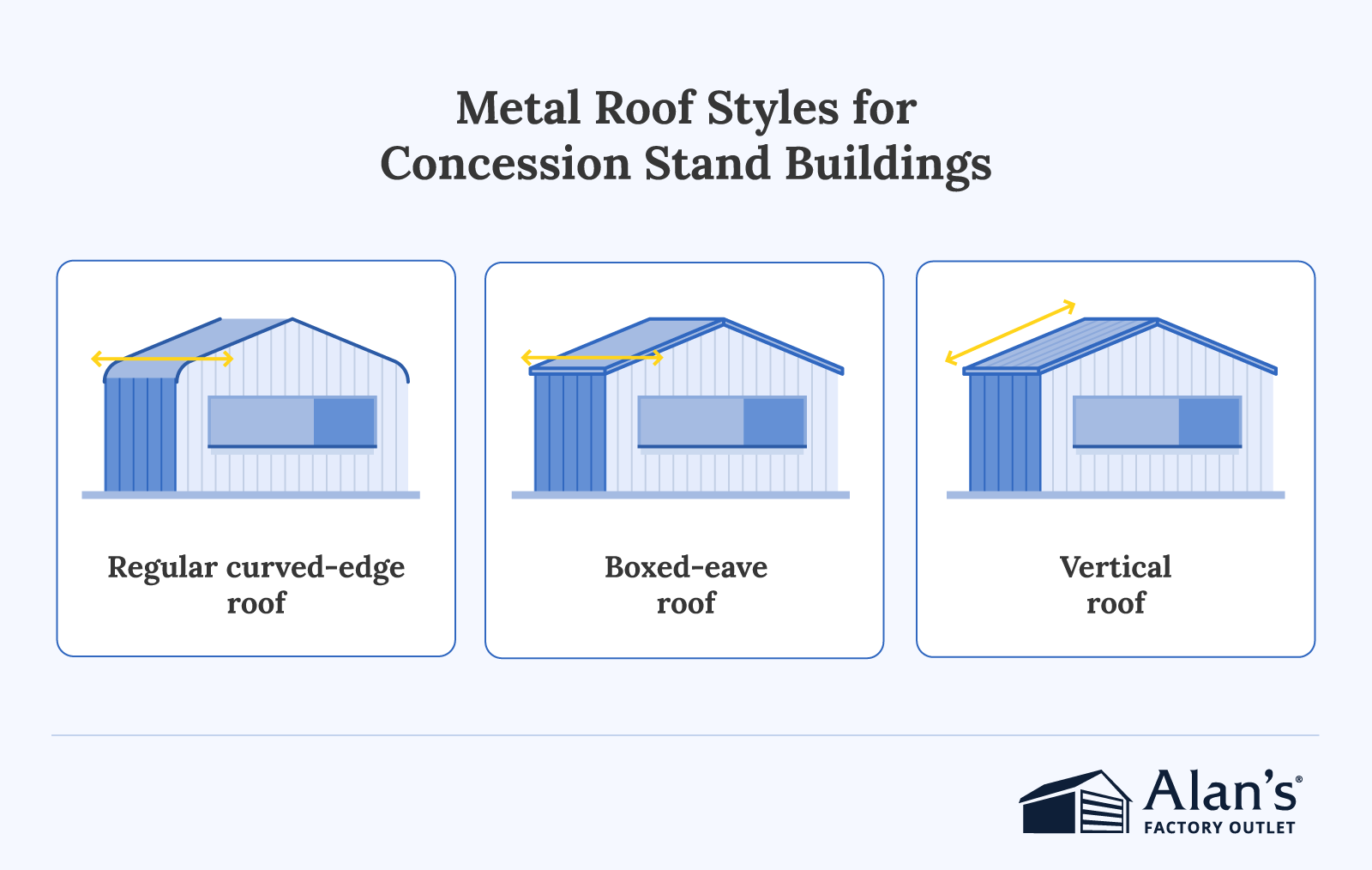
Choosing the right roof style plays a key role in protecting your concession stand from the elements while enhancing overall durability and function. At Alan’s Factory Outlet, there are three primary metal roof types to consider:
- Regular curved-edge roof. The most affordable option, this style has curved edges that form a bow shape — ideal for shielding equipment and supplies from rain and sun.
- Boxed-eave roof. This design has horizontal panels and offers a more traditional look. It may require occasional maintenance to remove leaves or debris from panel ridges.
- Vertical roof. Best for areas with heavy rain or snow, this style features vertically aligned panels that promote efficient drainage and reduce buildup. It’s a popular pick for garages and food service structures alike.
Other styles, such as gambrel, hipped, mansard, flat, and single-slope roofs, may also be used for certain building types — but for most concession stands, a vertical or boxed-eave roof offers the best balance of performance and appearance.
Customization Options
Customization allows operators to match their stand to both their menu and brand identity.
Popular concession stand ideas include:
- Adjustable window placement. Enhances service flow and visibility.
- Upgraded interior finishes. Improves durability and supports efficient cleanup.
- Exterior color schemes. Align with school or event branding for a cohesive look.
Interior layouts can be tailored to support specific concession stand items:
- Refrigeration for ice cream
- Expanded prep space for BBQ and veggie options
Exterior trim and finishes can also help the building blend into its surroundings while remaining low-maintenance and easy to clean.
With the right custom features, operators can boost both functionality and visual appeal — all while keeping their setup aligned with operational needs.
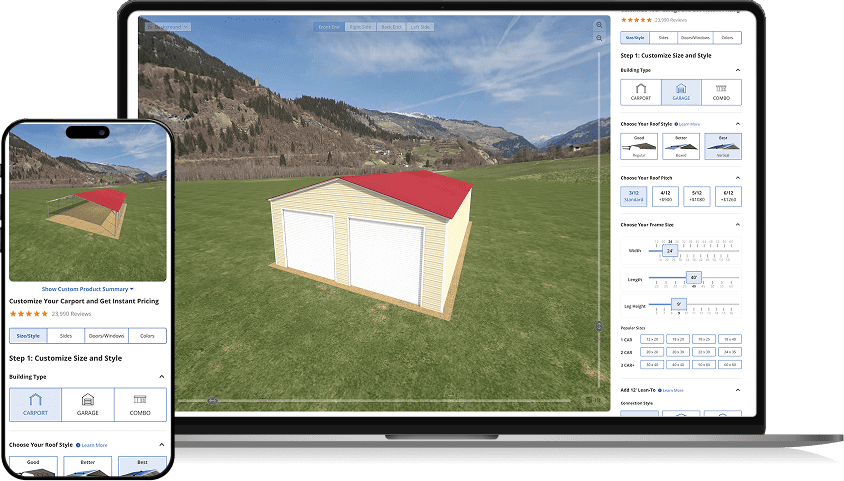
Want to see your concession stand take shape? Try the 3D Carport & Metal Garage Builder to visualize custom features and create a layout that fits your menu and service needs.
Tips for Creating a Concession Stand
Designing an efficient concession stand requires thoughtful planning around layout, equipment, branding, and essential systems that support daily operations.
Interior Layout and Equipment
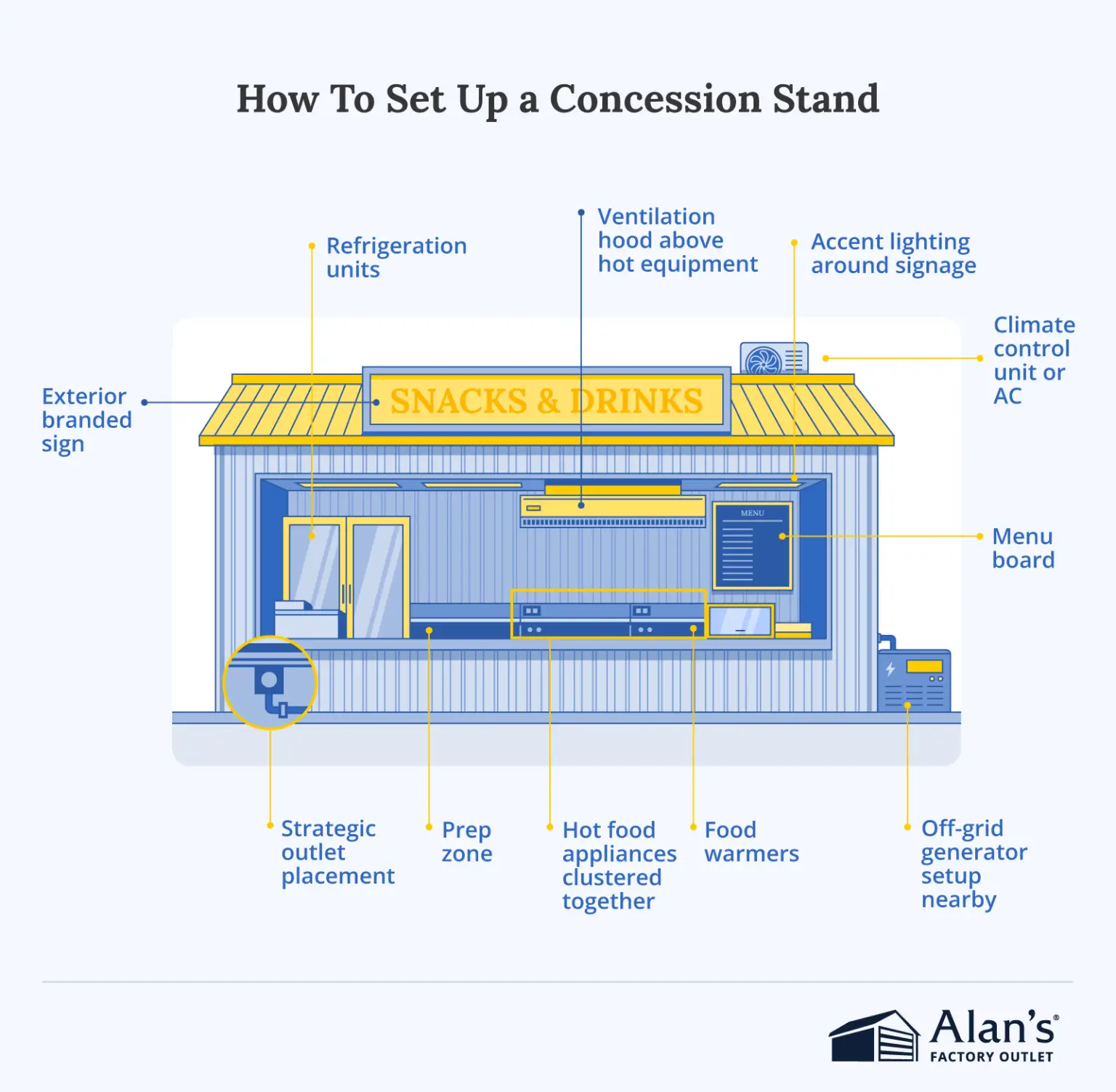
A functional interior layout keeps service moving and reduces staff strain. Most concession stands prioritize clear work zones for prep, cooking, and service.
Common equipment includes:
- Countertops and shelving. Provide space for prep, storage, and POS systems.
- Refrigeration. Keeps beverages, ice cream, and ingredients at safe temperatures.
- Food warmers. Maintain ready-to-serve items during rush periods.
- Hot food appliances. Griddles, fryers, hot dog rollers, and popcorn machines support a flexible menu.
Smart placement of each concession equipment piece shortens prep time and minimizes cross-traffic inside the stand.
Signage and Branding
Clear, visible signage helps customers decide quickly and keeps lines moving. Custom branding also reinforces recognition at repeat events.
Common signage options include:
- Exterior building signs. Display the stand name or sponsor branding.
- Menu boards. Highlight pricing and featured items.
- Lighting accents. Improve visibility for evening events.
Thoughtful signage supports strong concession stand ideas without cluttering the service area.
HVAC and Electrical Add-Ons
Proper HVAC supports comfort, appliance performance, and staff safety.
Key systems and considerations include:
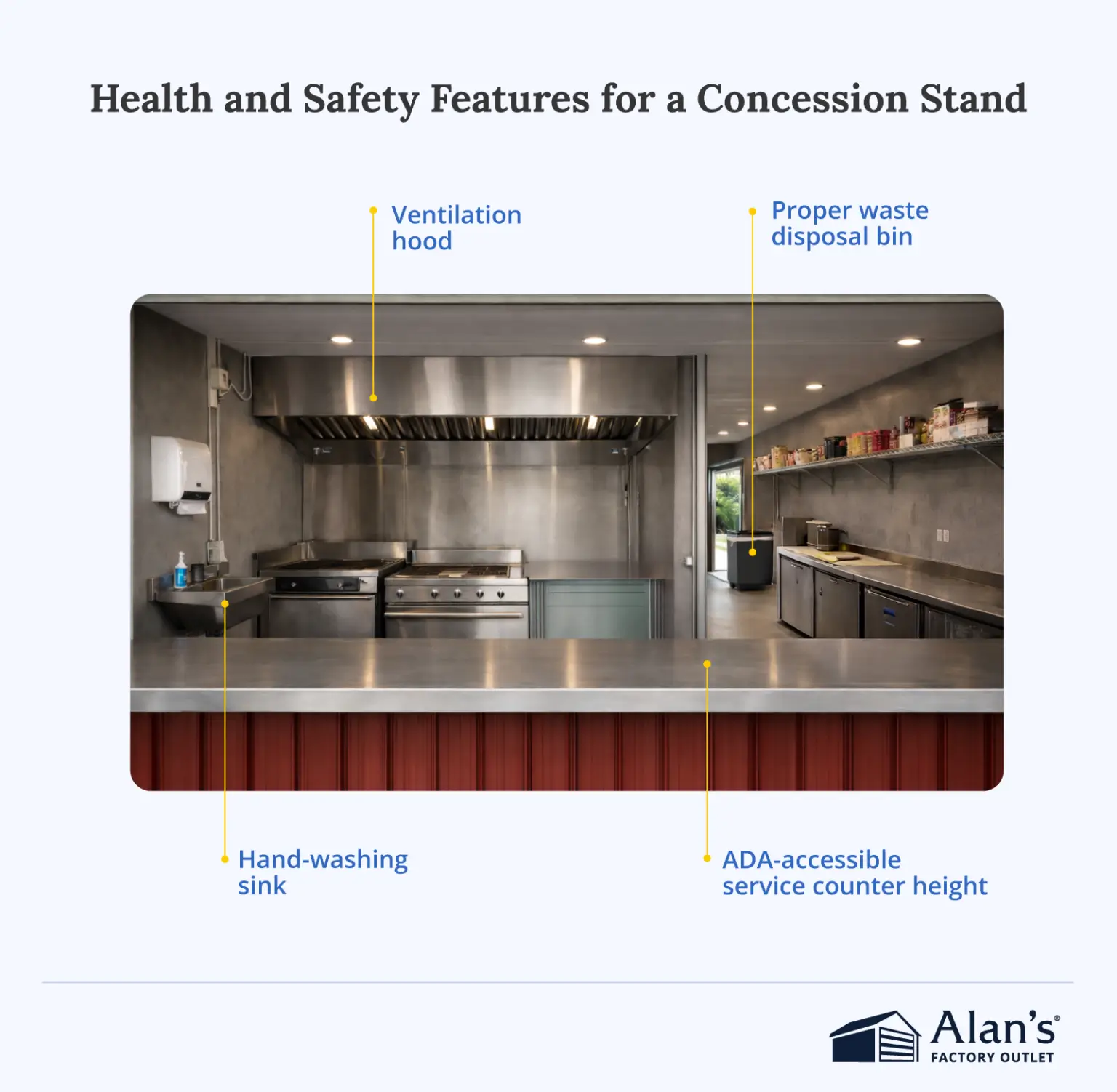
- Ventilation. Manages heat from fryers and griddles to maintain safe working conditions.
- Climate control. Prevents refrigeration systems from overworking in high temperatures.
- Electrical planning. Includes outlets, dedicated circuits, and space for future upgrades.
- Off-grid power options. Generators or portable hookups keep high-quality concession equipment running during long events.
Together, these systems help maintain efficient operations while protecting equipment and staff — even under demanding conditions.
Cost Factors for Concession Stand Buildings
Several factors influence the total cost of a concession stand.
Key cost drivers include:
- Building size and materials. The cost to build your stand will vary widely based on the materials and size. Smaller setups cost less, while larger, customized stands require more investment.
- HVAC and electrical upgrades. Support expanded prep areas and enhance long-term usability.
- Ongoing expenses. Utilities, maintenance, and future upgrades to concession equipment like popcorn machines or hot dog rollers.
Including permit fees and compliance costs in early estimates helps keep budgets realistic and operations sustainable.
Regulatory Considerations and Permits
Every concession stand building must meet local health codes and zoning rules. Early planning helps avoid delays and unexpected costs.
Common regulatory requirements include:
- Hand-washing sinks. Employees must adhere to strict hand washing. You will also need food-safe plumbing.
- Food handling certifications. All staff must be certified to handle food safely.
- Proper waste disposal. This is essential to keeping your concession stand clean and safe for customers.
- ADA accessibility. Compliance is the law, and it keeps customers and staff safe and happy.
- Permit processes. These vary by city and state.
Budgeting time and money for permits and compliance helps prevent last-minute changes and keeps your concession stand project on track.
How to Start a Concession Stand Business
Launching a concession stand operation takes planning, but a clear process keeps it manageable.
Basic steps include:
- Define your menu and concept. Decide on concession stand food like tacos, hot dogs, nachos, funnel cakes, or lemonade.
- Source suppliers and equipment. Choose reliable vendors for ingredients and popcorn machines.
- Complete food safety training. Meet local certification requirements.
- Select a building. Match the stand size and layout to your menu and service volume.
- Set up payments. Plan for credit cards, QR code payments, and cash handling.
- Secure permits and inspections. Confirm compliance before opening day.
Choosing the right stand building early supports smooth setup and scalable growth.
Find the Right Concession Stand Building
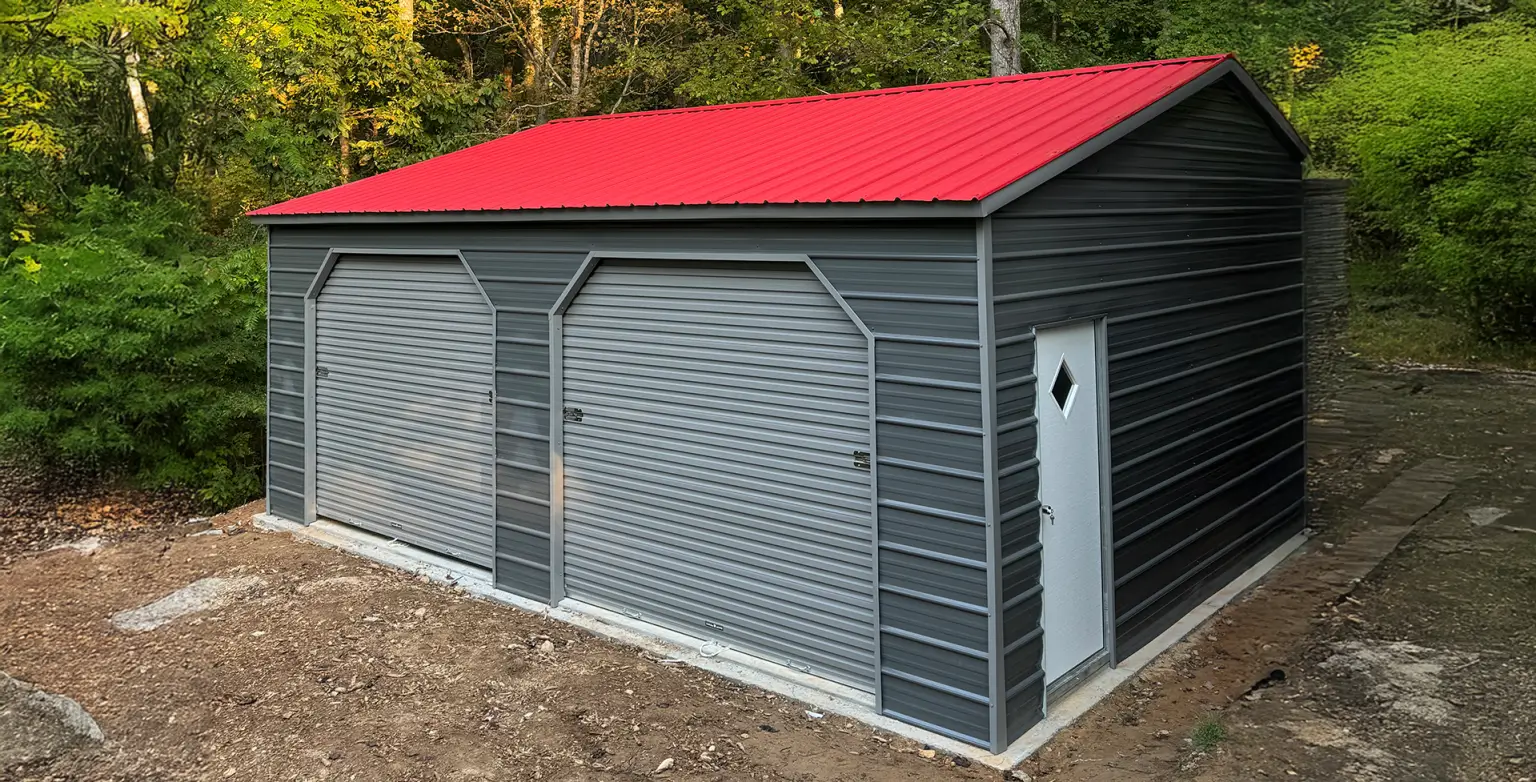
Metal concession stands offer durability, portability, and long-term value for a wide range of uses. When selecting a concession stand building, consider size, equipment needs, and local regulations alongside your menu and staffing plan. Flexible designs make it easier to adapt as demand grows, while durable materials reduce maintenance over time.
If you’re exploring portable concession stand options or gathering new concession stand ideas, start by reviewing available configurations and customization features.
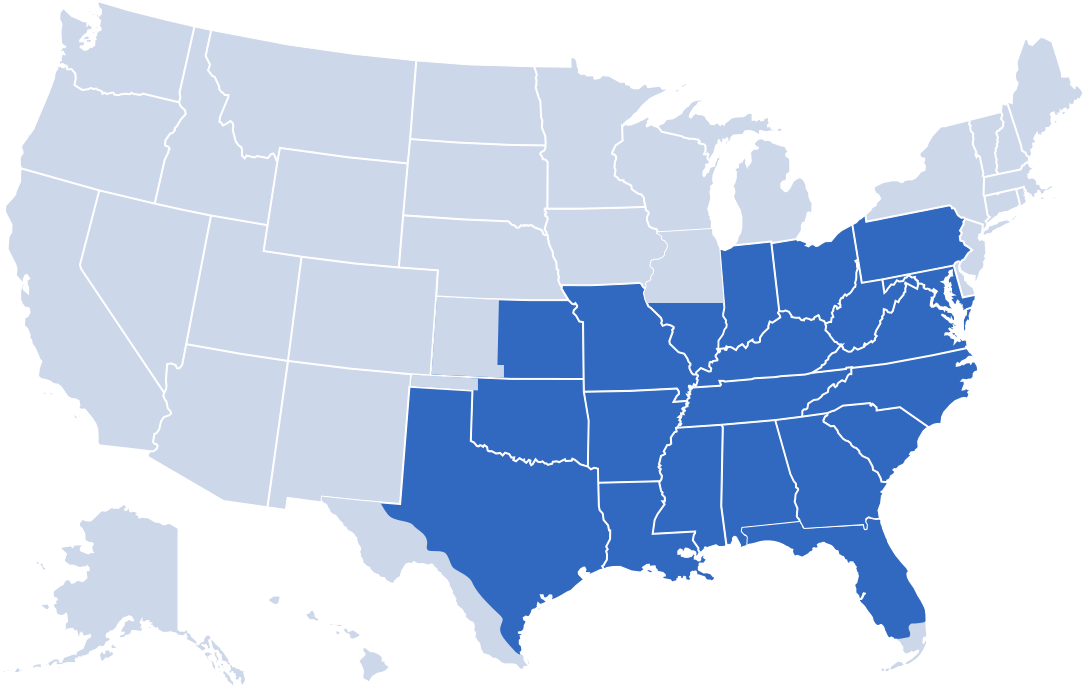
Shop concession stands and learn more at Alan’s Factory Outlet. We offer free delivery and installation in our 21-state service area.
Free Delivery and Professional Installation in 21 States
FAQs About Concession Stand Buildings
The following questions address common planning concerns for new and experienced operators, from interior layouts to menu strategy.
What does a concession stand look like inside?
Most interiors feature defined zones for service, prep, and storage. Countertops anchor the service window, while refrigeration, griddles, fryers, and food warmers line the prep area. Safety features like fire extinguishers and proper ventilation help protect staff and equipment.
What is the difference between a snack bar and a concession stand?
A snack bar usually offers a limited menu in a fixed location, while a concession stand supports a broader menu and flexible setup. Concession stands often use more specialized equipment and appear at public venues like sports fields and fairs, though both serve similar audiences.
What is the most profitable concession stand food?
High-margin items typically cost little to prepare and serve quickly. Popular options include:
- Hot dogs
- Nachos
- Popcorn from popcorn machines
- Funnel cakes
- Lemonade
- Pretzels
Simple prep and consistent demand help maximize returns.
How can I start my own concession stand business?
Start with a basic business plan, finalize your concession stand food and items, and select a compliant building. Focus on permits, food safety training, and equipment planning early to avoid delays and open with confidence.