

Craving a weekend retreat, a starter home, or a downsized retirement space without blowing your budget? A barndominium might just be what you need.
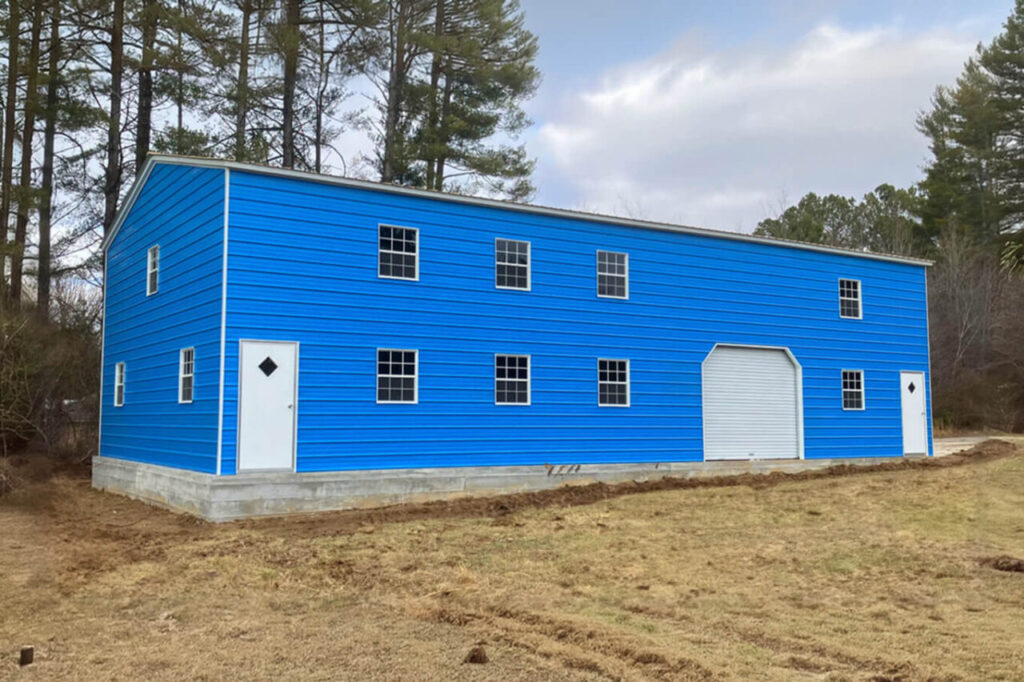
A small barndominium is a metal building used as a living space, typically under 2,000 square feet. That puts it in a sweet spot between a tiny house and a full-scale traditional home: enough room to live comfortably, without the square footage you don’t actually need or the price tag that comes with it.
The appeal is practical. Metal building construction costs less than stick-built, goes up faster, and holds up better over time. Whether you’re putting it on a few acres outside town or a suburban lot with room to spare, a small barndominium gives you flexibility that traditional construction rarely offers.
In this article, we’ll walk through everything worth knowing before you build: floor plan layouts and square footage options, what things actually cost, design styles, and permit considerations.
Why Choose a Small Barndominium?
Small barndominiums punch well above their square footage. Here’s why you should choose one:
- Affordability. Small barndominiums typically cost less per square foot than traditional stick-built homes. That gap widens when you factor in the integrated functionality of the design. Instead of budgeting separately for a detached garage, workshop, or RV garage, it’s all part of the same structure.
- Faster construction. Metal building shells go up quicker than wood-framed homes. Less time on-site means lower labor costs and a shorter window between assembly and moving in.
- Durability. Steel doesn’t rot, warp, or attract termites. A well-built metal building stands up to harsh weather and decades of wear in ways that wood-framed construction simply doesn’t.
- Design flexibility. Don’t let the “small” label fool you. These builds can be laid out to include a carport, a car garage, a dedicated living space, and storage.
First-time homeowners get an accessible entry point into property ownership without sacrificing livability. Weekend property owners get a durable, low-maintenance structure that holds up between visits. Downsizers get to keep the garage and the storage, just without the house they don’t need anymore.
Small Barndominium Floor Plans
One of the biggest draws of a small barndominium is how much you can do with a modest footprint. Fewer interior walls mean more usable space, better natural light, and a layout that feels larger than its square footage suggests.
600 Sq Ft Studio Layout (24×25)
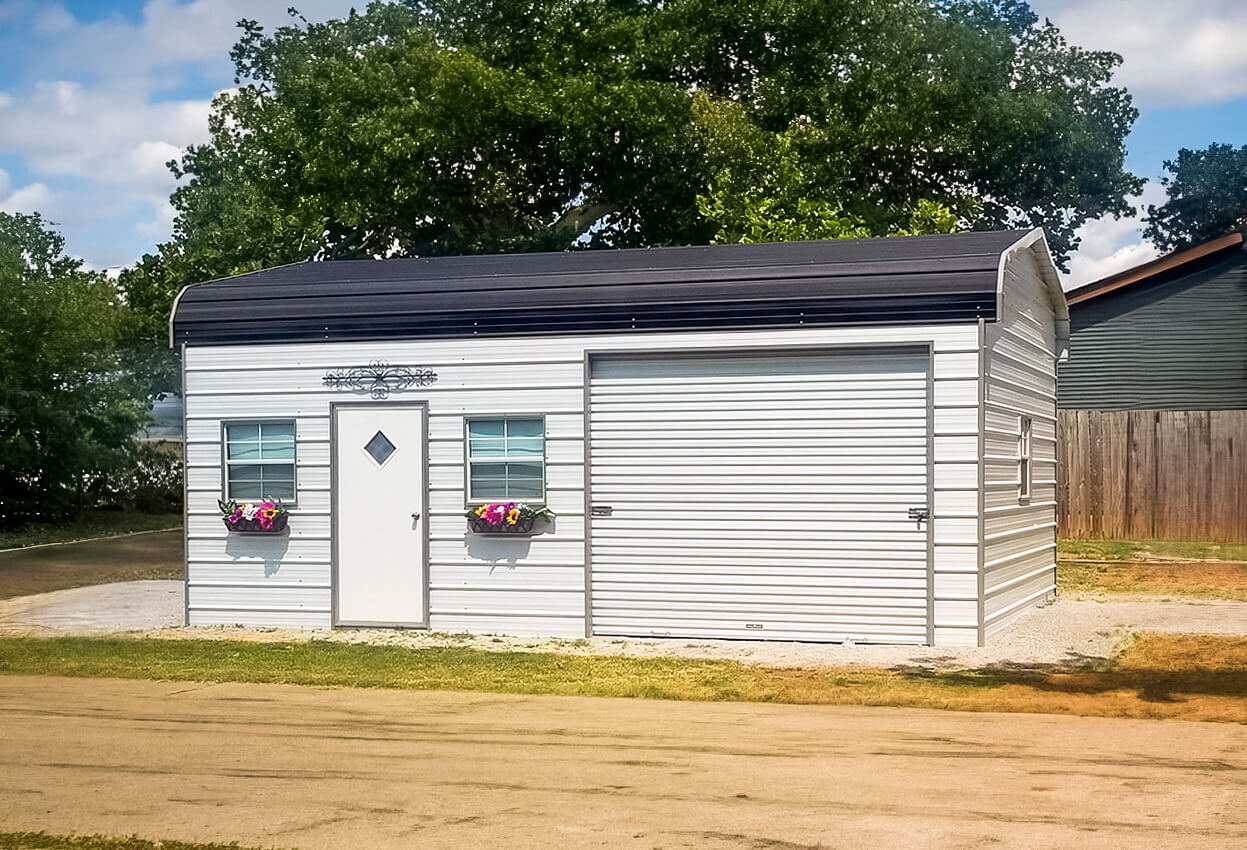
For minimal living or weekend use, a 600 sq ft studio layout covers the essentials without anything extra getting in the way. The open-concept design keeps the kitchen and living space connected, making the footprint feel more generous than it looks on paper. A full bathroom completes the layout. It’s a practical small house for a solo owner, a hunting cabin, or a seasonal retreat.
900 Sq Ft One-Bedroom Layout (30×30)
Step up to 900 sq ft, and the barndominium house starts to feel a bit more like a full-time residence. A defined bedroom separates sleeping from living without closing the rest of the floor plan off entirely. The kitchen and living space stay open to each other, and there’s usually enough room to work in a mud room near the entry, which rural and suburban buyers tend to appreciate more than almost any other feature.
1,200 Sq Ft Two-Bedroom Layout (30×40)
At 1,200 sq ft, a two-bedroom layout gives a small family enough room to breathe. The open floor plan keeps shared living space (aka the kitchen, dining, and living room) connected and functional, while two separate rooms offer flexibility. The second room doesn’t have to be a bedroom. A home office, a craft room, or a dedicated workspace all fit the footprint just as well.
1,500 Sq Ft Two-Bedroom + Loft Layout (30×50)
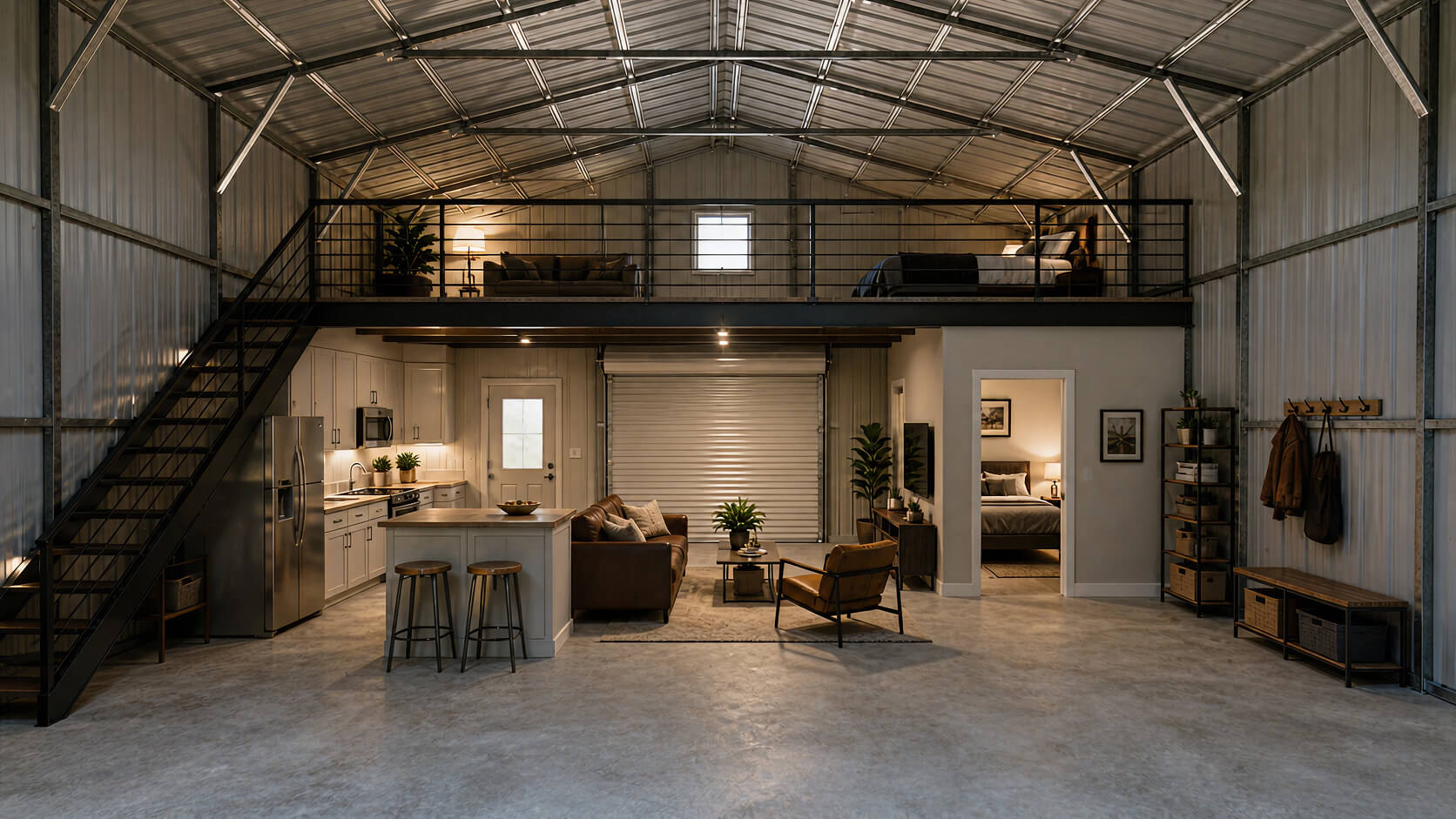
At 1,500 sq ft, you’re still well within small barndominium territory, but the layout starts doing a lot more. A loft or bonus room above the main level adds a two-story feel without the full cost of a two-story build.
The main level houses the primary living spaces like the kitchen, living area, and a master suite. The loft works well as a guest space, a bunk room for kids, or a shared area if the property is split between multiple users. It’s one of the better configurations for co-ownership or weekend properties where different people need their own space.
How Much Does a Small Barndominium Cost?
Costs vary depending on size, location, and how finished you want the final product, but small barndominiums are consistently cheaper to build than traditional homes. Here’s a general breakdown of what to budget for each component:
| Component | Estimated cost |
|---|---|
| Metal building shell/barndominium kit | $20–$45 per sq ft |
| Foundation | $4–$20 per sq ft |
| Interior finishing (plumbing, electrical, drywall, flooring) | Can be over $100 per sq ft |
| Roofing (if not included in shell) | $7–$16 per sq ft |
| Windows | $100–$1,300 for a single window |
| Doors | $500 to $1,500 to install |
| HVAC | $7,000–$8,000 total |
| Prefab delivery and site prep | Varies by location |
Black Barndominium Styles and Modern Design Trends
Black barndominiums with dark steel panels, clean lines, and minimal trim sit right at the intersection of modern farmhouse and industrial design.
The appeal comes down to curb appeal and contrast. A black barndo reads as intentional. Against an open landscape, surrounded by trees, or sitting on a working property, the exterior makes a strong visual statement without trying too hard.
From a materials standpoint, metal building construction is a natural fit for this style. Steel panels:
- Hold dark finishes well
- Resist fading better than painted wood
- Require far less maintenance over time
Customization options include matte black, charcoal, and dark bronze finishes, with contrasting trim colors, such as white, wood tones, or weathered metal, used to break up the exterior and add depth.
Inside, black barndominium designs typically carry the modern farmhouse aesthetic through exposed beams, concrete or wide-plank wood floors, open-concept layouts, and large windows.
Design Features That Maximize Small Barndominium Space
Smaller square footage doesn’t have to mean cramped. The right design choices can make a 600 or 900 sq ft barndominium feel significantly more livable than a traditional home twice its size. These are the features that do the most work:
- Open-concept layouts. Removing unnecessary interior walls is the single biggest thing you can do for a small space. An open floor plan that connects the kitchen, dining, and living space creates a flow that makes the space feel bigger.
- Lofts. A loft adds usable space without adding to your foundation footprint. It’s an obvious choice for a sleeping area, but it doesn’t have to be. A loft works just as well as a reading nook, an art studio, a kids’ hangout, or a bonus room for whatever you need.
- Wraparound porch designs. A wraparound porch effectively extends your living space outdoors without the cost of adding square footage inside. It gives you a place to eat, sit, and spend time that doesn’t affect your interior layout.
- Smart storage solutions. Wall-mounted shelving, ceiling-hung storage racks, built-in cabinetry, and overhead loft storage all keep the floor clear without sacrificing functionality.
Permits and Zoning for Small Barndominiums
Before you start anything, check your local zoning laws. This step trips up a ton of barndominium builds, and skipping it can mean costly delays or having to modify a structure you’ve already paid for.
The rules vary more than most people expect. A metal building used as a primary residence sits in a gray area in a lot of jurisdictions.
In Texas, for example, you’ll almost certainly need a permit, but which permits, and how many, depends entirely on the county. Some require full site plans. Others add septic permits, soil evaluations, and separate inspections for mechanical and plumbing work. There’s no single answer, even within the same state.
A few things worth checking before you commit to a build:
- Zoning classification. Some rural areas restrict residential use on agriculturally zoned land, even for prefab or steel buildings intended as permanent homes.
- Minimum square footage rules. Certain counties set a floor on how small a permitted residence can be, which can affect smaller barndominium layouts.
- Foundation and utility requirements. Some jurisdictions require specific foundation types or mandate connections to municipal water and sewer rather than well and septic.
Your safest bet is to call your county’s building and zoning office before you finalize your barndominium plans.
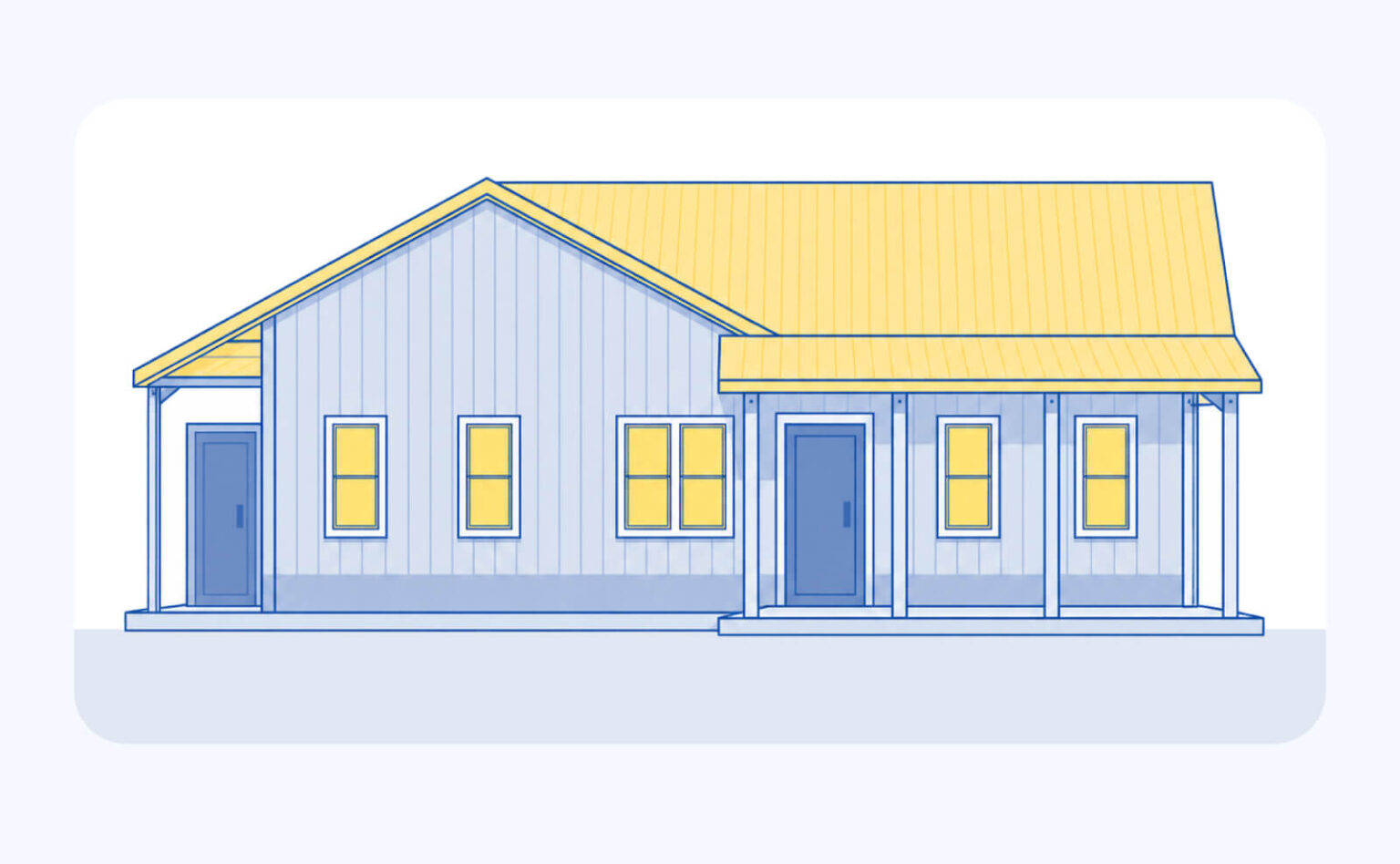
From Order to Move-In: The Build Process
Here’s what the process generally looks like from start to finish.
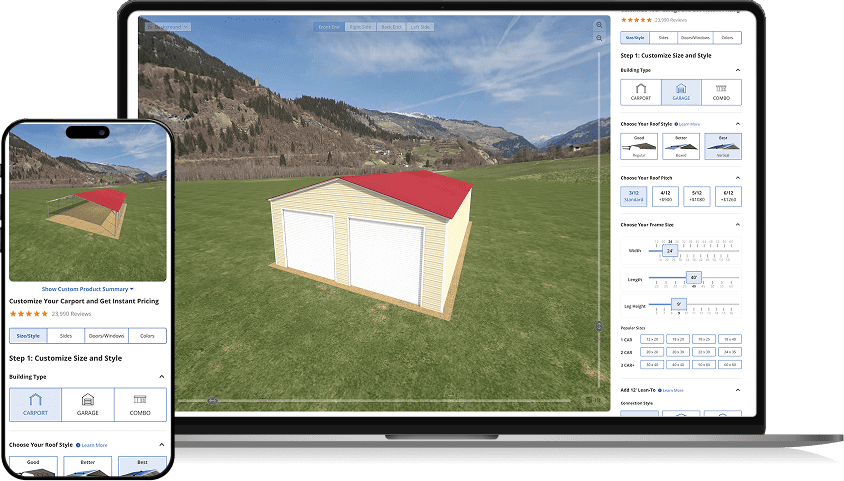
It starts with choosing your building. Alan’s Factory Outlet’s 3D Carport & Metal Garage Builder lets you configure your metal building online before you buy. You can adjust the size, roof style, wall color, trim color, and door and window placement as you go.
Once you’ve placed your order, the next steps move in a logical sequence:
- Site prep. Before delivery, your land needs to be ready: foundation poured, ground leveled, and utilities roughed in if that’s part of the plan.
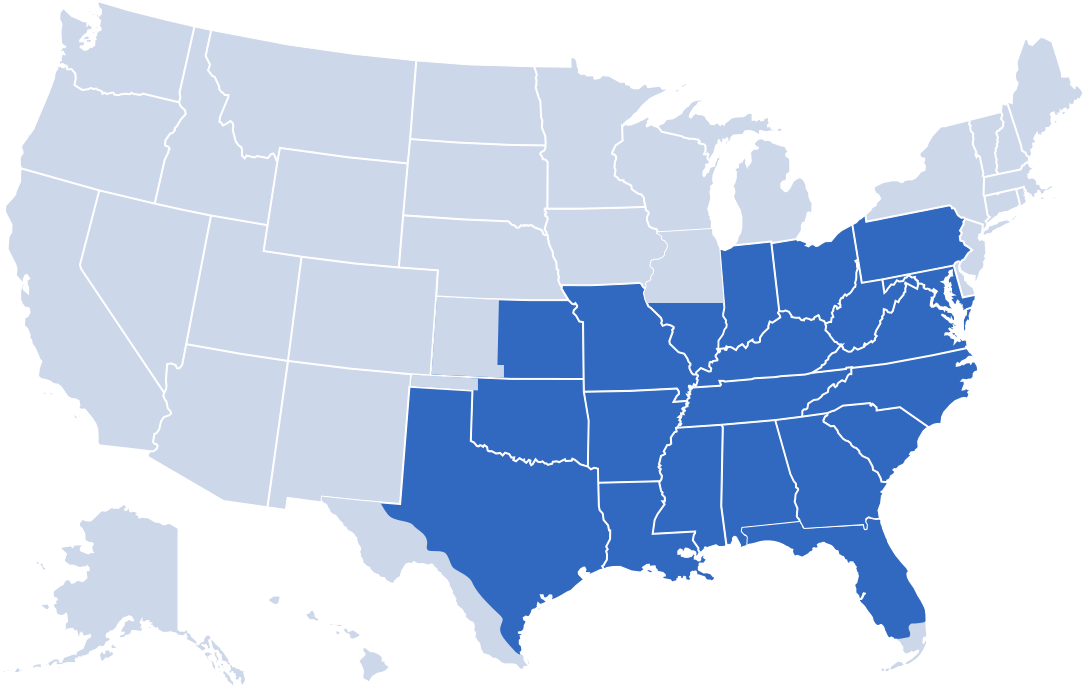
- Delivery and installation. Alan’s Factory Outlet offers free delivery and installation in their 21-state service area, which takes a significant line item off the budget for most buyers.
- Interior finishing. This is where the barndominium kit becomes living quarters. Insulation, drywall, flooring, cabinetry, plumbing, and electrical work all happen at this stage. How long it takes depends on how finished you want the final product and whether you’re doing any of the work yourself.
From order to move-in, a small barndominium can come together considerably faster than a stick-built home of comparable size.
Free Delivery and Professional Installation in 21 States
Frequently Asked Questions About Small Barndominiums
Here are answers to some of the questions that come up most often from buyers who are just starting to explore this build type.
Can you build a barndominium for under $100K?
Yes, depending on size and finish level. A small barndominium in the 600–900 sq ft range can come in under $100K if you keep the interior finishes practical and handle some of the work yourself.
What is the most expensive part of a barndominium?
Interior finishing. The metal building shell is often more affordable than people expect; it’s the plumbing, electrical, insulation, flooring, and cabinetry that drive the final cost up. Labor is the biggest variable. If you’re in an area with high contractor rates or limited availability, that alone can push a build well past initial estimates.
Are barndominiums cheaper than a tiny house?
Usually, yes, especially when you factor in what you get per square foot. A tiny house can run surprisingly high per sq ft once you account for the custom nature of the build and the specialized systems required to keep everything functional in a very compact footprint.
A small barndominium typically gives you more usable space for the money, with fewer compromises on storage, ceiling height, and livability.