


Choosing between a pole barn and a metal building is a big decision for any building project. Both options provide practical storage and workspace solutions. However, the key differences affect durability, cost, safety, and long-term value.
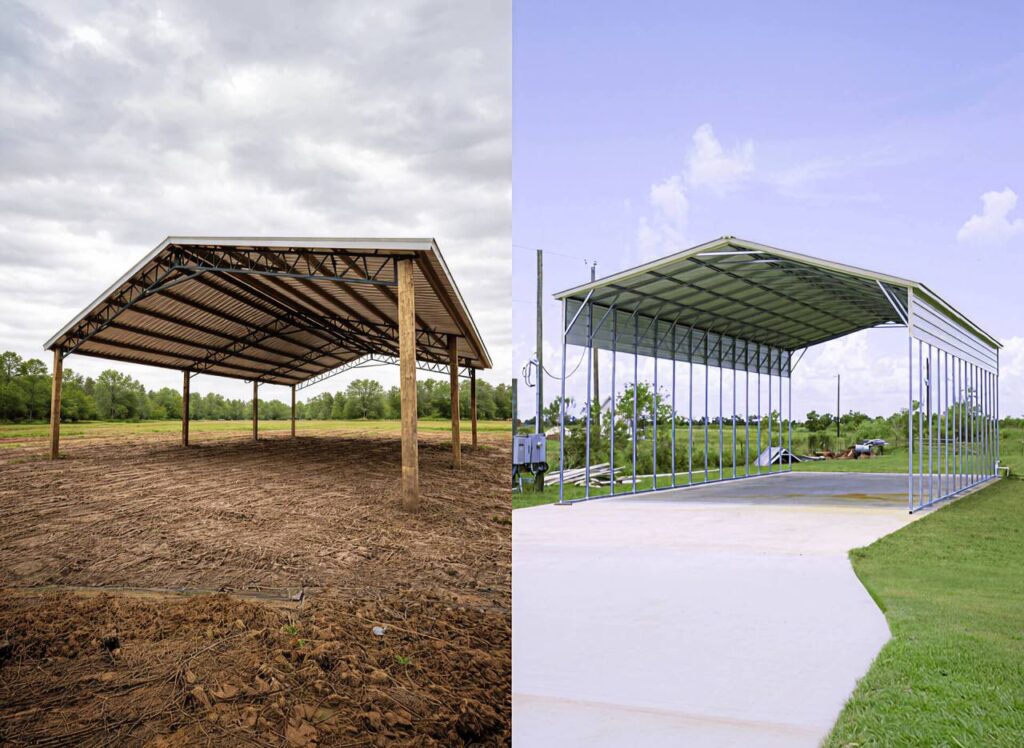
A pole barn, also called a post-frame building, uses wooden posts set in the ground or secured to a foundation. A metal building uses a steel frame to create a rigid, engineered structure. While both can look similar from the outside, their structural systems perform very differently over time.
Steel buildings often stand out for strength and resistance to fire, pests, and moisture. Pole barns may appeal to property owners focused on lower up-front costs. This guide compares lifespan, maintenance, load capacity, and overall performance so you can choose the right structure for your needs and budget.
| Steel Building vs. Pole Barn | ||
|---|---|---|
| Steel building | Pole barn | |
| Structure type | Engineered metal frame with anchored supports | Wood framing with embedded posts |
| Primary materials | Galvanized steel tubing and metal panels | Treated lumber and wood posts |
| Foundation | Anchored to concrete slab or foundation | Posts set in ground or on concrete pad |
| Durability | Resistant to moisture, corrosion, and shifting | Vulnerable to moisture and soil conditions |
| Fire resistance | Noncombustible, fire-resistant steel structures | Combustible wood building materials |
| Pest resistance | Not susceptible to termite damage | Susceptible to termites and insects |
| Expected lifespan | Often 40–60+ years with proper care | Typically 20–40 years with maintenance |
What Is a Steel Building?
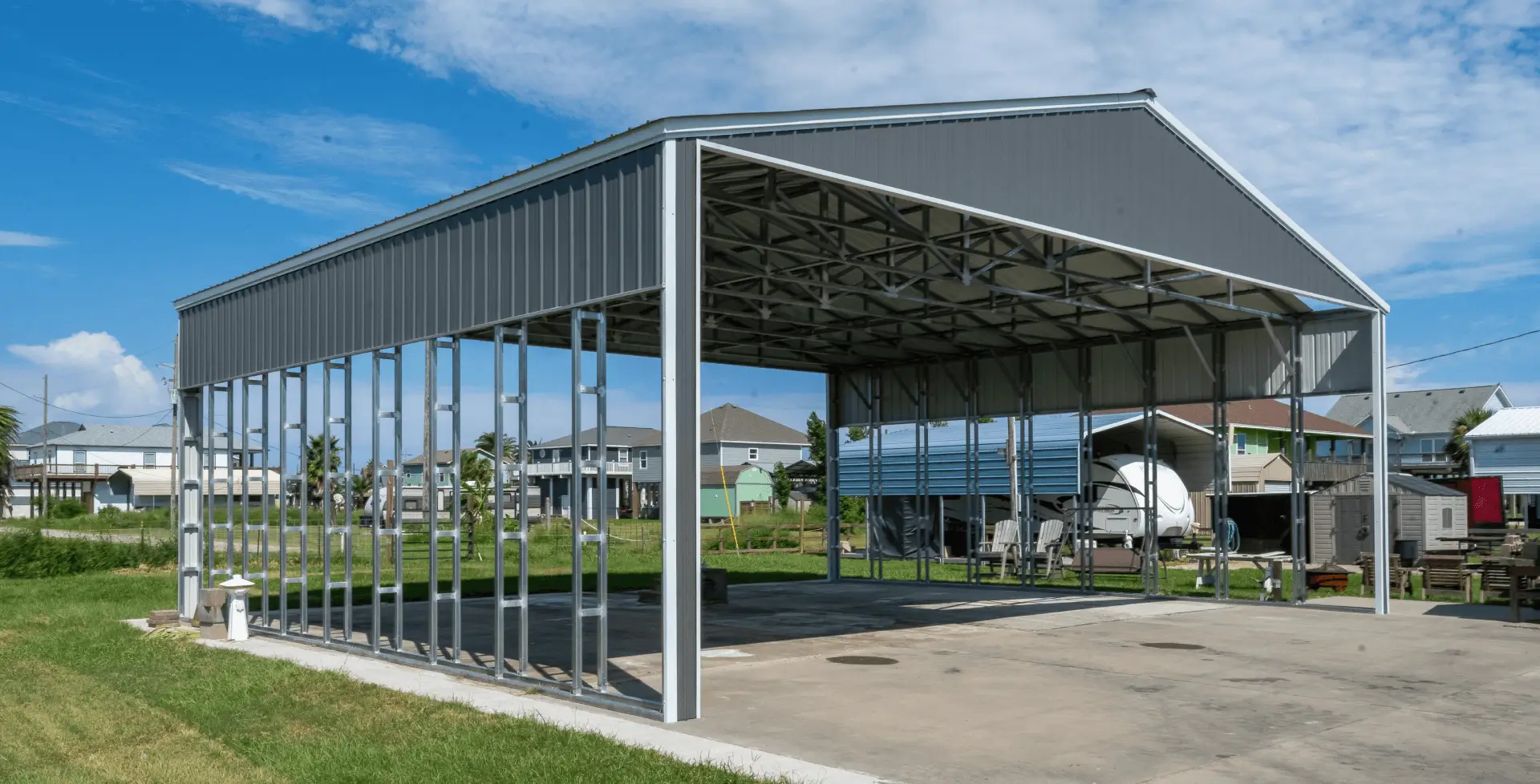
A steel building is a metal barn or building constructed with a steel frame instead of traditional wood framing. At Alan’s Factory Outlet, these structures use 12-gauge or 14-gauge galvanized steel tubing to create a strong, corrosion-resistant frame built for long-term performance in rural and suburban settings.
Unlike traditional post-frame construction, steel buildings use precision-manufactured framing components that crews assemble on-site. Installers anchor the frame to a concrete foundation, erect the structural supports, and secure metal panels to the steel roof and walls according to engineered plans. The galvanized coating helps protect the steel from rust and weather exposure.
Steel buildings are a practical choice for property owners who need dependable space for vehicles, equipment, or storage. Common uses include:
Compared to wood structures that rely on embedded posts, steel buildings provide consistent strength and structural integrity through a fully anchored frame system. This approach delivers reliable performance while maintaining a clean, functional interior layout suited for everyday use.
What Is a Pole Barn?
A pole barn is a type of wood building that relies on large wooden poles for structural support. Builders embed each wood pole directly into the ground or anchor it to a concrete pad. These vertical posts carry the weight of the roof and walls.
Installers attach roof trusses across the tops of the posts to create the roof shape. They fasten horizontal purlins to support roofing panels. After framing, crews add metal panels or other siding materials to enclose the structure. The result is a practical pole shed commonly used for farm equipment storage, livestock shelter, or general agricultural use.
Cost Comparison
Many property owners ask, “Are pole barns cheaper than steel?” The answer depends on how you define cost.
A pole barn often has lower up-front material costs because wood framing can be less expensive at the start of a building project. For a homeowner comparing cost per square foot, that initial number may look attractive.
However, lifetime value tells a different story. Wood framing may require:
- Ongoing maintenance. Repairing rot, replacing damaged boards, and sealing exposed areas add recurring expenses.
- Pest treatment. Protecting against termites and insects increases long-term costs.
- Structural repairs. Addressing settling posts or warped components can require labor and material replacement.
A metal building built with galvanized steel structures typically requires less maintenance over time. Steel does not attract termites, and it resists moisture-related damage. Insurance providers may also view noncombustible construction more favorably, depending on the policy.
While a pole barn may appear cheaper at first glance, many homeowners find that a durable steel structure delivers stronger long-term value across the life of the building.
Durability and Lifespan: Which Structure Lasts Longer?
A typical pole barn may last 20 to 40 years, depending on soil conditions, moisture exposure, and maintenance. Embedded posts face constant ground contact. Over time, wooden structures can absorb moisture, leading to rot. Termites and other pests can damage untreated areas. Wood can also warp as humidity changes, affecting doors, siding, and structural alignment.
Steel buildings commonly last 40 to 60 years or longer with proper installation and care. Because steel is noncombustible and fire-resistant, it does not burn like a traditional wood building. Galvanized coatings help protect against corrosion, while engineered framing maintains structural shape under load.
For homeowners who want minimal upkeep and steady performance, steel buildings often provide a more durable solution. The longer lifespan and resistance to pests, moisture, and fire make steel a strong choice for permanent storage, garages, and multipurpose buildings.
Structural Strength and Load Capacity
Structural strength affects how well your barn building performs over time. It also determines how safely the structure handles snow, wind, and daily use.
In a pole building, the load path depends heavily on wood framing and soil stability. In a steel system, the structure connects directly to a concrete floor. The structural differences include:
- Load distribution in a pole building. Trusses and roof trusses sit on vertical posts, and wood framing transfers roof loads down into the ground.
- Soil-dependent stability. Embedded posts can shift or weaken if the soil holds moisture, erodes, or settles over time.
- Anchored steel support. A steel frame attaches to a concrete foundation or concrete slab with engineered fasteners, creating a stable and predictable base.
Snow loads, wind speeds, and roof load requirements should guide your final decision. A properly engineered system must meet regional building codes. For many rural properties exposed to heavy weather, a steel frame anchored to concrete offers consistent strength and long-term reliability.
Ease of Construction and Installation
A traditional post-frame pole building often requires cutting lumber on-site and assembling the frame piece by piece. This process can take more time and depends heavily on crew skill and weather conditions.
Metal buildings use precision-engineered components that must be assembled on-site. Installers follow detailed, engineered plans to erect the steel frame, secure the structure to a concrete foundation, and attach metal panels in sequence. While the building does not arrive pre-assembled, the standardized components and clear installation process help streamline construction compared to traditional post-frame methods.
Free Delivery and Professional Installation in 21 States

Disadvantages of a Pole Barn
While many property owners choose a post-frame building for its simplicity, it has limitations.
The key concerns include:
- Termite exposure. Wooden poles in contact with soil can attract termites and other wood-destroying insects.
- Moisture damage. Embedded wooden poles may absorb moisture over time, leading to rot or structural weakening.
- Warping and movement. A wood building can warp as humidity levels change, affecting doors, siding, and alignment.
- Fire risk. Combustible framing materials present a greater fire risk than noncombustible construction.
Disadvantages of Steel Buildings
The common drawbacks of steel buildings include:
- Higher initial material cost. Steel buildings may require a larger up-front investment compared to basic wood framing.
- Condensation control. A metal building needs proper insulation and ventilation to manage moisture buildup on metal panels.
- Foundation requirements. A steel frame must anchor securely to a concrete foundation or slab for optimal stability.
With proper planning, these challenges are manageable. Many homeowners find that long-term durability offsets the initial considerations.
Which One Should You Build?
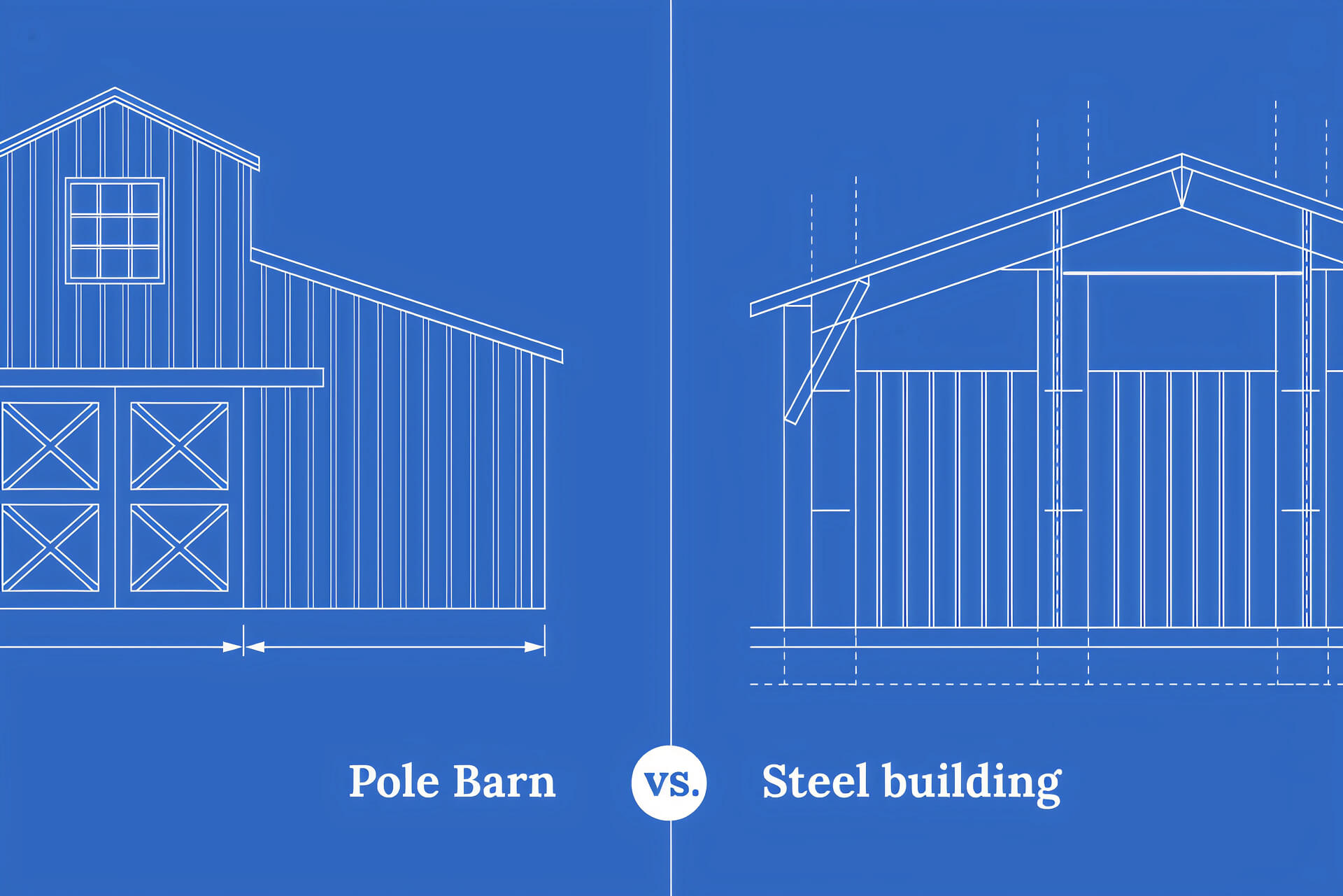
The right choice depends on priorities. If your main focus is short-term savings and light-duty storage, a pole barn may meet your needs. If durability, low maintenance, and long-term value matter most, a metal building often stands out.
Steel structures resist pests, moisture, and fire. They anchor securely to a concrete slab and maintain structural integrity for decades. For homeowners planning a permanent garage, workshop, or equipment storage solution, this stability brings peace of mind.
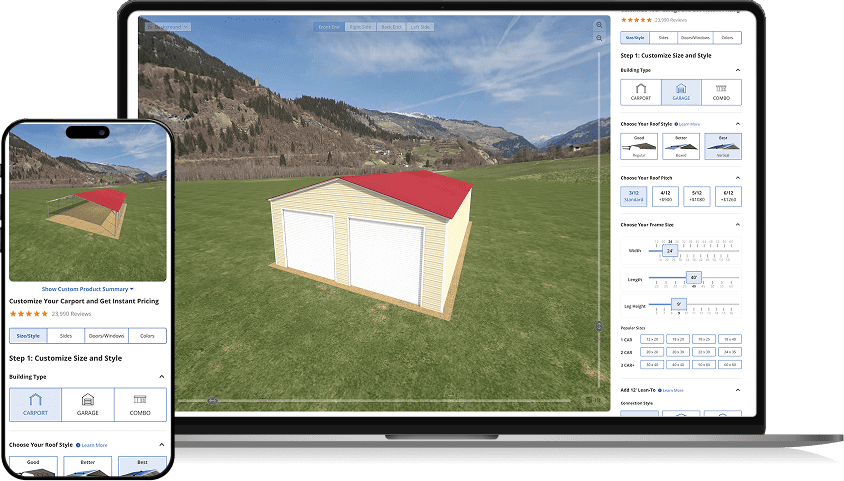
Alan’s Factory Outlet provides galvanized steel buildings with free delivery and installation. If you are ready to compare options and design your structure, use our 3D Carport & Metal Building Designer tool to start planning your project today.