


If you’re dreaming of opening your own auto repair shop, or maybe you just want the ultimate home garage for weekend engine rebuilds — a mechanic shop building made from steel might be the better move.
Sure, plenty of people go online searching for an existing shop for sale. However, once you factor in the cost of renovations, outdated layouts, and potential zoning issues, building a customized, cost-effective solution from scratch becomes a more sensible option.
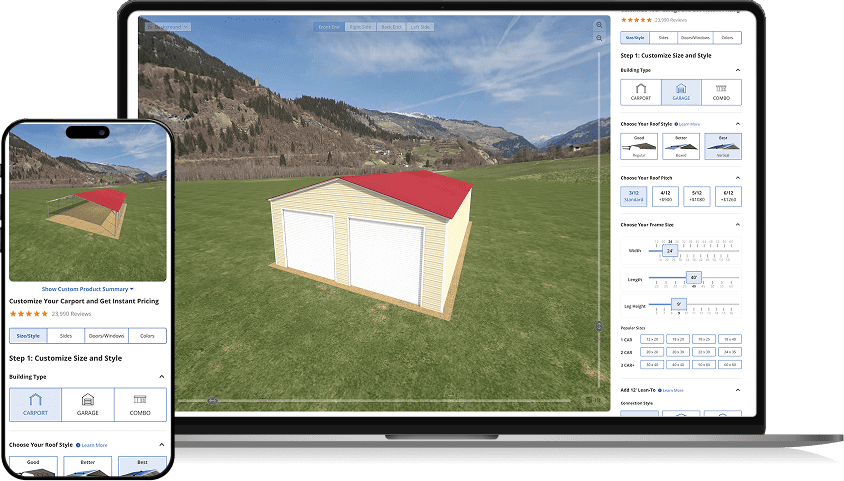
A steel garage built from a prefab metal building offers exactly that. You get control over the design, from clear-span interiors with space for multiple bays to oversized roll-up doors that accommodate trucks or equipment.
Alan’s Factory Outlet specializes in this type of garage. Our buildings can be configured as full-scale commercial workshops or personal hobby shops, with plenty of add-ons to fit your setup. If you’re looking for a smarter way to build, not just buy, a mechanic shop building, steel makes it easy to get started.
Why Choose a Steel Mechanic Shop Building?
Steel continues to dominate modern construction thanks to its durability, precision, and design flexibility. In fact, more than 70% of all steel-framing use in the U.S. is tied directly to building and construction, making it one of the most relied-on structural materials today.
Here are just a few reasons steel beats traditional materials for mechanic shops:
- Durability. Steel resists pests, warping, and corrosion better than wood or concrete.
- Low Maintenance. With fewer upkeep concerns, owners can focus on the work, not the building.
- Fire Resistance. A key feature when working around flammables like oil and fuel.
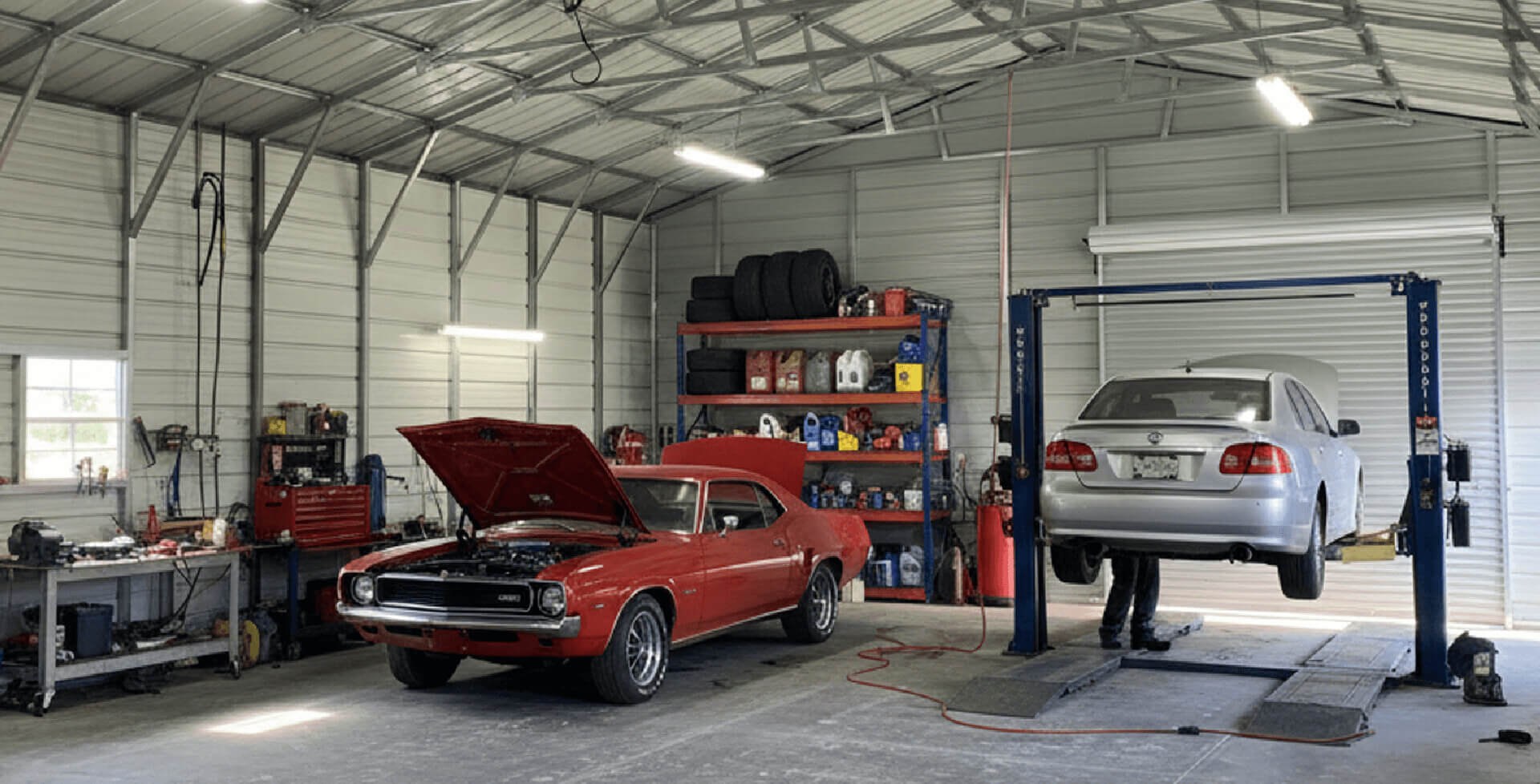
Thanks to clear-span framing, you’ll also enjoy a wide-open, column-free layout — ideal for lifts, workbenches, or multiple service bays. Whether you’re running a commercial metal garage or setting up a home workshop, a steel building holds up in all kinds of weather conditions and typically includes a one-year warranty from manufacturers like Alan’s.
Customization Options for Your Mechanic Garage
Every mechanic shop has different needs, whether it’s a small weekend project space or a full auto repair business. That’s why steel garages come with broad customization options designed to meet your layout, functionality, and comfort needs.
Start with features that support comfort and efficiency:
- Insulation. Keeps the building temperature stable year-round.
- Ventilation. Add ridge vents, exhaust fans, or windows to maintain airflow.
- Climate Control. Allows for heating and cooling systems for year-round work.
Then, tailor the building design to your workflow:
- Building Size. Choose dimensions that suit your available lot and planned work area.
- Roll-up Doors. Go with 10’×10′ or larger for equipment or oversized vehicle access.
- Lean-to. Extend your workspace with a covered area on one or both sides.
- Interior Finishes. Add drywall, shelving, or partition walls as needed.
All of these features support both design flexibility and realistic timelines. So, whether you’re planning a showroom, workshop, or small body shop, your metal building can be configured to fit your specific needs.
Starting a Mechanic Shop: Building vs. Buying
Buying an old auto repair shop building can feel like a shortcut, but it often means inheriting worn-out equipment, outdated wiring, and floor plans that don’t match your workflow. Starting a new building project with prefabricated steel buildings lets you control the layout, add modern amenities, and avoid hidden repair costs.
For entrepreneurs setting up commercial buildings like a body shop or repair garage, building new is often more cost-effective over the long run, especially with lower upkeep and fewer surprises down the road.
How Much Does It Cost to Build a Mechanic Shop?
Building costs can vary widely, but for most, the final price depends on square footage, customization, and local conditions. A 30×50 steel garage — enough for a small repair business or a serious hobbyist — starts around $16,500. At the same time, a larger 40×60 fully enclosed metal building typically begins at around $35,000, excluding site preparation and permits.
Factors that affect cost include:
- Size and layout
- Insulation and interior finish
- Custom features like windows or extra doors
- Labor, foundation type, and local permits
Alan’s Factory Outlet includes installation with most purchases and offers a free quote to help you budget. For many business owners or homeowners, a steel building kit is a more affordable and efficient option than traditional construction. These pre-engineered metal buildings also come with fewer delays and simpler logistics, especially when you plan ahead for building materials and permits.
Designing the Ideal Workspace
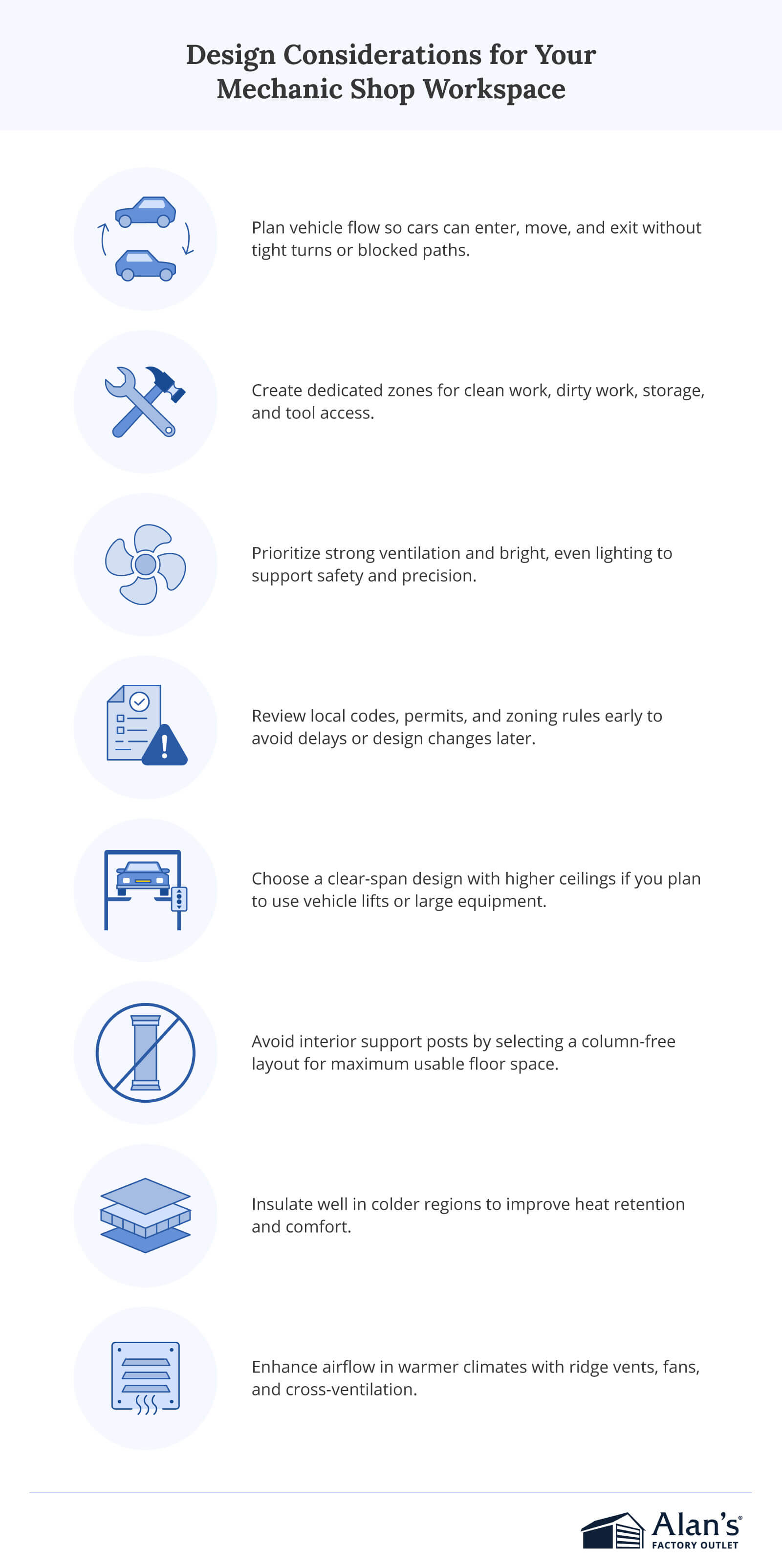
A well-planned shop layout keeps your workflow smooth and prevents everyday bottlenecks. Keep these key points in mind when designing a steel building for repairs, restoration work, or serious hobby projects:
- Plan vehicle flow so cars can enter, move, and exit without tight turns or blocked paths.
- Create dedicated zones for clean work, dirty work, storage, and tool access.
- Prioritize strong ventilation and bright, even lighting to support safety and precision.
- Review local codes, permits, and zoning rules early to avoid delays or design changes later.
- Choose a clear-span design with higher ceilings if you plan to use vehicle lifts or large equipment.
- Avoid interior support posts by selecting a column-free layout for maximum usable floor space.
- Insulate well in colder regions to improve heat retention and comfort.
- Enhance airflow in warmer climates with ridge vents, fans, and cross-ventilation.
Use Case Examples
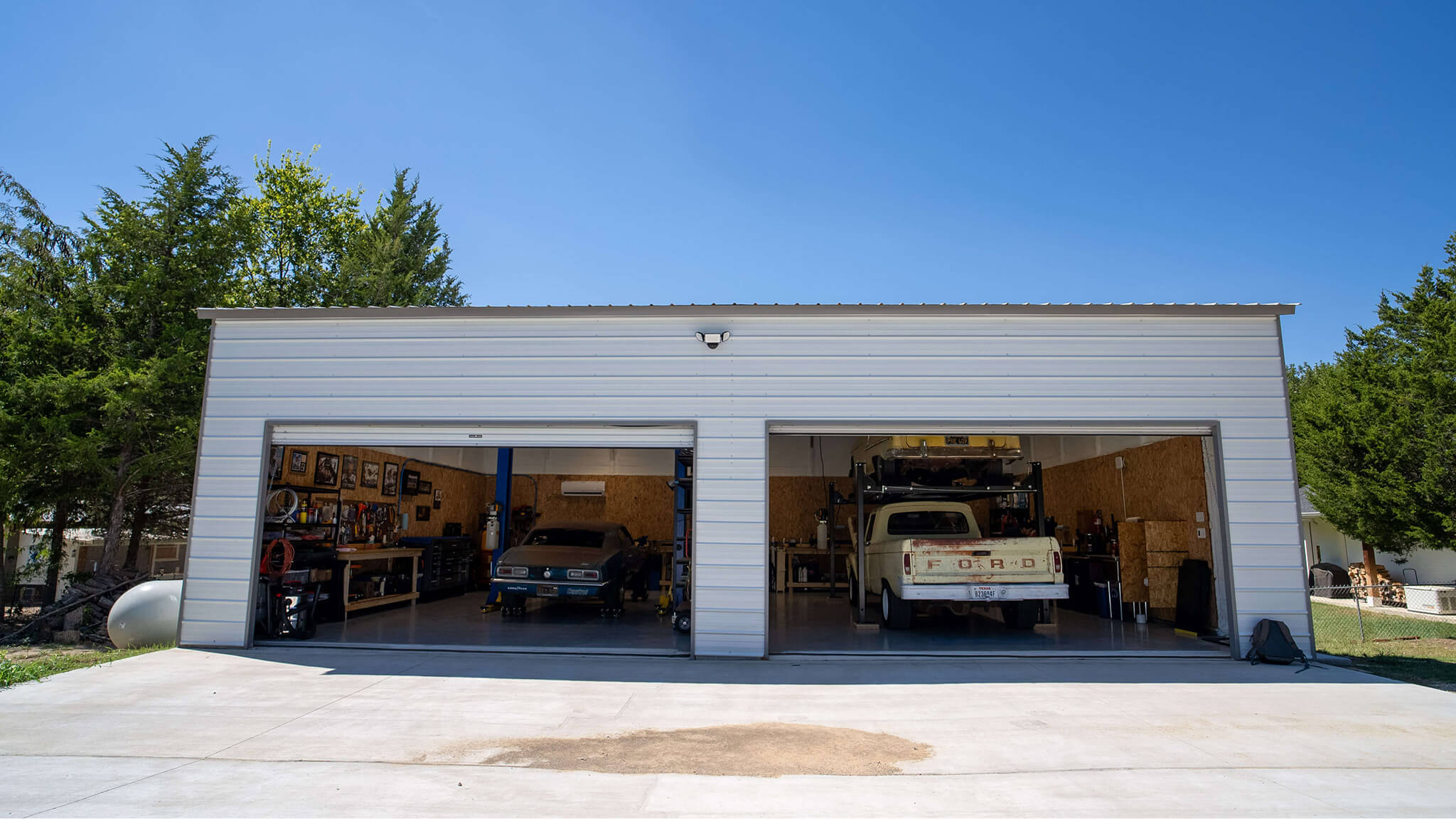
For a small repair shop owner, a 24×40 steel garage can become the perfect setup, offering room for two lifts, clean tool organization, and an open floor plan that keeps vehicles moving throughout the day without bottlenecks.
For a classic-car collector, a 30×50 workspace provides the necessary breathing room for restoration and detailing. Separate zones, steady lighting, and reliable insulation help protect their collection while keeping the work environment comfortable.
For a weekend hobby mechanic, a smaller steel garage can be customized around simple upgrades — better ventilation, smart storage, and a clear, open layout that fits weekend projects without overwhelming the property.
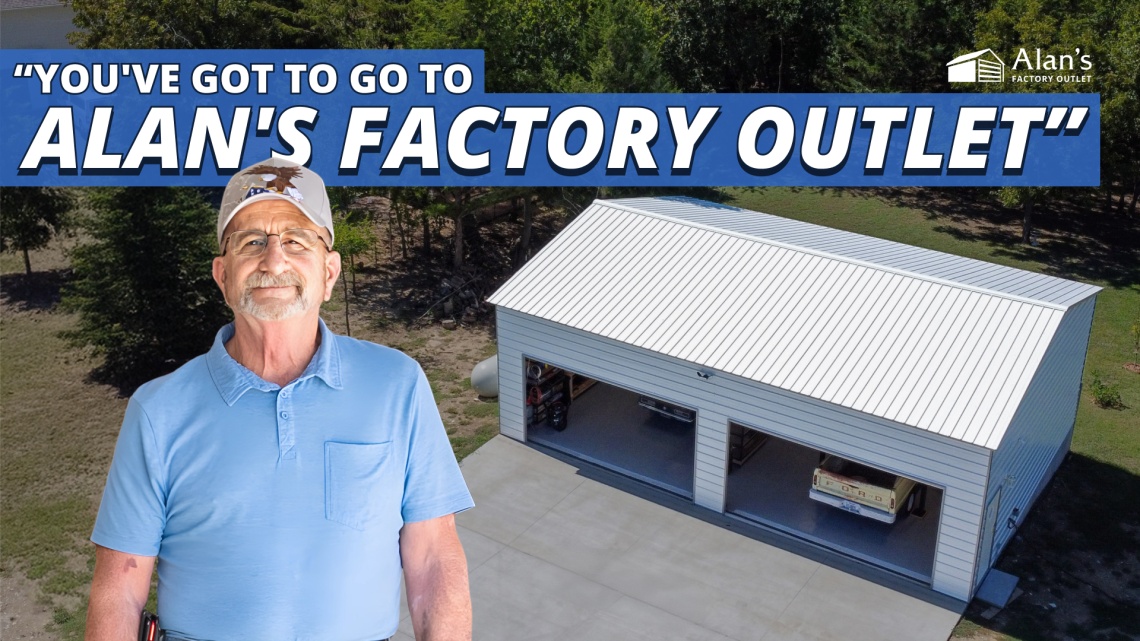
In this video, John Varsalone walks us through his custom setup — a fully insulated, well-lit garage that balances comfort and functionality. John’s shop shows what’s possible when you build it your way.
Ready to Build Your Mechanic Shop?
Whether you’re starting a new venture or upgrading your garage, a mechanic shop building from Alan’s Factory Outlet offers the kind of performance and value that lasts. From affordability and durability to quick installation and nearly endless customization, it’s a practical way to launch your project without delays or surprises.
Installation is included in most orders, and you can explore options like commercial metal buildings or workshops directly through Alan’s. Don’t guess on the details — get a free quote and see how a pre-engineered steel building can fit your needs.
Design your mechanic shop building today with Alan’s Factory Outlet.
FAQs for Mechanic Shop Buildings
Looking for quick answers? Here are a few of the most common questions about designing and building a steel mechanic shop.
What type of building is a mechanic shop?
A mechanic shop is typically a steel building designed for automotive repair, combining pre-engineered metal buildings with the versatility needed for lifts, bays, and tool space.
What permits or zoning requirements apply?
Permit and zoning requirements vary, so check with your local city or county office before starting your building project. Most areas classify mechanic shops as commercial buildings, which means stricter building code rules.
What size metal building is best for an auto repair shop?
A 30×50 metal building suits most smaller garages, while 40×60 or 50×100 sizes are better for larger auto repair shop setups. Choose based on your workspace needs, lot size, and shop type to match your mechanic shop building plan.