



For many Americans, the driveway or curb is where their car spends most of its time. Whether it’s under summer sun or coated in winter frost, outdoor parking can quietly wear down even the most dependable vehicle. Over the years, that exposure can leave a mark on the paint, on the parts, and eventually, on the car’s value.
Alan’s Factory Outlet conducted a two-part study to understand how weather impacts vehicles parked outdoors. We first examined climate data from 200 major U.S. cities to rank locations by their risk of weather-related vehicle depreciation. We then surveyed 1,006 car owners to learn how they protect their vehicles from the elements and what weather damage has cost them.
For car owners, these findings are a good reminder that the weather can quietly take a toll over time. Heat, cold, and moisture all add up, affecting how your vehicle looks and how long it lasts. The good news is that much of this damage can be avoided. Parking under a roof, whether it’s a carport or a garage, can make a big difference in protecting your car’s condition and value.
Key Takeaways
- Florida dominates the list of worst cities to park outside, with Hialeah, Pembroke Pines, Hollywood, and Fort Lauderdale all within the top 5 due to weather-related damage risk.
- California cities dominate the safest spots, with Oakland and San Francisco at the top.
- More than 1 in 2 car owners (53%) park outdoors without weather protection, and 61% have experienced weather-related damage as a result.
- Nearly 1 in 4 (23%) think their local weather is causing more damage to their car than driving.
- Car owners reported spending an average of $585 per incident to repair weather-related damage to their vehicles, and nearly 1 in 4 said they spent over $1,000.
- Tesla owners reported the highest weather-related repair costs, spending an average of $927 per vehicle.
Where Weather Damages Cars the Fastest
According to Carfax, the typical new vehicle loses about 40% of its market value after five years. However, in cities with extreme temperatures or heavy precipitation, the rate of depreciation can climb significantly. Factors such as UV exposure, humidity, and cold snaps all contribute to accelerated wear and tear, especially for older cars left outdoors.
To estimate car depreciation from weather in different U.S. cities, we developed a Weather Risk Score based on:
- Summer heat risk (average maximum temps)
- Winter cold risk (average minimum temps)
- UV and moisture exposure (average summer UV index and precipitation)
Taking these factors into account, the depreciation rate increased by up to 5% in cities with the harshest weather. That means a car that might lose 40% of its original value under normal conditions could lose up to 45% when parked outside year-round.
Florida’s hot, humid climate makes it a tough place to protect a vehicle’s value. The cities of Hialeah, Pembroke Pines, Hollywood, and Fort Lauderdale ranked among the top five for the highest depreciation risk. In these areas, paint damage, rust, and engine wear are more likely to occur faster, raising maintenance and car insurance costs and lowering a vehicle’s resale value.
Top 10 Worst U.S. Cities to Park Your Car Outside (Due to Higher Weather Damage Risk)
- Hialeah, FL
- Pembroke Pines, FL
- Sioux Falls, SD
- Hollywood, FL
- Fort Lauderdale, FL
- Minneapolis, MN
- Phoenix, AZ
- St. Paul, MN
- Houston, TX
- Chandler, AZ
By contrast, the safest areas for protecting a car’s value were in California. Oakland, San Francisco, and Salinas had the mildest conditions for preserving a vehicle’s residual value and keeping depreciation low.
Top 10 Best U.S. Cities to Park Your Car Outside (Due to Lower Weather Damage Risk)
- Oakland, CA
- San Francisco, CA
- Salinas, CA
- Huntington Beach, CA
- Oxnard, CA
- San Diego, CA
- Oceanside, CA
- Chula Vista, CA
- Hayward, CA
- Seattle, WA
Even in California’s drier climates, constant sun exposure can still take a toll on a car’s paint and interior over time. UV rays fade color, crack dashboards, and dry out rubber seals, especially on vehicles parked outside daily. A carport or covered parking space still plays a key role in reducing long-term depreciation from sun damage.
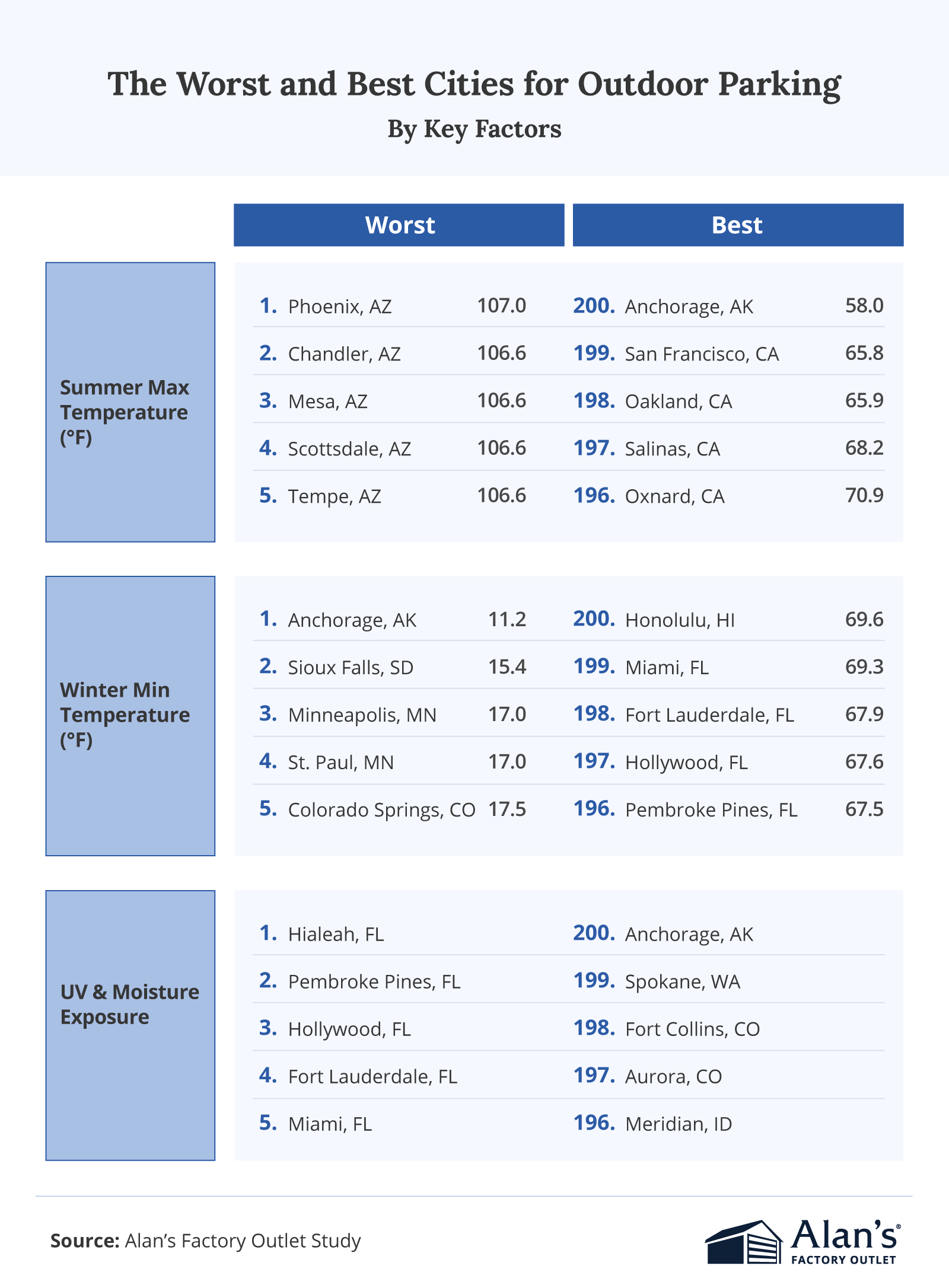
The following cities experience the fastest vehicle depreciation for cars parked outdoors, reducing resale and trade-in potential for owners trying to sell or upgrade to a new car at a dealership.
Top 15 Cities With the Highest Estimated 5-Year Weather-Related Depreciation
- Hialeah, FL: 45%
- Pembroke Pines, FL: 44.78%
- Hollywood, FL: 44.57%
- Fort Lauderdale, FL: 44.44%
- Miami, FL: 44.28%
- Sioux Falls, SD: 44.27%
- Houston, TX: 44.19%
- Pasadena, TX: 44.18%
- Phoenix, AZ: 44.18%
- Tampa, FL: 44.08%
- Chandler, AZ: 44.04%
- Mesa, AZ: 44.04%
- Scottsdale, AZ: 44.04%
- Tempe, AZ: 44.04%
- Gilbert, AZ: 44.01%
Who Protects Their Cars and Who Doesn’t
Most car owners understand that regular maintenance like oil changes, clean service records, and keeping mileage low help preserve a car’s resale value. However, weather protection is often overlooked, even though it impacts vehicle depreciation and long-term costs.
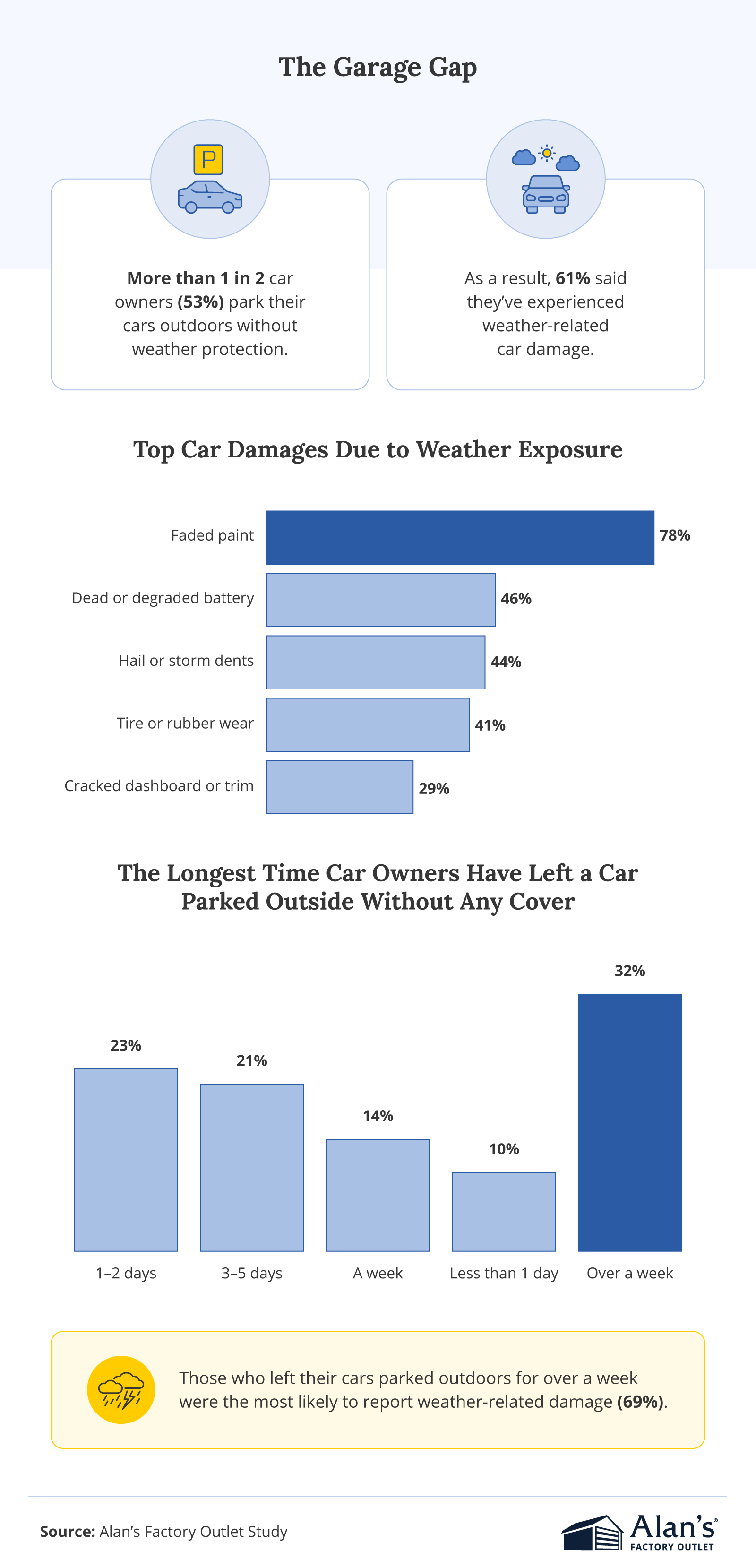
More than half of car owners (53%) park outdoors without protection, and 61% have experienced weather-related damage as a result. Among them, faded paint (78%) topped the list, followed by dead batteries (46%), storm dents (44%), and tire damage (41%). Nearly 1 in 4 drivers (23%) said their local weather causes more harm than daily driving habits, and 44% believe their area’s climate is reducing their vehicle’s lifespan.
Chevrolet (71%), Volkswagen (67%), and Nissan (66%) owners were most likely to park outside. Luxury cars and electric vehicles, such as BMW (78%) and Tesla (67%), were more commonly parked in private home garages.
A surprising 7% of respondents said they would rather give up high-speed internet for a whole year before giving up indoor parking. That reflects how much these car owners value garage space when it comes to maintaining resale value and avoiding expensive repairs.
The Financial Toll of Leaving Your Car Outside
Most people don’t think twice about parking outside, until the weather reminds them why it matters. And when it comes time to repair or resell, that exposure can make a noticeable difference in both condition and cost.
Only 1 in 9 car owners believed their vehicles were built to handle most weather conditions. EV (22%), hybrid (17%), and truck owners (17%) were the most likely to think so. A quarter of drivers said they’ve even chosen a specific vehicle or color based on their local climate. These findings show how much the weather influences the way people buy and care for their cars.
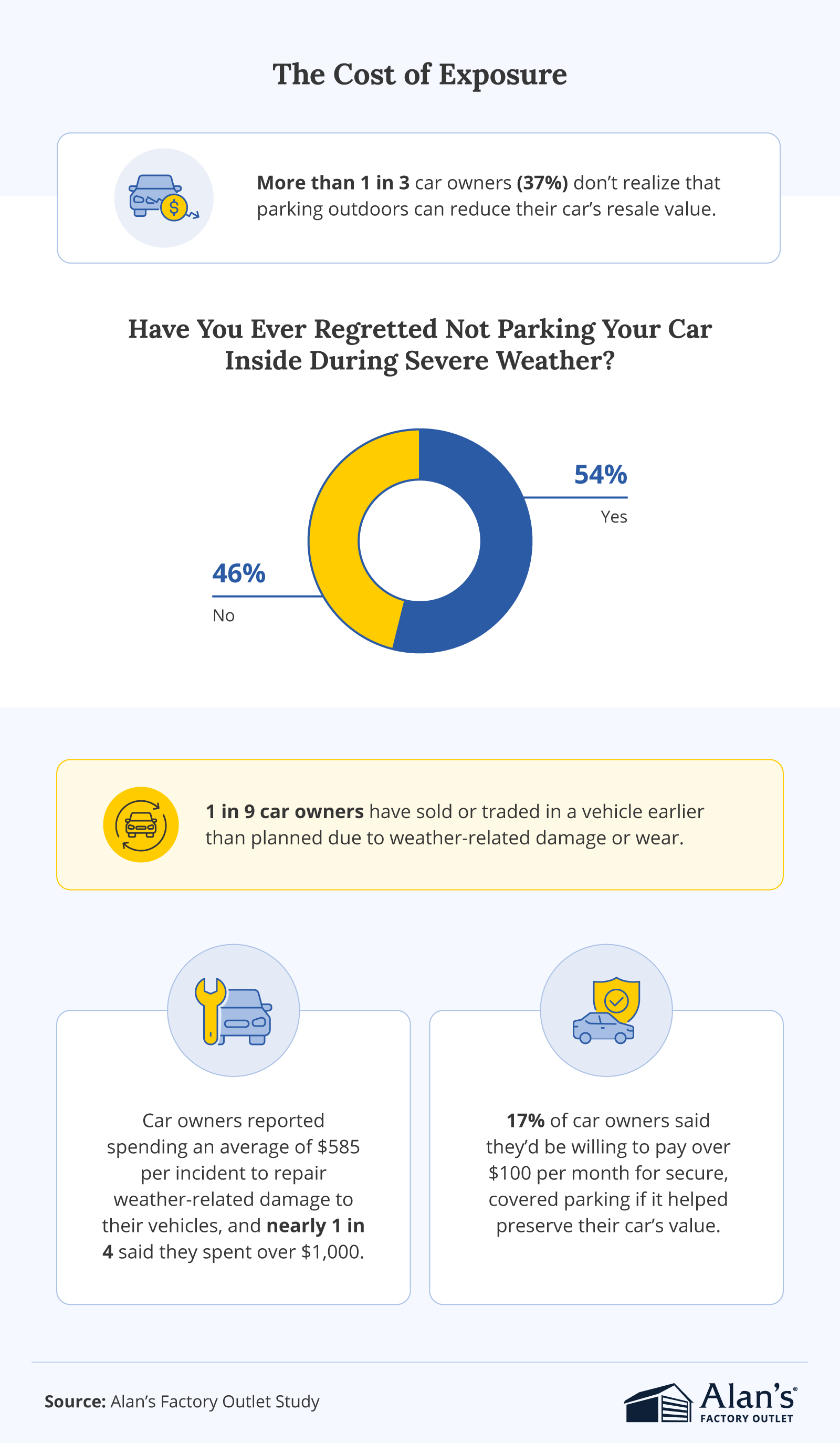
Feeling confident in a vehicle’s toughness is one thing, but storms and temperature swings often tell a different story. Many owners have learned the hard way what happens when a car faces the weather unprotected. More than half (54%) have regretted not parking indoors during severe weather events.
On average, drivers spent $585 per incident on weather-related repairs, while nearly 25% spent over $1,000. Tesla owners faced the steepest repair bills, averaging $927 per repair, followed by Jeep ($789), Mazda ($717), BMW ($717), and Chevrolet ($701) owners.
For some drivers, the effects of weather have been enough to inspire major life changes. Roughly 1 in 4 car owners (26%) said they’ve considered moving or buying a home with a garage after dealing with weather-related damage to their car. For many, simply adding a carport or enclosed garage could be the difference between repeat repairs and long-term protection that keeps their car looking and running like new.
Conclusion: Protecting Your Car’s Value Starts With Shelter
Whether you drive a brand-new model or a well-loved classic car, keeping it protected from the weather can make a real difference in how long it lasts and how much it’s worth down the road. The data shows that cars left outside face more damage, higher repair costs, and faster depreciation, but the solution doesn’t have to be complicated.
Parking under a sturdy carport or inside a metal garage can help reduce wear, preserve resale value, and save money on maintenance over time. A little shelter today can go a long way toward keeping your car in great shape for years to come.
FAQ About Car Depreciation
Understanding how car depreciation works can help you make smarter choices when buying, selling, or protecting your vehicle. Below are some of the most common questions drivers ask about how cars lose value over time, when depreciation slows down, and what factors can help preserve your vehicle’s worth.
What year does a car depreciate the most?
The biggest loss in initial value happens in the first year after purchase. Once a car leaves the dealership, it’s considered a used vehicle, and that instant shift from original purchase price to resale value can mean a sharp decline.
At what point does car depreciation slow down?
Car depreciation usually slows after the first few years of ownership. After about five years old, depreciation tends to level off as the car’s resale price stabilizes. Over time, regular maintenance, service history, and warranty coverage can help slow down depreciation and make the vehicle more appealing to potential buyers. Tools like a car depreciation calculator or data from Kelley Blue Book (KBB) can help estimate when your specific make and model might hold steady in value.
When is the best time to buy a car to avoid depreciation?
If you want to minimize depreciation, consider buying a used car that’s already a few years old. Most cars take their biggest hit in value in the first year, so buying after that initial drop means you’re getting more car for your money. According to KBB, Toyota models tend to hold their value better than many others in the car market, thanks to strong market demand and reliability records.
What causes some cars to lose value faster than others?
Depreciation depends on several factors, including market demand, repair costs, and perceived reliability. Luxury cars like Porsche and some high-end BMW models often lose value faster due to higher ownership and maintenance expenses. In contrast, brands like Toyota and Honda tend to depreciate more slowly because they’re known for durability and lower long-term costs. You can check rankings from iSeeCars to see how your vehicle compares.
Does insurance affect car depreciation?
Your insurance company doesn’t directly determine depreciation, but insurance claims and accident history can significantly reduce a vehicle’s value. Even a minor accident can lower the resale amount. Keeping good service records and avoiding unnecessary claims can help protect your car’s market value when you’re ready to sell or trade in.
Methodology
To determine which U.S. cities are the most punishing for vehicles parked outdoors, we analyzed detailed climate data and estimated weather-related vehicle depreciation across 200 major cities. Our approach focuses on three key climate-related risk factors that accelerate vehicle wear, especially for those not parked in garages.
All weather data was sourced from World Weather Online’s Historical Weather API, which provides historical averages for temperature, UV index, and precipitation across global locations. The weather factors included:
- Summer heat risk (40% weight): Measured using the average maximum temperatures during summer months within the past 3 years
- Winter Cold Risk (35% weight): Measured using the average minimum temperatures during winter months within the past 3 years
- UV and moisture exposure (25% weight): Only summer UV and precipitation were used, as vehicles are more exposed and vulnerable during hot, wet months
Cities were then ranked from No. 1 (most risk) to No. 200 (least risk) based on their total score. A higher rank means greater weather-related exposure and potential vehicle damage when parked outside over time.
We also surveyed 1,006 car owners to explore how people protect their vehicles from the weather elements and what it’s costing them. Data was collected in October 2025.
About Alan’s Factory Outlet
Alan’s Factory Outlet helps car owners protect their vehicles from the damaging effects of weather with durable, affordable metal carports, garages, and storage buildings. Each structure is built to handle a variety of climates, from harsh sun to heavy snow, helping reduce the wear and tear that leads to costly repairs and faster car depreciation. With customizable sizes and styles, Alan’s Factory Outlet makes it easy for homeowners to add reliable shelter that protects their car’s value and keeps it looking its best.
Fair Use Statement
The information and data in this article may be shared for noncommercial purposes only. If you choose to use or reference any part of this content, please provide proper attribution and a link back to Alan’s Factory Outlet.