


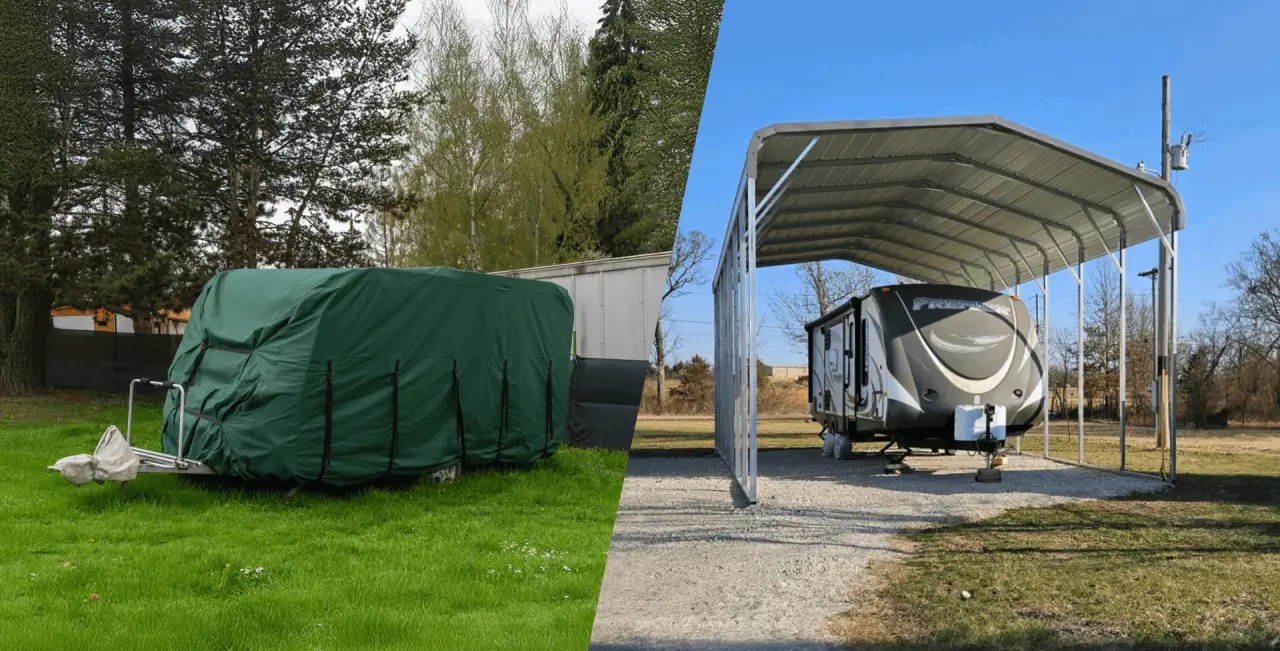
Each winter, RV owners across the country pull out their fabric RV covers, stretching and strapping them over their motorhome or camper in hopes of keeping the weather at bay. After just a few seasons, though, those same covers start to show wear with torn edges, mildew spots, or worse, a complete failure during a windstorm. Replacing them becomes a familiar, frustrating ritual.
But there’s another option, one that doesn’t need replacing every few years. A metal RV carport offers long-term weather protection, more reliable RV storage, and peace of mind regardless of the season. Instead of wrestling with fabric or worrying about snow, UV rays, or high winds, RV owners can drive their recreational vehicle under a permanent shelter designed to last for decades.
This article compares RV covers and metal RV carports head-to-head, helping you decide which storage solution fits your needs. We’ll break down the differences in durability, cost, convenience, and performance in harsh weather.
Durability: How Long Will It Last?
For RV owners, durability should be top of mind when choosing a storage solution. Fabric RV covers can provide short-term protection, but they often degrade quickly, especially when exposed to UV rays, strong winds, or harsh weather. In contrast, steel RV carports are built to last, providing long-term reliability through all seasons.
Here’s how the two compare in terms of materials and performance:
- Fabric RV covers wear out over time. They’re prone to tearing, especially in areas with high wind or sharp temperature swings.
- Fabric can trap moisture. This moisture creates the risk of mildew or mold on your recreational vehicle, even if it’s covered.
- Steel RV carports are made from durable materials. Steel structures resist rust, corrosion, and sun damage, withstanding long-term exposure to UV rays.
- Metal carports stay in place. Anchored to the ground, they don’t blow off or shift during strong winds or storms.
- Warranties add peace of mind. While many fabric covers offer only limited short-term protection, most steel RV carports include multi-year warranty coverage, reflecting their superior build quality.
If you’re looking for a truly durable solution, steel structures are designed to withstand nature’s worst year after year.
Convenience and Everyday Use
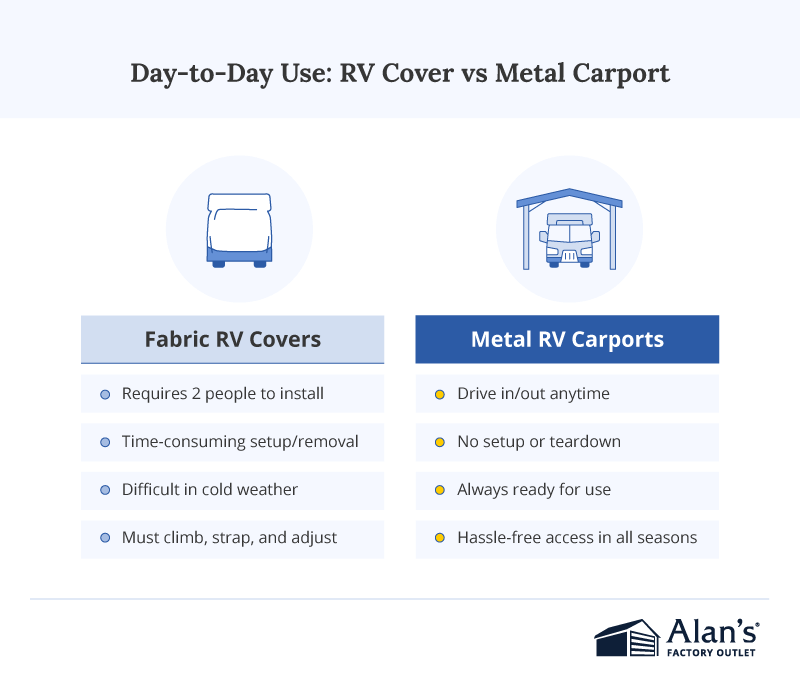
For many RV owners, convenience is just as important as protection. Fabric RV covers often require two people to secure them into place, which is a process that can be time-consuming, awkward, and frustrating. Taking them off isn’t much easier, especially in cold weather or when pressed for time.
A metal RV carport eliminates that hassle. With easy access at any time, you can drive your motorhome or camper in and out without dealing with straps, zippers, or ladders. This convenience makes daily or weekend use more enjoyable and less of a chore.
Beyond sheer functionality, a permanent structure offers peace of mind. You don’t have to worry whether your fabric RV cover is secured properly or if a storm will rip it off. Your recreational vehicle is always protected and ready to go, requiring no setup or teardown.
Cost Comparison: Upfront vs. Long-Term
Initially, fabric RV covers might seem like the more cost-effective choice. With prices ranging from $150 to $500 or more, depending on the quality, they offer short-term savings, but those savings add up quickly once you account for replacements, wear and tear, and potential costly repairs from inadequate protection.
Most RV owners find themselves replacing fabric covers every two — three years. By year six, you could easily spend $1,000 or more, not including any damage to your recreational vehicle caused by wind, mildew, or UV exposure.
On the other hand, steel RV carports typically cost more upfront, but they’re a one-time investment that lasts for decades. Plus, they add property value and eliminate the cycle of frequent replacements.
Here’s a side-by-side look:
| Cost of Fabric RV Covers vs. Metal RV Carport | ||
|---|---|---|
| Feature | Fabric RV Covers | Steel RV Carports |
| Average cost | $300 to $500 | $1,300 to $5,000+ |
| Lifespan | Two to three years | 20+ years |
| Replacement frequency | Every few years | Rarely, if ever |
| Protection level | Moderate | High (all-weather resistant) |
| Adds property value | No | Yes |
| Customization options | Limited | Extensive |
| DIY installation | Yes, but requires effort | Yes, with professional help |
Weather Protection in All Conditions
When it comes to weather protection, not all RV shelters perform the same. While fabric RV covers offer basic coverage, they often struggle under pressure. From heavy snowfall to high winds and intense UV exposure, harsh weather puts these materials to the test. In contrast, steel structures like metal RV carports are built to handle region-specific conditions, giving your recreational vehicle more dependable protection year-round.
Here’s how the two options compare under various weather challenges:
- Snow load resistance. A vertical roof on a metal carport allows snow to slide off easily, reducing the risk of collapse. Fabric covers often sag and stretch under the weight of snow.
- Performance in high winds. Steel structures can be securely anchored to resist high winds, while fabric covers can blow off or tear.
- Protection from heavy rain. Metal buildings with enclosed sides or roof overhangs channel water away from your motorhome, unlike a loose tarp that may pool water or leak.
- Defense against UV rays and heat. Fabric weakens with prolonged sun exposure, while a steel carport offers consistent shade and reduces long-term sun damage.
- Built for regional climates. With various roof styles, side panel options, and anchoring methods, you can customize metal RV carports for your specific environment, including areas with coastal storms or mountain snow.
Customization and Aesthetics
One benefit of metal RV covers is their flexibility in both function and form. Unlike fabric covers, which typically come in a few standard sizes and colors, you can personalize metal structures to your specific preferences.
Here are several ways you can customize a metal RV carport:
- Choose your roof style. Options include a regular roof with rounded edges, an A-frame design for a more residential look, or a vertical roof for better drainage and snow runoff.
- Adjust the height. A Class A RV may require 14-foot sides, while a smaller Class C could fit under a lower RV port. Taller carports also improve ventilation and maneuverability.
- Select the width and length. Customize dimensions to fit a single camper, a double motorhome, or even create a full RV garage setup.
- Match your home’s look. With color choices for the roof, trim, and panels, your carport can complement existing buildings and improve curb appeal.
- Opt for enclosed sides. Turn an open metal RV cover into a more secure structure that looks and functions like a garage.
Installation and Anchoring: What to Expect
Installing a metal RV carport is easier than many first-time buyers expect. Alan’s Factory Outlet makes the process smooth with free on-site delivery and setup included in every order.
Below is a quick overview of what to expect with your building project:
- Choose your foundation. You can anchor steel RV carports on gravel, concrete, or asphalt surfaces.
- Pick your size and options. Measure the storage space needed for your RV or camper, then select your roof style, height, and any additional features.
- Place your order online or by phone. Alan’s makes it simple to start your project — you can use our online builder or call for support.
- Prepare the site. Clear and level the area where the carport will go. A flat surface ensures proper installation and long-term durability.
- Let Alan’s Factory Outlet handle the rest. Unlike most DIY kits, our metal RV carports come with professional setup at no extra cost, so your metal building is securely installed and ready to use.
Why One RV Owner Switched to a Metal Carport
For many RV owners, the decision to upgrade from fabric RV covers to a metal RV carport comes from real-life experience. Michael, a recent retiree, found himself using his travel trailer and boat far more often and needing a reliable way to protect both.
Michael chose a custom metal RV carport from Alan’s Factory Outlet that offered the exact clearance height for his trailer and enough width to shelter his boat alongside it.
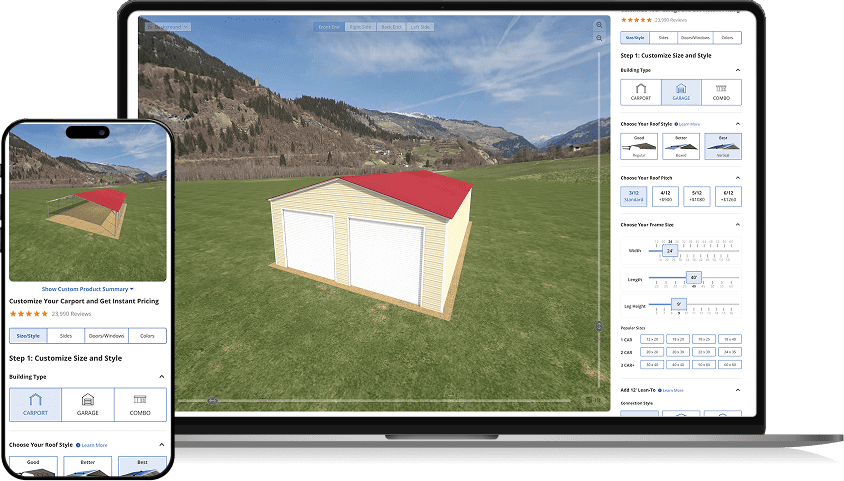
Using the 3D builder, he easily designed the structure online, selecting the features he needed without any guesswork. The quick install made the entire process smooth, and now he has year-round weather protection plus lasting peace of mind knowing his equipment is safe and ready whenever he needs it.
For RV owners like Michael, the switch to a permanent carport has simplified his life, protects his investments, and makes the most of retirement adventures.

Which RV Shelter Is Best for You?
When comparing RV covers and metal RV carports, the difference is clear. While fabric covers may be suitable for short-term use, they fall short in durability, weather resistance, and convenience. For RV owners seeking a long-term storage solution, a metal RV carport delivers better protection, easier access, and greater peace of mind.
Not only are steel carports more cost-effective over time, but they also add property value and eliminate frequent replacements. With customization options, DIY tools like the 3D builder, and free delivery and setup, Alan’s Factory Outlet makes it easy to upgrade.
Get started by visiting Alan’s Factory Outlet for a free quote for your custom RV carport.
FAQs
Before making the switch from fabric covers to a permanent shelter, many buyers have questions about performance, value, and materials. Below are answers to some of the most common concerns about metal RV carports and how they compare to traditional RV covers.
Can I use an RV carport as a camper cover in winter?
Yes. A metal RV carport is an excellent option for winter coverage. Unlike fabric RV covers, which can sag or tear under the weight of snow, steel RV carports are engineered to handle heavy snow loads in many regions. They offer superior functionality in harsh weather and help protect your camper from moisture, wind, and cold temperatures.
Do metal RV covers increase home value?
Likely, yes. Metal RV carports are considered permanent improvements, especially when installed on a concrete foundation. Because they add usable storage space and enhance property utility, they can improve curb appeal and contribute to resale value.
What is the best material for an RV cover?
For long-term durability and year-round protection, steel is the best material. While fabric RV covers are lighter and cheaper, they’re prone to mildew, tearing, and UV breakdown. Steel RV carports are built to last decades, often come with a warranty, and provide the most reliable defense against harsh weather.