


Keeping horses or livestock means thinking ahead about comfort, safety, and how much work you want to put in over time. The barn plays a big role in all of that. That’s why a lot of horse owners go with metal. It’s sturdy, easier to maintain than wood, and helps with airflow, which makes a big difference in daily care.
This guide covers the basics — stall sizes, layout ideas, cost comparisons, and common add-ons. You’ll also get help choosing between a prefab horse barn and a custom barn, plus tips on ventilation, material options like a metal roof, and how to plan a setup that fits your animals and your property.
With over 20 years of experience, Alan’s Factory Outlet helps customers build barns that match their needs, whether it’s a compact prefab or a fully customizable metal barn. Ready to build smarter? Here’s how to design the right horse barn for your animals and your property.
Key Features and Benefits of Modern Horse Barns
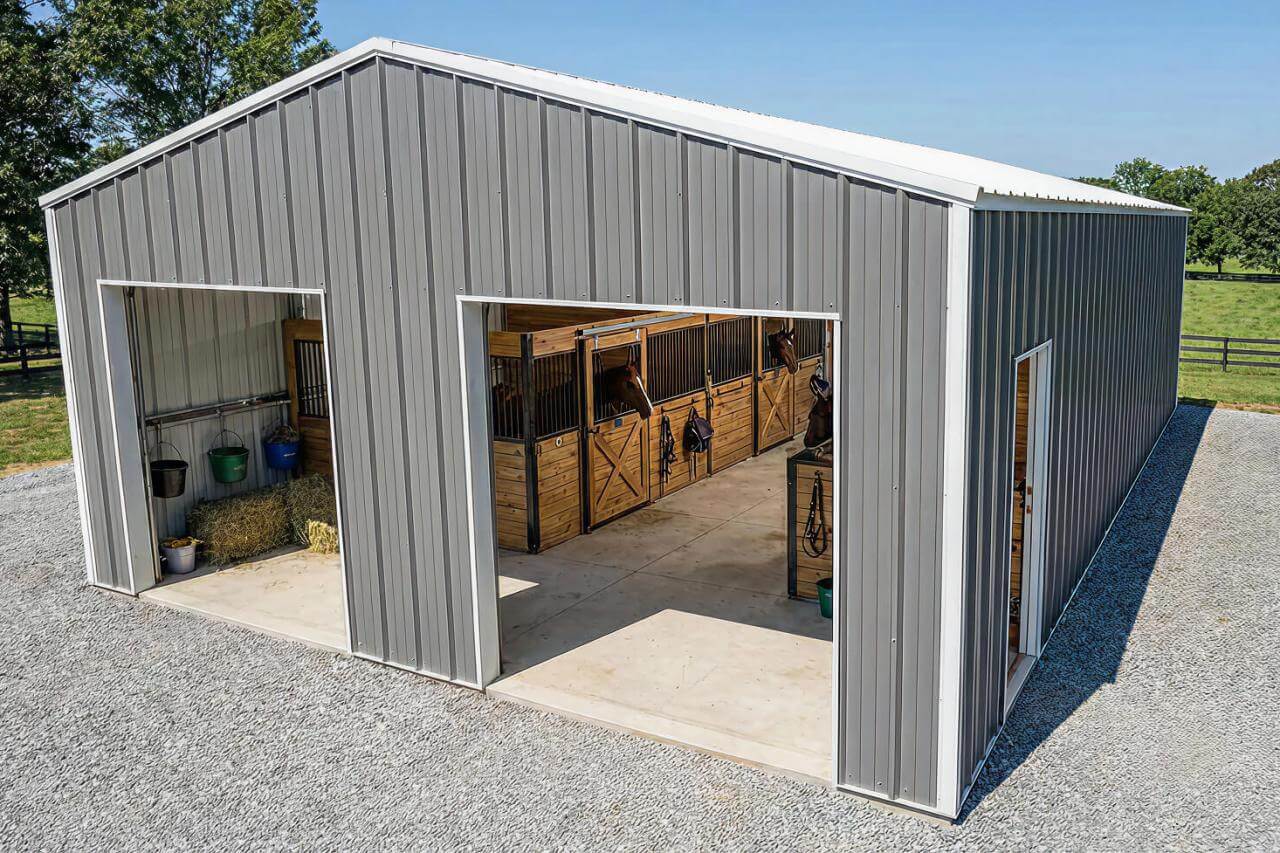
A horse barn is a dedicated structure built to house and protect horses, often featuring stalls, a tack room, feed areas, and storage. These barns can also serve as shelters for goats, cattle, and other livestock. Today, many equestrian property owners choose metal horse barns for their durability, weather resistance, and lower maintenance needs compared to wood.
Whether you’re building a new barn or upgrading an existing one, smart design and quality construction make daily care easier, improve safety, and extend the barn’s lifespan. The best horse barns combine functionality, comfort, and protection with thoughtful features like:
- Individual stalls. Secure, defined spaces help reduce stress and prevent injury.
- Tack room. A dry, locked area for storing saddles, bridles, feed, and grooming tools.
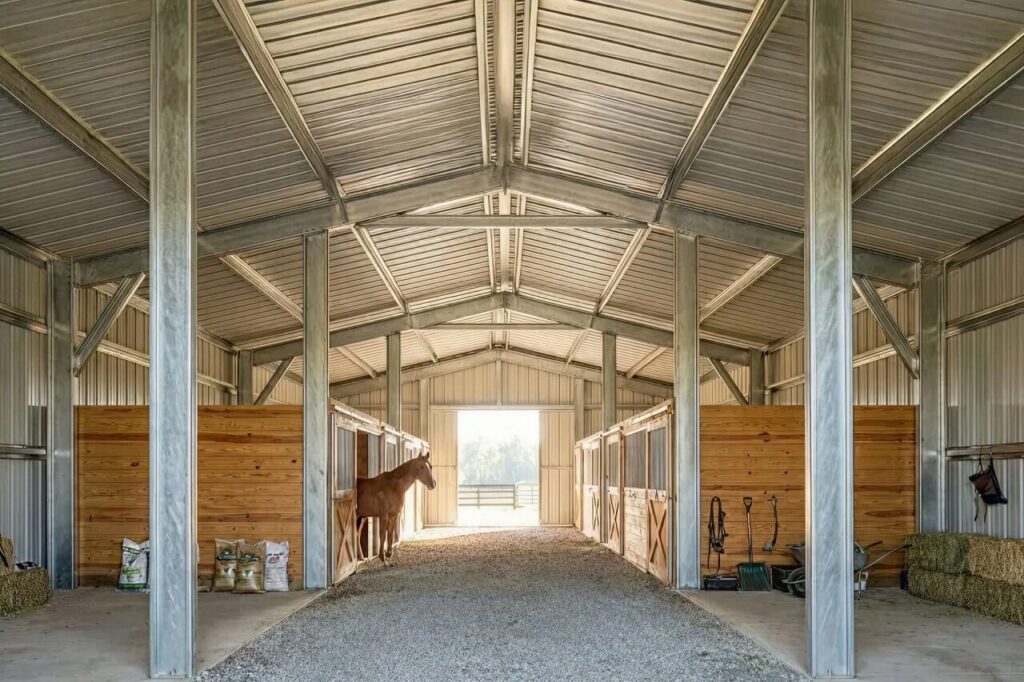
- Center aisle. A wide walkway that allows easy movement of horses and supplies.
- Ventilated doors, windows, and cupolas. These features improve airflow, reduce moisture, and support air quality.
- Sliding or Dutch doors. Secure access with better visibility and natural ventilation.
- Windows for airflow. Help control heat, humidity, and barn odors.
- Kick boards. Impact-resistant panels protect walls from horse damage.
- Overhangs. Provide shade and protect entry points from rain and runoff.
- Metal roof. Long-lasting and low-maintenance, it handles extreme weather and sheds water efficiently.
Metal barns also resist rot, pests, and fire, and require minimal upkeep. Regular maintenance, like clearing vents, checking door tracks, and inspecting seams, helps ensure long-term performance and animal safety.
Common Horse Barn Sizes and Stall Layouts
The right barn size depends on how many horses you have and how much space you’ve got. Horse barn builders often suggest planning for future growth, especially if you think you’ll add more animals later. Each horse stall needs enough room for the horse to move safely and for you to handle daily care.
Here’s a quick look at common stall counts and typical building dimensions:
| Typical Horse Barn Dimensions | |
|---|---|
| Number of stalls | Typical barn dimensions (approx.) |
| 2 stalls | 24 ft x 24 ft |
| 4 stalls | 36 ft x 24 ft |
| 6 stalls | 48 ft x 36 ft |
Barn design is about more than square footage. Good ventilation, natural light, and smooth traffic flow can reduce animal stress and make chores faster and easier. Layout matters just as much as size:
- Center aisle layout. This popular setup puts stalls on both sides of a wide aisle. It’s easy to navigate and improves airflow.
- Shed row horse barn. A straight row of stalls under a shared overhang. Simple and effective, especially in warmer areas.
According to equine standards, each horse stall should be at least 12 by 12 feet. A smart layout boosts functionality, safety, and overall animal care.
Prefab vs. Custom Horse Barns
One of the first decisions you’ll make is whether to go with a prefab horse barn kit or build something custom. Both can work well; it just depends on your budget, timeline, and how your property’s set up.
Prefab kits, often called modular horse barns, are pre-engineered and ship-ready for fast assembly. Custom barns are built from the ground up with specific layouts and dimensions.
Here’s a quick comparison:
| Comparing Horse Barns: Kits vs. Custom | ||
|---|---|---|
| Feature | Prefab horse barn kits | Custom-built barns |
| Cost | Lower initial cost | Higher upfront investment for long-term value and personalization |
| Assembly time | Quick to install with minimal site prep | Extended timeline allows for precision and quality craftsmanship |
| Design flexibility | Standardized layouts | Fully tailored to unique needs or terrain |
For many horse owners, custom options offer strong value. Alan’s custom metal buildings are structurally solid and available in a variety of sizes and barn styles, all while staying budget-friendly.
Custom barns may make more sense for large properties, complex layouts, or uneven ground. Experienced horse barn builders can help figure out which option brings the best long-term return.
Costs and Financing Options
How much a horse barn costs comes down to a few key things. Whether you’re looking at prefab horse barn kits or something more custom, knowing what affects the price helps you plan without surprises.
Here’s what usually affects total cost:
- Size and layout. Bigger barns with more stalls need more materials and labor, which raises the price.
- Materials and roofing. Options like steel framing and a metal roof cost more upfront but last longer.
- Custom features. Items like Dutch doors, overhangs, and interior dividers add to the build cost.
- Delivery and installation. Site conditions, travel distance, and local labor rates all factor in.
Making Your Barn Multi-Functional
A smart barn design does more than shelter horses. It can also support storage, feeding, and even recreation. Building a custom barn with multiple uses adds long-term value and makes daily tasks easier on equestrian properties and livestock shelters.
Here are a few upgrades that boost barn functionality:
- Hay storage loft or bay. Keeps feed dry and easy to access while freeing up floor space.
- Tack room. A clean, secure place to keep riding gear, grooming supplies, and meds all in one spot.
- Wash area with drainage. Makes rinsing off horses or livestock quick and keeps water from pooling where it shouldn’t.
- Feed station or grain room. Keeps feed and supplies in one place, so daily chores run smoothly.
To increase flexibility, you can add removable stall dividers, multi-species pens, or rooms with more than one purpose. Some owners also build in workspaces or lean-tos to store tools and ATVs.
Small details make a big difference. Painted trim, a decorative cupola, and smart lighting can turn a basic horse barn into a standout structure.
How to Choose the Right Horse Barn
Picking the right horse barn isn’t just about layouts and features. It starts with choosing a seller you can trust. A reliable provider delivers quality materials, smooth service, and solid support. With so many horse barn builders out there, knowing what to look for helps you avoid costly mistakes.
Here are a few signs of a trustworthy barn seller:
- Proven experience. Stick with companies that have a strong track record and solid reviews.
- Quality craftsmanship. Materials should be durable, construction should be solid, and details should be done right.
- Customization options. You should be able to adjust the layout, colors, and features to get exactly what you need.
- Responsive customer support. A good team stays available from your first quote to the final installation.
Alan’s Factory Outlet brings more than 20 years of experience to the table. We’re known for dependable delivery and flexible metal buildings. Let us help you find the right fit for your horses and property.
Thinking about a simple shelter for livestock or a flexible add-on to your barn setup? This 12×16 lean-to garage used as an animal loafing shed shows how a basic metal structure can be a practical, low-cost solution:
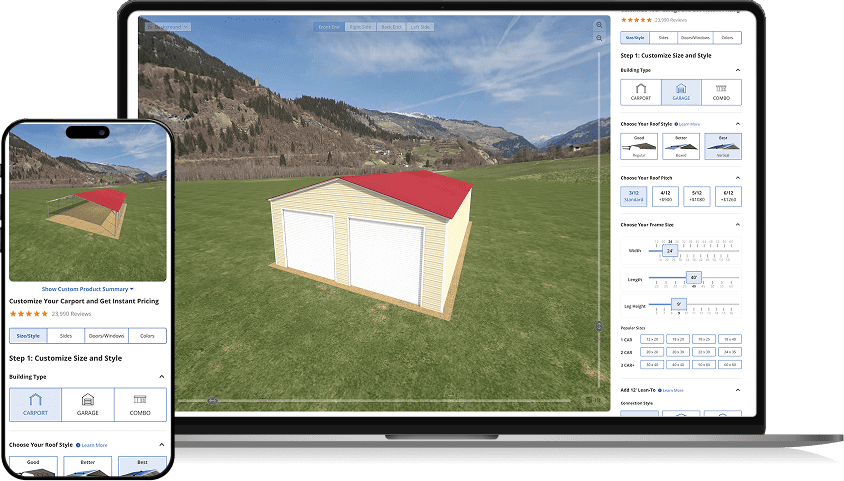
Want to see your horse barn or livestock shelter take shape? Try the 3D Carport & Metal Garage Builder to visualize your layout, explore custom features, and design a setup that fits your animals, storage, and daily routine.
Bring Your Vision to Life
The way your barn’s set up can make everyday tasks faster, keep your animals in better shape, and save you money down the line. Good airflow, safe layouts, and smart storage for feed and gear all play a part in keeping things running smoothly.
That’s why many horse owners choose Alan’s Factory Outlet for affordable, customizable options. Whether you’re building a compact shelter or a full dream barn, our flexible features help you create a setup that works for your property.
Design your dream horse barn today with Alan’s Factory Outlet.
FAQs About Horse Barns
Choosing or building a horse barn takes more than picking a size and style. From land use rules to materials, horse owners often have specific questions as they plan the right setup. Here are answers to common questions to help you move forward.
What is the difference between a barn and a stable?
People often use the terms interchangeably, but they mean different things. A barn is a general-purpose building for hay, equipment, or multiple animals. A stable is built specifically for horses.
Here’s a quick comparison:
| Barn vs. Stable | ||
|---|---|---|
| Feature | Barn | Stable |
| Primary use | Multi-purpose, often mixed-use | Specifically for housing horses |
| Animals housed | Horses, cattle, goats, etc. | Horses only |
| Structure layout | Flexible layouts, storage areas | Individual horse stable stalls |
| Function | Feed storage, livestock shelter | Horse boarding and care |
What are the best materials for building a horse barn?
Metal is often the best choice. It’s durable, affordable, and low-maintenance. A metal barn resists moisture, fire, pests, and decay better than wood. It usually lasts longer with fewer repairs.
Wood has a classic look but needs more upkeep and is more prone to damage. For most horse owners, metal is the better long-term option.
What is the minimum acreage to own a horse?
A good rule is one to three acres per horse, but this depends on soil, grass quality, and local rules. You’ll also need to plan for grazing, shelter, and room for the horses to move.
Key land considerations include:
- Enough pasture. Rotating grazing spots helps avoid overgrazing, keeps the grass healthy, and gives the land time to bounce back.
- Clean water sources. Horses need constant access to fresh, clean water for digestion, temperature control, and overall health.
- Following local zoning and animal density limits. These rules vary by area and can affect how many horses you’re allowed to keep on your land.
Check with your local zoning board to make sure your plan meets equine care standards.
Where can I build a horse barn?
Determining the right horse barn location starts with knowing your local zoning laws. Most rural or agricultural zones allow barns, but you may still need a building permit or have to meet specific setback or land use rules. Before you get started, check in with your local planning or zoning office to make sure you’re cleared to build.
Once you’ve got the green light, pick a spot that’ll work well in every season. Look for land with a slight slope to help with drainage, and steer clear of low areas where water tends to collect — standing water leads to mud, bad smells, and damage over time.
There are a few other important things to think about:
- Access to utilities. The closer you are to water and power, the less you’ll spend on setup, and the easier the barn will be to use.
- Property boundaries. Make sure your barn meets local setback rules so it’s not too close to roads or neighboring lots.
- Orientation. Line it up to take advantage of natural light and airflow. That helps keep things dry and well-ventilated.
- Surrounding space. Leave enough room for vehicles, pasture rotation, and easy cleanup.
Taking the time to plan it right saves money later and helps your barn work better for the long haul.