


When planning a clear-span building, choosing the right frame style is one of the most important early decisions. In metal construction, the two most common types of buildings are clear-span structures and truss-framed systems. Each offers specific benefits depending on how you plan to use the space.
Clear-span metal buildings are built without interior support columns, giving you wide, uninterrupted open space. This makes them ideal for steel buildings like warehouses, aircraft hangars, indoor riding arenas, and sports facilities. Truss frames, on the other hand, include interior supports that help spread out the structural load. They’re great for barns, garages, and other uses where completely open interiors aren’t necessary.
In this guide, we’ll break down both options, comparing structure, cost, span limits, and ideal applications. We’ll also cover the customization options available through Alan’s Factory Outlet.
Whether you’re building a business, farm, or personal project, understanding the differences in building design helps you choose the right metal structure and building solution for your needs and avoid costly missteps.
| Clear-Span vs. Truss Metal Buildings | ||
|---|---|---|
| Feature | Clear-span buildings | Truss metal buildings |
| Interior space | Fully open, no support columns | Partially open, interior support columns |
| Structural design | Heavy-duty beams, wide spans | Lightweight trusses, load spread through frame |
| Cost | Higher up front, but better long-term flexibility | Lower initial cost, but less adaptable over time |
| Customization | Greater layout and height flexibility | Best for basic, segmented interior setups |
| Best for | Sports, warehousing, aircraft hangars | Barns, workshops, equipment or livestock storage |
What Is a Clear-Span Building
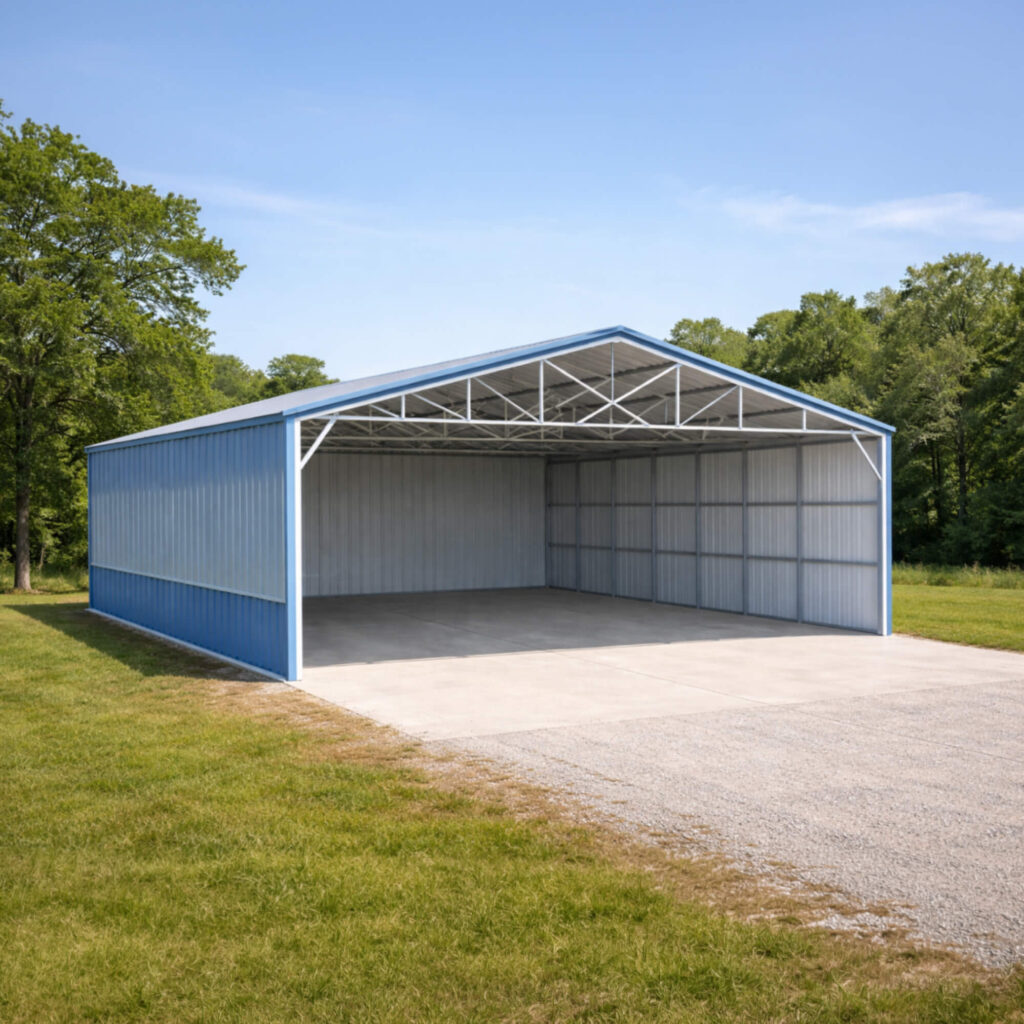
A clear-span building is a type of steel structure built to span wide distances without interior support columns. This allows for full, wall-to-wall open space and is ideal for layouts that need flexibility and room to move.
Here are some key features and benefits of clear-span structures:
- Wide-open interiors. No interior support means full, unobstructed floor space, which is ideal for heavy equipment, high-traffic areas, and flexible layouts.
- Durable structural materials. Built with structural steel or engineered trusses that evenly distribute weight for long-lasting performance.
- Flexible, scalable design. Easily reconfigure the interior or expand the footprint as your needs grow.
- Built for large-scale operations. Great for warehouses, hangars, sports complexes, and manufacturing thanks to high ceilings and large bay openings.
- Energy-efficient lighting. Add skylights or windows to bring in natural light, cut energy costs, and create a more open feel.
- Fully customizable. Adjust size, layout, roof pitch, and finishes to match your site or business requirements.
What Is a Truss Metal Building?
A truss metal building uses a network of connected steel components to form a stable frame. It spreads weight across the structure while using lighter materials, making it a cost-effective choice for many builds.
Here’s what makes truss-framed buildings unique and advantageous:
- Strong, efficient framing. Web-like steel trusses spread out weight while using fewer materials than heavier framing systems.
- Segmented interior layouts. Support columns make it easy to divide the space into stalls, work areas, or storage zones.
- Budget-friendly for mid-sized builds. Truss systems require less steel and labor, keeping costs lower than clear-span alternatives.
- Classic, practical design. Exposed beams and lower profiles offer a traditional look often preferred for agricultural or utility structures.
- Built for agriculture and utility use. Perfect for barns, metal garage buildings, lean-tos, or buildings with specific ventilation or layout needs.
Structural Design Differences
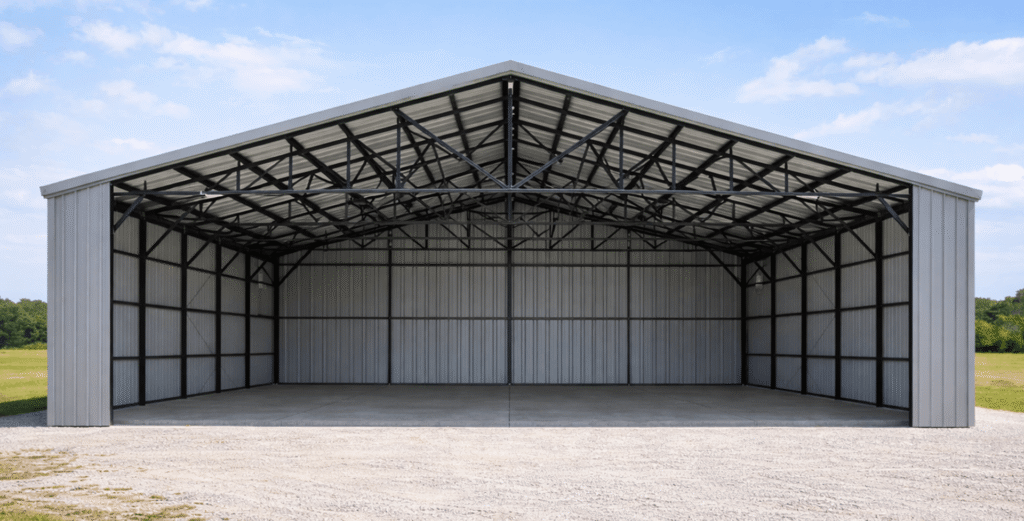
Clear-span buildings use heavy-duty I-beams or rigid steel frames so you don’t need interior columns. That lets them cover very wide spaces — sometimes 100 feet or more — while staying strong and stable. They also let you build with higher roof pitches and lots of vertical clearance, which helps when you need overhead space or tall storage.
Truss systems go a different route. They use a web of lighter steel parts to spread weight, but usually need interior support columns. That means less wide-open space, but also lower material weight and cost. When built right, trusses handle snow loads well too, especially if the roof slope is planned with weather in mind.
Depending on your design choice, you’ll get different usable space, ceiling height, and overall flexibility for what the building can do.
Space and Interior Layout
Clear-span buildings deliver wide open space with no posts to work around. They’re perfect for sports facilities, aircraft hangars, or large storage buildings. With no interior support columns, you get a clean floor plan, free movement for vehicles or equipment, and flexible layouts.
Truss-framed buildings use support columns spaced through the interior. That works fine for agricultural storage, metal barns, or workshop buildings. But if you need large open areas or plan to frequently change the layout, those support posts can limit flexibility. The building will work best when your needs match a more segmented interior.
Cost Differences
Truss buildings usually cost less up front because they use lighter materials and assemble more easily. But clear-span buildings give you long-term flexibility and may save money later if you rely on open layouts or need to adapt the space over time.
Here are the cost differences laid out clearly:
| Cost Comparison: Clear-Span vs. Truss Metal Buildings | ||
|---|---|---|
| Factor | Clear-span buildings | Truss metal buildings |
| Material costs | Higher, due to heavy-duty steel | Partially open, interior support columns |
| Labor costs | Slightly higher overall | Lightweight trusses, load spread through frame |
| Span range | Ideal for 40 – 100’+ widths with fully open interiors | Best for 20 – 60′ widths, where some interior supports are needed |
| Long-term durability | Very high — fewer joints means less wear | High, though joint upkeep may be needed |
How to Choose the Right Structural Design for Your Project
Choosing whether to go with a clear-span or truss structure depends on what you need the building for and the conditions of your site. Getting the match right can save you time, money, and headaches down the road. It’s worth thinking through your priorities before you start your building project.
Key considerations include:
- Budget. Truss systems cost less up front, which makes them a solid choice for smaller spans. Clear-span steel buildings cost more, but pay off when you need wide-open areas or heavy-duty capacity.
- Use case. If you need wide, open interiors, a clear-span layout works best. If you’re building barns, workshops, or agricultural buildings, a truss design often fits just fine.
- Climate. In places with heavy snow loads or strong winds, you might need stronger framing or steeper roof pitches to stay safe and stable.
- Size. Once you get to wider buildings (60 feet or more), clear-span framing becomes the most practical way to keep the space open and structurally sound.
Once you’ve weighed your budget, building size, climate, and use case, you’ll have a clearer idea of which structure fits your needs best.
Traditional metal buildings are fully installed by professionals and include free delivery across AFO’s 21-state service area. This option works best if you want a turnkey solution without having to manage setup yourself:
- Covers standard building types. Includes carports, garages, and other fully installed metal structures.
- Customize your building. Use the 3D Carport & Metal Garage Builder to design exactly what you need.
- Let AFO handle setup. Delivery and installation are included, so you don’t have to coordinate labor.
Move Forward With Your Metal Building Project
Once you’re ready to move ahead, the most important step is choosing a metal building that fits your space, budget, and intended use. From residential storage to commercial applications, the right structure should balance durability, functionality, and long-term value without unnecessary complexity.
With Alan’s Factory Outlet, you can customize steel garages, metal carports, and other metal building solutions designed to meet practical, everyday building needs. Our lineup focuses on dependable construction, flexible sizing, and layout options that support everything from vehicle storage to workspace organization.
By working with a provider that specializes in these core building types, you can move forward confidently, knowing your project is built around solutions they deliver every day — straightforward, reliable, and built to last.
FAQs About Clear-Span Buildings
When planning a metal structure, a few common questions often pop up. Here are straightforward answers to help you decide if a clear-span design fits your project.
What does clear-span mean in construction?
A “clear-span” building is one without interior support columns, which leaves the floor plan completely open. That kind of space works well for indoor sports arenas, large warehouses, airplane hangars — anywhere you need unobstructed floor use.
How wide can a clear-span building be?
Clear-span steel buildings usually range from about 30 to 100 feet wide. Engineered designs can push that width beyond 200 feet, depending on structural requirements, steel gauge, and how the space will be used.
Can I order a custom building?
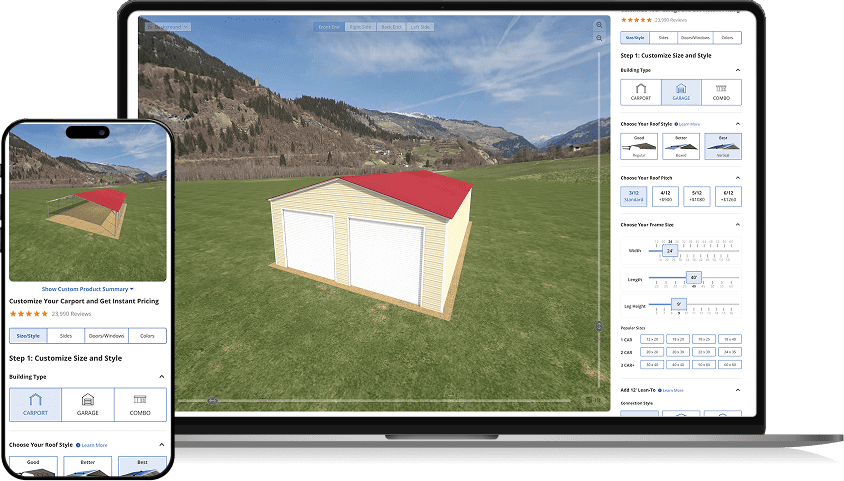
Yes. With Alan’s Factory Outlet you can customize nearly every aspect: building size, roof style, colors, doors, windows, and interior layout. It’s possible to get a building tailored to your property and budget. Get started with the 3D Carport & Metal Garage Builder and get free delivery and installation.
What types of buildings commonly use a clear-span design?
Clear-span framing shines in places that benefit from wide-open interiors. Common uses include sports arenas, aircraft hangars, carports, riding arenas, warehouses, garages, and manufacturing spaces. These designs keep workflow smooth, allow easy equipment access, and maximize visibility.